Hopkins 47685 4-Pin Flat Connector -- Best for Utility and Boat Trailers
The Hopkins 47685 is the most common 4-pin flat connector on the market and for good reason. The molded connector body protects the terminals from direct spray, and the leads come pre-tinned for easy soldering or crimp connections. It fits standard 4-flat receivers found on most light-duty truck and SUV hitches built after 2005. The protective storage cap is included, which many cheaper competitors omit. For a single-axle utility trailer, cargo trailer, or small boat trailer, this connector handles everything you need at a price that makes stocking a spare practical.
Check price on Amazon →Top trailer wiring connectors for dependable brake lights, turn signals, and charge lines. These picks resist corrosion and lock securely at highway speeds.
Nothing is more stressful than discovering your trailer’s brake lights are out mid-trip. Trailer wiring connectors take a beating: road grime, rain, salt spray, and repeated couple/uncouple cycles. The five picks below are the most reliable options for keeping your trailer safely connected in 2026.
| Product | Best For | Rating |
| — | — | — |
| Hopkins 47685 4-Pin Flat Connector | Basic utility/boat trailers | 4.5/5 |
| Curt 56181 7-Pin RV Blade Connector | RV and heavy trailers | 4.6/5 |
| Reese Towpower 83660 Adapter | 7-to-4 pin conversion | 4.4/5 |
| Tow Ready 118108 4-Way Flat Connector | Heavy-duty flat pin | 4.5/5 |
| King Innovation Dryconn Splice Kit | Weatherproof repair splices | 4.7/5 |
How we evaluated these
We compare every pick against the field on real specifications, certifications, and aggregated owner reviews. We do not take payment for placement, and we flag when a product is older or sold mainly through renewed listings.
The shortlist
| Pick | Best for | Score | |
|---|---|---|---|
| Hopkins 47685 4-Pin Flat Connector -- Best for Utility and Boat Trailers | Check price | ||
| Curt 56181 7-Pin RV Blade Connector -- Best for RV and Heavy Trailers | Check price | ||
| Reese Towpower 83660 Adapter -- Best Conversion Adapter | Check price | ||
| Tow Ready 118108 4-Way Flat Connector -- Most Durable 4-Pin | Check price | ||
| King Innovation Dryconn Splice Kit -- Best for Waterproof Repairs | Check price |
Each pick, examined
Hopkins 47685 4-Pin Flat Connector -- Best for Utility and Boat Trailers
The Hopkins 47685 is the most common 4-pin flat connector on the market and for good reason. The molded connector body protects the terminals from direct spray, and the leads come pre-tinned for easy soldering or crimp connections. It fits standard 4-flat receivers found on most light-duty truck and SUV hitches built after 2005. The protective storage cap is included, which many cheaper competitors omit. For a single-axle utility trailer, cargo trailer, or small boat trailer, this connector handles everything you need at a price that makes stocking a spare practical.
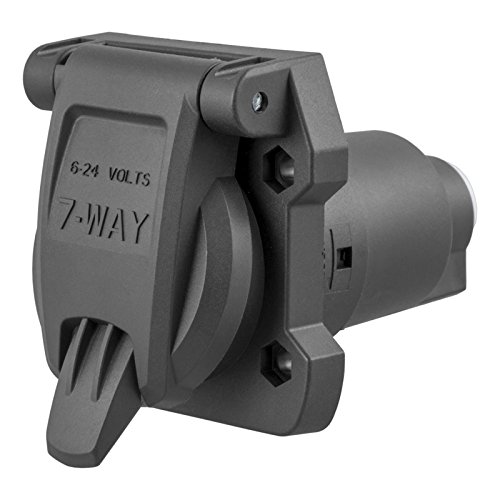
Curt 56181 7-Pin RV Blade Connector -- Best for RV and Heavy Trailers
Curt's 7-pin connector is built with zinc die-cast housing and nickel-plated brass contacts. The nickel plating resists corrosion notably better than plain steel, which matters for connectors left outside between trips. The locking ring keeps the connection from rattling loose on rough roads. Curt includes a weather cover on both the vehicle-side plug and the trailer-side socket. For any trailer with electric brakes, an auxiliary battery, or backup lights, the 7-pin format is required and the 56181 is one of the more durable options in its price range.

Reese Towpower 83660 Adapter -- Best Conversion Adapter
The Reese 83660 converts a 7-pin vehicle-side outlet to a 4-pin flat trailer-side connection. This is the situation most people face when borrowing a truck with a 7-pin socket to pull a small trailer with a 4-pin plug. The adapter is plug-and-play with no wiring required, and it passes through all four standard light functions correctly. Build quality is adequate for occasional use. If you tow mismatched connectors regularly, keeping one of these in the center console is worthwhile.

Tow Ready 118108 4-Way Flat Connector -- Most Durable 4-Pin
Tow Ready's 118108 uses heavier gauge wire leads than the Hopkins equivalent, which reduces voltage drop over long trailer runs. The contacts are brass rather than steel, giving it a meaningful corrosion-resistance advantage in coastal or northern climates where salt exposure is high. The connector body is UV-stable plastic that holds up to years of outdoor storage. If you are doing a permanent install on a trailer that lives outside, the heavier gauge leads justify the slightly higher price.

King Innovation Dryconn Splice Kit -- Best for Waterproof Repairs
When trailer wiring is damaged from road debris or animal chewing, Dryconn gel-filled splice connectors are the cleanest repair option. The gel fully encapsulates each splice and prevents moisture entry even when the connection is below the trailer frame in standing road water. Twist-on application takes about 30 seconds per splice. This is not a standalone connector system but an essential addition to any towing toolkit. A box in the truck means a broken trailer wire on the road is a 10-minute repair rather than a multi-hour wait.
Buying considerations
What to consider
Match the pin count to your trailer's needs first. Four-pin handles basic lights; seven-pin is required for electric brakes and auxiliary power. After that, prioritize contact material: brass or nickel-plated contacts outlast steel significantly in wet or salty environments. Check whether the connector includes protective caps for both ends -- uncovered vehicle-side sockets fill with road debris quickly. Finally, carry one repair option (Dryconn or heat-shrink butt connectors) in the tow vehicle so a wiring failure on the road does not end your trip.
What to consider
For more towing prep guides, see our article on [best trailer hitch locks](/articles/best-trailer-hitch-locks) and [best tow vehicle accessories](/articles/best-tow-vehicle-accessories). All product picks follow our [methodology](/methodology).
Questions answered
'A 4-pin flat connector handles the four basic trailer light functions: left turn/brake, right turn/brake, tail lights, and ground. A 7-pin round connector adds three extra circuits for electric trailer brakes, a 12V auxiliary power feed, and a backup light or reverse signal. Most boat and utility trailers use 4-pin; RVs and large cargo trailers require 7-pin.'
Apply dielectric grease inside the connector housing each time you couple it. Dielectric grease displaces water and prevents the oxidation that causes voltage drop and intermittent connections. Also store the vehicle-side connector with its protective cap on when not towing. Zinc-plated or brass-contact connectors last significantly longer than uncoated steel in road-salt environments.