Dailies Total1 -- Best for Mechanical Irritation
When irritation is driven by the physical sensation of the lens moving across the eyelid, Dailies Total1 is the most effective solution available in a daily format. The near-100% water content outer layer reduces the coefficient of friction between the lens surface and the lid to near zero. The daily replacement cycle ensures that surface degradation -- a primary driver of increasing irritation throughout the day -- never has a chance to accumulate. For people who feel a persistent awareness of their lens even minutes after insertion, this is the first lens to try.
Check price on Amazon →Eye irritation from contact lenses is often caused by deposits, poor oxygen flow, or incompatible materials. These five lenses reduce the most common irritation triggers for a calmer, clearer wear experience.
Lens-related irritation covers a wide range of experiences: the gritty late-afternoon feeling, chronic end-of-day redness, intermittent burning that forces early removal, or reactive sensitivity that makes wear windows unpredictably short. The lenses below address the most common mechanical and chemical causes of contact lens irritation without requiring a move to glasses.
Disclaimer: Persistent or worsening eye irritation while wearing contacts can indicate a serious condition. Remove lenses and consult an eye care professional if irritation is accompanied by pain, discharge, or vision changes.
| Product | Best For | Rating |
| — | — | — |
| Dailies Total1 | Mechanical irritation | 4.9/5 |
| Acuvue Oasys 1-Day | Tear film disruption | 4.8/5 |
| Air Optix Plus HydraGlyde | Deposit-related redness | 4.7/5 |
| Biofinity | Corneal oxygen deprivation | 4.6/5 |
| Biotrue ONEday | Chemistry-sensitive eyes | 4.6/5 |
How we evaluated these
We compare every pick against the field on real specifications, certifications, and aggregated owner reviews. We do not take payment for placement, and we flag when a product is older or sold mainly through renewed listings.
The shortlist
| Pick | Best for | Score | |
|---|---|---|---|
| Dailies Total1 -- Best for Mechanical Irritation | Check price | ||
| Acuvue Oasys 1-Day -- Best for Tear Film Disruption | Check price | ||
| Air Optix Plus HydraGlyde -- Best for Deposit-Related Irritation | Check price | ||
| Biofinity -- Best for Corneal Oxygen Deprivation | Check price | ||
| Biotrue ONEday -- Best for Chemistry-Sensitive Eyes | Check price |
Each pick, examined
Dailies Total1 -- Best for Mechanical Irritation
When irritation is driven by the physical sensation of the lens moving across the eyelid, Dailies Total1 is the most effective solution available in a daily format. The near-100% water content outer layer reduces the coefficient of friction between the lens surface and the lid to near zero. The daily replacement cycle ensures that surface degradation -- a primary driver of increasing irritation throughout the day -- never has a chance to accumulate. For people who feel a persistent awareness of their lens even minutes after insertion, this is the first lens to try.
Acuvue Oasys 1-Day -- Best for Tear Film Disruption
Tear film instability is a major source of irritation because a broken tear layer means direct lens-to-cornea contact and fluctuating vision. Acuvue Oasys 1-Day addresses this with HydraLuxe Technology, a network of tear-like molecules that stabilize the tear film by integrating with it rather than simply sitting on top of it. For wearers whose irritation manifests as intermittent blurring followed by burning, tear film disruption is a likely cause and this lens is a logical first intervention. UV Class 1 protection also reduces the photosensitivity-related irritation some wearers experience outdoors.
Air Optix Plus HydraGlyde -- Best for Deposit-Related Irritation
Protein and lipid deposits from the tear film accumulate on lens surfaces over time, and for many wearers this buildup is the primary irritation trigger -- lenses feel fine on day one of a monthly cycle and progressively worse by week three. Air Optix Plus HydraGlyde's SmartShield Technology actively resists lipid and protein attachment, keeping the surface cleaner longer. The HydraGlyde Moisture Matrix adds lasting lubrication on top. For monthly wearers whose irritation follows a predictable monthly pattern, this lens breaks that cycle.
Biofinity -- Best for Corneal Oxygen Deprivation
Corneal hypoxia (insufficient oxygen reaching the cornea) triggers neovascularization and creates a low-grade chronic irritation and redness that many wearers attribute to the wrong cause. Biofinity's Dk/t of 160 places it among the most oxygen-permeable monthlies available, addressing hypoxia-driven irritation directly. If your redness is diffuse and consistent rather than event-related, oxygen transmissibility is worth investigating. The Aquaform Technology also binds moisture permanently into the material, so dryness-related irritation is addressed in the same lens.
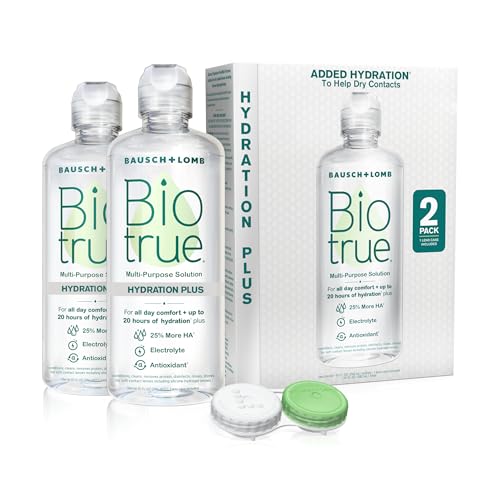
Biotrue ONEday -- Best for Chemistry-Sensitive Eyes
Some wearers' irritation is fundamentally a chemistry mismatch: certain lens materials, surface coatings, or packaging solutions interact poorly with individual tear chemistry and trigger a mild but persistent inflammatory response. Biotrue ONEday reduces this risk by matching the pH and biology of the eye as closely as possible. The hyaluronan-based material mirrors corneal surface chemistry, and the packaging solution is buffered to tear pH. For wearers who have tried multiple lenses across brands without relief, chemistry sensitivity is worth investigating, and Biotrue is the most natural-chemistry lens in the daily category.
Buying considerations
What to consider
Before selecting a lens, try to identify what pattern your irritation follows. If it builds through the day, deposit accumulation or oxygen deprivation is likely -- look for high-Dk/t lenses or switch to dailies. If irritation is present from the first moment of insertion, chemistry sensitivity or solution incompatibility is more likely. If irritation is intermittent and blurring precedes the burning sensation, tear film instability is probably the driver. Switching solution brands (or to preservative-free rewetting drops) while keeping the same lens is a useful diagnostic step before changing the lens entirely. Always consult your eye doctor if a pattern change does not resolve irritation within two weeks.
What to consider
For more help, see our [best contacts for dry sensitive eyes](/articles/best-contacts-for-dry-sensitive-eyes) guide and our [best contacts for extremely dry eyes](/articles/best-contacts-for-extremely-dry-eyes) article. Learn more about our review process on the [methodology](/methodology) page.
Questions answered
The most common causes are protein and lipid deposits accumulating on the lens surface, insufficient oxygen reaching the cornea, hypoxia-driven blood vessel growth into the cornea, solution sensitivity, or wearing lenses beyond the recommended schedule. In some cases the fit of the lens itself may be off, which an updated fitting exam can identify and correct.
Temporary irritation from a new lens or environment is normal and often resolves within days. Persistent redness, pain, blurry vision, or discharge warrants immediate lens removal and a same-day eye care appointment. These symptoms can signal infection, corneal hypoxia, or GPC -- conditions that worsen if lens wear continues.
Keep reading
5 Best Contacts for Dry Sensitive Eyes 2026 | Gentle wear all day long
5 Best Contacts for Friends 2026 | Gift-worthy lenses to share the glow-up
