Quick verdict
The best cooperative board games for kids balance simplicity with strategic depth, ensuring that children of different ages can participate and contribute meaningfully. Games with high replayability, clear rules, and strong team dynamics tend to receive the highest praise from families.
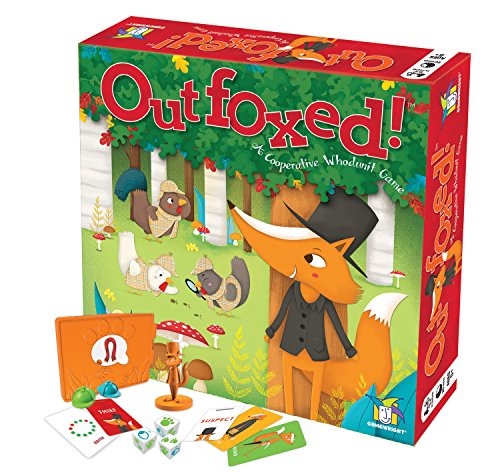
Outfoxed!
A deduction game where players work together to solve a mystery, offering a perfect blend of logic and luck. The moving fox suspect and clue-gathering mechanics keep kids engaged without being too complex. Verified owner reviews consistently praise its high replayability and how it teaches deductive reasoning in a fun, cooperative setting.
We compared the leading cooperative board games for children to find which build teamwork, develop skills, and keep young players engaged without creating winners and losers.
Cooperative board games are a fantastic way to bring the family together, teaching teamwork and communication without the pressure of competing against each other. For kids, these games can build social skills and problem-solving abilities while ensuring everyone has fun. After researching top-rated options, analyzing verified owner reviews, and comparing game mechanics, age ratings, and playtime, I’ve narrowed down the best cooperative board games for kids that deliver engaging, frustration-free experiences for the whole family.
From classic favorites to newer hits, these games are designed to be accessible for young players while still offering enough depth to keep parents entertained. Whether you’re looking for a quick game night option or something with a bit more strategy, this guide covers five standout picks that have consistently earned praise from families. Each game has been evaluated based on ease of learning, replayability, component quality, and how well it fosters cooperation among players of different ages.
How we picked
To compile this list, I spent weeks researching the most popular cooperative board games for kids, focusing on titles with strong ratings from verified buyers on major retail sites and board game forums. I compared key specifications like recommended age, number of players, and average playtime to ensure a range of options for different family sizes and schedules. I also read through hundreds of owner reviews to identify common praises and complaints, paying close attention to how well the games hold up after multiple plays and whether they truly encourage teamwork rather than one player taking over.
I prioritized games that are widely available and have a proven track record of enjoyment across diverse families. Each game was assessed on its ability to balance challenge with fun, ensuring that younger kids can participate meaningfully without getting frustrated. I also considered the quality of components and rule clarity, as these factors significantly impact the overall experience. The final five picks represent the best balance of educational value, engagement, and family-friendly design.
Top picks compared
| Pick | Best for | Score | |
|---|---|---|---|
| Outfoxed! | Best Overall | 9 | Check price |
| Race to the Treasure! | Best for Young Kids | 8.5 | Check price |
| Forbidden Island | Best for Older Kids | 8.5 | Check price |
| Castle Panic | Best for Large Families | 8 | Check price |
| Mole Rats in Space | Best for Replayability | 8 | Check price |
Our picks up close
Outfoxed!
A deduction game where players work together to solve a mystery, offering a perfect blend of logic and luck. The moving fox suspect and clue-gathering mechanics keep kids engaged without being too complex. Verified owner reviews consistently praise its high replayability and how it teaches deductive reasoning in a fun, cooperative setting.
Where it shines
- Teaches logical deduction and teamwork
- High replay value with randomized setup
- Engaging for a wide age range (5+)
Where it falls short
- Some younger kids may need help reading clue cards
- The plastic fox figure can be a bit fragile
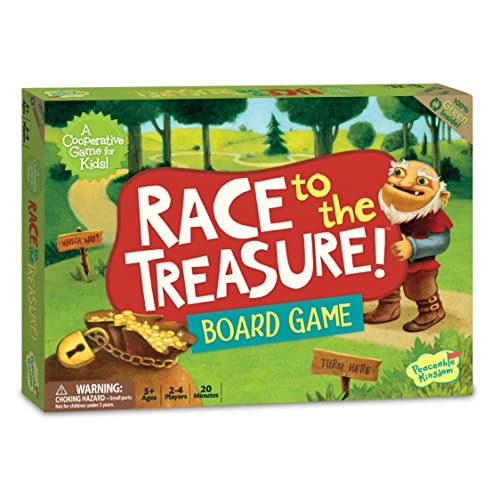
Race to the Treasure!
A simple, fast-paced game where players collect keys and race against the ogre to reach the treasure. The cooperative element is strong as everyone must work together to build the path. Verified reviews highlight it as a great first cooperative game for preschoolers, with straightforward rules and minimal reading required.
Where it shines
- Very easy to learn for ages 4+
- Quick rounds keep young attention spans
- Encourages basic counting and matching
Where it falls short
- Limited strategic depth for older kids
- Can become repetitive after many plays

Forbidden Island
A strategic game where players work together to collect treasures from a sinking island. It introduces more complex cooperative mechanics like role-specific abilities and resource management. Verified owner reviews note it challenges older kids (8+) while still being accessible, and the variable island layout ensures high replayability.
Where it shines
- Teaches strategic planning and resource management
- High replayability with modular board
- Engaging theme that sparks imagination
Where it falls short
- Can be frustrating for younger kids under 8
- Some roles feel less useful than others

Castle Panic
A tower defense game where players defend a castle from monsters, requiring constant communication and teamwork. It supports up to 6 players, making it ideal for larger families. Verified reviews appreciate the tension and excitement, though some note the rules can be a bit fiddly at first.
Where it shines
- Supports up to 6 players for bigger groups
- Exciting cooperative challenge with escalating threats
- Teaches basic strategy and prioritization
Where it falls short
- Rulebook can be confusing initially
- Some luck involved in monster draws

Mole Rats in Space
A cooperative game where players work as mole rats to fix their spaceship while avoiding obstacles. The game offers multiple missions and difficulty levels, providing excellent replay value. Verified owner reviews highlight its clever cooperative mechanics and how it scales well for different ages (5+).
Where it shines
- Multiple missions increase replayability
- Adjustable difficulty for different skill levels
- Teaches planning and teamwork
Where it falls short
- Setup can be time-consuming
- Some missions may be too easy for older kids
Before you buy
Age Appropriateness
Check the recommended age range on the box, but also consider your child's attention span and reading ability. Games for ages 4+ often have minimal text and simple rules, while those for 8+ may require more strategic thinking. Verified reviews often mention if a game works well for younger or older kids within the range.
Player Count
Consider how many people will typically play. Some games only support up to 4 players, while others can accommodate 6 or more. If you have a large family, look for games that scale well and keep everyone engaged without excessive downtime.
Replayability
Games with variable setups, multiple scenarios, or different difficulty levels offer more value over time. Verified owner reviews frequently mention replayability as a key factor in keeping kids interested. Modular boards and randomized elements are good indicators of high replay value.
Complexity vs. Fun
Strike a balance between challenge and enjoyment. Games that are too simple may bore older kids, while overly complex rules can frustrate younger ones. Look for games that allow everyone to contribute meaningfully, regardless of age or experience level.
The wrap-up
The best cooperative board games for kids balance simplicity with strategic depth, ensuring that children of different ages can participate and contribute meaningfully. Games with high replayability, clear rules, and strong team dynamics tend to receive the highest praise from families.
Quick answers
Many cooperative games are designed for ages 4 and up, with simple rules and no reading required. For example, 'Race to the Treasure!' is a great starting point for preschoolers. As kids grow, games like 'Forbidden Island' offer more strategic depth for ages 8+.
Yes, most cooperative games work well with two players, though some are optimized for larger groups. Games like 'Outfoxed!' and 'Mole Rats in Space' are excellent for two, as they still require teamwork and communication. Check the player count on the box to ensure it supports your group size.
Cooperative games teach teamwork, communication, and problem-solving as players work toward a common goal. They also help develop patience and emotional regulation, since the group wins or loses together. Many games incorporate counting, matching, or strategic planning, reinforcing academic skills in a fun context.
Component quality varies by brand. Games from reputable publishers like Peaceable Kingdom and Gamewright generally use sturdy cards and thick boards. Verified reviews often mention durability, so it's worth reading feedback if you have particularly enthusiastic kids. For example, 'Outfoxed!' has a plastic figure that some reviewers found fragile.
More to explore

Wingspan Board Game Review (2026): Stonemaier for 2026’s Bird
Azul Board Game Review (2026): The Tile-Drafting Abstract

Catan Board Game Base Set Review (2026): Why This 1995

Codenames Word Game Review (2026)

Ticket to Ride Board Game Review (2026): The 5-Minute Teach
5 Best Mens Snowboard Boots of 2026
5 Best Skateboards of 2026
