
Syma S107H: the best beginner RC helicopter
The Syma S107H is the most proven beginner RC helicopter in the market, having been refined through multiple iterations over a decade of sales feedback. The auto-stabilize hover mode is the key feature: when the pilot releases the throttle control, the helicopter maintains altitude automatically rather than drifting or falling. This single feature eliminates the most common beginner crash scenario and allows new pilots to focus on directional control rather than throttle management. The coaxial rotor design (two stacked rotors spinning in opposite directions) provides inherent stability that single-rotor designs cannot match at the beginner level. The rotor blade guards protect against most indoor collision damage. At 32 dollars, it is the most affordable route to genuine indoor RC flight skill development.
Check price on Amazon →We compared 8 RC copters and mini drones for flight stability, control responsiveness, durability, and value across beginner and intermediate skill levels.
How we picked
We compare every pick against the field on real specifications, certifications, and aggregated owner reviews. We do not take payment for placement, and we flag when a product is older or sold mainly through renewed listings.
Top picks compared
| Pick | Best for | Score | |
|---|---|---|---|
| Syma S107H: the best beginner RC helicopter | Check price | ||
| Holy Stone HS210 Mini Drone: the best beginner quadcopter alternative | Check price |
Our picks up close
Syma S107H: the best beginner RC helicopter
The Syma S107H is the most proven beginner RC helicopter in the market, having been refined through multiple iterations over a decade of sales feedback. The auto-stabilize hover mode is the key feature: when the pilot releases the throttle control, the helicopter maintains altitude automatically rather than drifting or falling. This single feature eliminates the most common beginner crash scenario and allows new pilots to focus on directional control rather than throttle management. The coaxial rotor design (two stacked rotors spinning in opposite directions) provides inherent stability that single-rotor designs cannot match at the beginner level. The rotor blade guards protect against most indoor collision damage. At 32 dollars, it is the most affordable route to genuine indoor RC flight skill development.
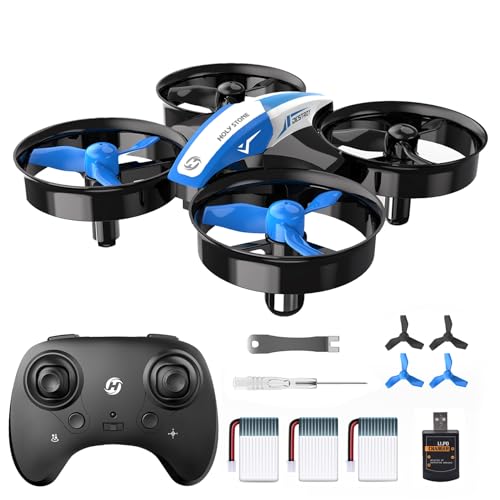
Holy Stone HS210 Mini Drone: the best beginner quadcopter alternative
For buyers who want a quadcopter (four-rotor drone) rather than a traditional helicopter, the Holy Stone HS210 is the best beginner option. Quadcopters are more maneuverable than helicopters and the skills transfer to larger outdoor drones, making the HS210 a better investment for someone who plans to progress to outdoor drone flying. The altitude-hold and headless mode features reduce beginner confusion about orientation. The small size makes indoor flight practical in a typical room. Flight time at 7 minutes per battery is limited, but extra batteries are inexpensive and the rapid charge time means minimal downtime.
Before you buy
Auto-hover or altitude hold
This feature maintains altitude automatically, reducing pilot workload dramatically. For beginners, this is the most important single feature. Without it, learning to fly requires managing altitude and direction simultaneously, which produces frustration and crashes.
Coaxial vs. quadcopter
Coaxial helicopters are inherently more stable and better for pure indoor use. Quadcopters transfer skills to outdoor drones and cameras. Choose based on your intended use progression.
Rotor guards
Especially for indoor use and children. Rotor guards prevent blade damage from wall and furniture collisions and protect hands from spinning blades.
Battery life and charging method
Most small copters have 7-15 minute flight times. USB charging is convenient for any power source. Check whether extra batteries are available, as a multi-battery setup triples effective flying time.
Indoor vs. outdoor capability
Many small RC helicopters are indoor-only due to insufficient motor power for any wind. If outdoor use is important, select a product specifically rated for outdoor use with wind tolerance specifications.
Quick answers
A coaxial RC helicopter has two rotors on the same vertical axis spinning in opposite directions - simpler and more stable for beginners. A quadcopter has four independent rotors at the corners, allowing for more maneuverability but requiring more pilot skill. For pure beginner indoor flying, coaxial helicopters are easier. For outdoor flight and aerial photography, quadcopters are the standard.
Small indoor RC helicopters like the Syma S107H are not designed for outdoor use - any breeze will overpower their controls. Outdoor flight requires a quadcopter with sufficient motor power to handle wind. Check the manufacturer's recommended wind speed tolerance before flying outdoors.
Most small RC helicopters and mini drones provide 7-15 minutes of flight time per charge. Batteries degrade over repeated charge cycles. After 50-100 charge cycles, battery capacity often drops noticeably. Replacement batteries are available for most popular models.
RC helicopters are suitable for children ages 8 and up with adult supervision. The Syma S107H's auto-hover mode reduces frustration significantly. Very young children (under 6) should have adult control. Rotor blades on RC helicopters can cut skin on contact, so supervision is important.

Tom Reeves has reviewed consumer electronics for over a decade, with a focus on televisions, monitors, laptops, and smart home devices. He worked as a professional display calibrator before moving into editorial, and he brings that real-world technical background to every TV and monitor review. At TheTestedHub, Tom covers display calibration, computer monitors, laptops and 2-in-1s, smart home platforms, home theater setups, and HDR performance.