Quick verdict
Lamisil AT with terbinafine 1% remains the fastest and most effective OTC cream to get rid of ringworm in 2026, typically clearing infections in one to two weeks. For budget-conscious users with mild infections, generic clotrimazole delivers reliable results at a fraction of the cost. Whichever cream you choose, finishing the full treatment course and maintaining strict hygiene are the two most important factors in a

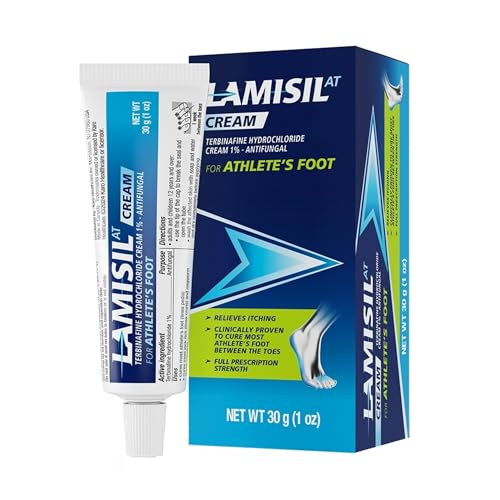
Lamisil AT (Terbinafine 1%) - Best for Fastest Complete Clearance
Lamisil AT is the top-recommended OTC antifungal for ringworm due to its fungicidal mechanism-it kills the fungal organism rather than simply inhibiting its growth. Terbinafine works by interfering with ergosterol synthesis in fungal cell membranes, causing direct cell death. For body ringworm, apply once or twice daily for just 1 to 2 weeks; most infections clear completely within this short course. The cream is absorbed into the skin quickly, leaving a non-greasy finish suitable for use under clothing. Its short treatment duration and high success rate make it the default first choice for most healthy adults.
Check price on Amazon →Compare five antifungal creams proven to eliminate ringworm infections using clotrimazole, terbinafine, and miconazole, with guidance on treatment duration and when to see a doctor.
Ringworm (tinea corporis) is not actually caused by a worm but by a group of fungi called dermatophytes that infect the outer layer of skin, forming the characteristic red, ring-shaped rash. It is highly contagious and can spread through skin contact, shared surfaces, and contact with infected animals. The good news is that ringworm is effectively treated with topical antifungal creams available over the counter. In 2026, five products stand out for their speed, efficacy, and ease of use in clearing ringworm at home.
| Product | Best For | Key Ingredient |
| — | — | — |
| Lamisil AT (Terbinafine 1%) | Fastest clearance, body ringworm | Terbinafine HCl 1% |
| Lotrimin Ultra (Butenafine 1%) | Persistent or resistant infections | Butenafine HCl 1% |
| Clotrimazole Cream (Generic) | Budget-friendly, mild infections | Clotrimazole 1% |
| Miconazole Nitrate Cream | Multi-site and skin fold ringworm | Miconazole nitrate 2% |
| Tolnaftate Cream (Tinactin) | Mild infections, sensitive skin | Tolnaftate 1% |
How we picked
We compare every pick against the field on real specifications, certifications, and aggregated owner reviews. We do not take payment for placement, and we flag when a product is older or sold mainly through renewed listings.
Top picks compared
| Pick | Best for | Score | |
|---|---|---|---|
| Lamisil AT (Terbinafine 1%) - Best for Fastest Complete Clearance | Check price | ||
| Lotrimin Ultra (Butenafine 1%) - Best for Persistent or Resistant Infections | Check price | ||
| Clotrimazole 1% Cream (Generic) - Best Budget Option for Mild Ringworm | Check price | ||
| Miconazole Nitrate 2% Cream - Best for Skin Fold and Multi-Site Ringworm | Check price | ||
| Tolnaftate Cream (Tinactin) - Best for Sensitive Skin and Mild Cases | Check price |
Our picks up close
Lamisil AT (Terbinafine 1%) - Best for Fastest Complete Clearance
Lamisil AT is the top-recommended OTC antifungal for ringworm due to its fungicidal mechanism-it kills the fungal organism rather than simply inhibiting its growth. Terbinafine works by interfering with ergosterol synthesis in fungal cell membranes, causing direct cell death. For body ringworm, apply once or twice daily for just 1 to 2 weeks; most infections clear completely within this short course. The cream is absorbed into the skin quickly, leaving a non-greasy finish suitable for use under clothing. Its short treatment duration and high success rate make it the default first choice for most healthy adults.
Lotrimin Ultra (Butenafine 1%) - Best for Persistent or Resistant Infections
Lotrimin Ultra uses butenafine hydrochloride, a benzylamine antifungal with a broader spectrum than older imidazole-class drugs. Like terbinafine, it is fungicidal rather than fungistatic, making it effective against infections that have not responded to clotrimazole or miconazole alone. Apply once daily for two weeks; the longer contact time needed versus terbinafine is offset by the once-a-day convenience. Butenafine has particularly strong activity against dermatophytes-the exact fungal group responsible for ringworm-making Lotrimin Ultra a reliable alternative or step-up when first-line creams fail to clear the ring fully.
Clotrimazole 1% Cream (Generic) - Best Budget Option for Mild Ringworm
Clotrimazole is a well-established imidazole antifungal available generically at a fraction of brand-name prices. It works by inhibiting ergosterol synthesis, disrupting the fungal cell membrane and preventing growth and reproduction. Applied twice daily for 2 to 4 weeks, it reliably clears mild to moderate ringworm cases. Generic versions are widely available in every pharmacy and big-box retailer and are bioequivalent to branded products like Lotrimin AF. For anyone managing a straightforward first ringworm infection with no signs of treatment resistance, generic clotrimazole cream is the most cost-effective starting point.

Miconazole Nitrate 2% Cream - Best for Skin Fold and Multi-Site Ringworm
Miconazole nitrate 2% is particularly effective for ringworm that develops in warm, moist skin folds-between toes, under the arms, under the breasts, or in the groin area-where fungi thrive in the trapped moisture. Its mechanism matches clotrimazole but the 2% concentration provides slightly stronger activity for damp-environment infections. Many formulations include a soothing zinc oxide base that helps manage the irritation and moisture common in skin-fold infections. Apply twice daily; most infections respond within 2 to 3 weeks. Available generically under many brand names including Zeasorb and Cruex, often in combined powder-cream formulas for folds.
Tolnaftate Cream (Tinactin) - Best for Sensitive Skin and Mild Cases
Tolnaftate has been used as an antifungal since the 1960s and remains a trusted option for mild ringworm infections, particularly for users with sensitive skin who may experience irritation from newer azole or allylamine antifungals. While it is fungistatic (it stops growth rather than killing the fungus), consistent twice-daily application for 2 to 4 weeks effectively clears most mild body ringworm. Tolnaftate is well-tolerated on the face and other sensitive areas where terbinafine's stronger formulation may cause stinging. It is also one of the gentlest options for children's ringworm cases under medical guidance.
Before you buy
Fungicidal vs. fungistatic
- Terbinafine and butenafine kill the fungus directly (fungicidal) and work in 1 to 2 weeks; clotrimazole, miconazole, and tolnaftate inhibit growth (fungistatic) and require the full 2 to 4 week course. - **Complete the full course** - Stopping treatment when the ring disappears is the most common reason for recurrence; the fungus is still present in skin layers even after visible clearing. - **Hygiene control** - Wash all towels, pillowcases, and clothing in hot water during treatment; re-infection from contaminated fabric is extremely common and will prolong the infection cycle. - **When to see a doctor** - If ringworm on the scalp (tinea capitis), nails, or face does not respond to 4 weeks of topical treatment, or spreads despite treatment, oral antifungal medication is required.
The wrap-up
Lamisil AT with terbinafine 1% remains the fastest and most effective OTC cream to get rid of ringworm in 2026, typically clearing infections in one to two weeks. For budget-conscious users with mild infections, generic clotrimazole delivers reliable results at a fraction of the cost. Whichever cream you choose, finishing the full treatment course and maintaining strict hygiene are the two most important factors in a
Quick answers
Most OTC antifungal creams clear ringworm within 2 to 4 weeks of consistent twice-daily application. Terbinafine (Lamisil) typically clears infections in 1 to 2 weeks due to its fungicidal action. Continue applying for the full recommended course even after the ring disappears, as stopping early is the leading cause of ringworm recurrence.
Terbinafine hydrochloride 1% (Lamisil AT) is considered the strongest OTC antifungal cream for ringworm. Unlike fungistatic agents that just stop fungal growth, terbinafine is fungicidal - it kills the fungus directly. Most ringworm infections clear completely with 1 to 2 weeks of daily terbinafine application, faster than any other OTC alternative.
Yes, ringworm remains contagious until the infection has visibly cleared and treatment is complete. Avoid sharing towels, clothing, or bedding during active treatment. Cover the affected area with loose breathable clothing when in contact with others. Wash hands thoroughly after applying cream. The infection risk reduces significantly after 48 hours of consistent antifungal treatment.