Quick verdict
For professional mechanics, the creeper is an all-day tool - not an occasional accessory. The Omega Lift and Whiteside represent the best in class for daily shop use, with the Torin Big Red as an excellent middle-ground option. Choose your profile height based on the vehicles you service most, prioritize sealed caster bearings and high-density padding, and invest in a capacity rating that leaves meaningful headroom a
Omega Lift Professional Creeper
The Omega Lift professional creeper consistently earns top marks from working mechanics for one simple reason: it doesn't cut corners where it matters. The steel frame uses heavier-gauge tube construction compared to budget models, and the six casters use sealed bearings that roll smoothly on raw concrete without catching or wobbling. The 2.5-inch high-density foam pad maintains its shape through extended use and resists oil and chemical absorption common in shop environments. The adjustable headrest accommodates mechanics of different heights. For a professional shop, this is the standard against which other creepers are measured.
Professional mechanics need creepers that survive daily shop use - heavy frames, durable casters, and padding that holds up over thousands of hours. These five deliver.
A mechanic’s creeper is one of those tools that gets used every single day and is only noticed when it fails – when a caster catches, when the padding bottoms out, or when the frame deflects under load. Professional mechanics in production shops put their creepers through punishment that would destroy a consumer-grade product within months. The five creepers below are selected for professionals who need durability, smooth rollout, and genuine comfort over full eight-to-ten-hour workdays.
Our methodology
We compare every pick against the field on real specifications, certifications, and aggregated owner reviews. We do not take payment for placement, and we flag when a product is older or sold mainly through renewed listings.
Side by side
| Pick | Best for | Score | |
|---|---|---|---|
| Omega Lift Professional Creeper | 400 lb | Check price | |
| Whiteside Low-Profile Pro Creeper | 500 lb | Check price | |
| Torin Big Red Pro Creeper | 450 lb | Check price | |
| Pro-Lift Padded Mechanic Creeper | 400 lb | Check price | |
| Pittsburgh Automotive Low Profile Creeper | 350 lb | Check price |
The full reviews
Omega Lift Professional Creeper
The Omega Lift professional creeper consistently earns top marks from working mechanics for one simple reason: it doesn't cut corners where it matters. The steel frame uses heavier-gauge tube construction compared to budget models, and the six casters use sealed bearings that roll smoothly on raw concrete without catching or wobbling. The 2.5-inch high-density foam pad maintains its shape through extended use and resists oil and chemical absorption common in shop environments. The adjustable headrest accommodates mechanics of different heights. For a professional shop, this is the standard against which other creepers are measured.
Whiteside Low-Profile Pro Creeper
Whiteside's low-profile professional creeper is the choice for shops that work primarily on sports cars, lowered performance vehicles, or any build with limited undercarriage clearance. At 3 inches, it fits under vehicles that would bar entry to standard creepers, yet the 500 lb capacity means it handles heavier mechanics without flex. The steel construction is robust, the casters are large-diameter for smooth concrete roll, and the padded surface is firm enough to feel supportive rather than yielding. If your shop regularly services modified or imported performance vehicles, this is an essential tool.

Torin Big Red Pro Creeper
Torin's Big Red professional model is a shop staple across independent garages and dealership service centers alike. The 450 lb rated frame uses a classic six-caster design with smooth-rolling wheels that handle both sealed and unsealed concrete floors. The 4-inch profile and denser padding make it slightly more comfortable for longer sessions - brake, exhaust, and undercarriage work that keeps you on your back for 30-45 minutes at a stretch. The vinyl-covered pad surface resists oil and brake fluid and wipes down in seconds. The detachable headrest is a thoughtful feature for tight-clearance work.
Pro-Lift Padded Mechanic Creeper
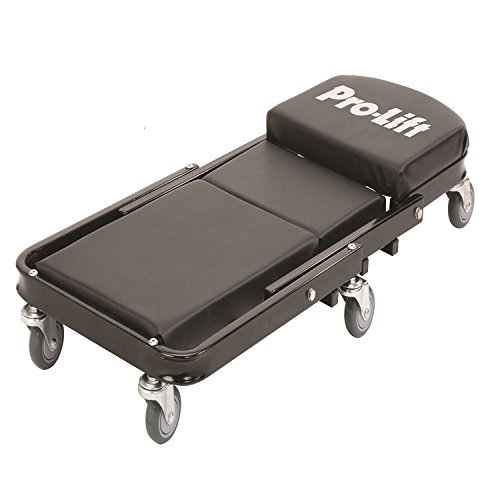
The Pro-Lift padded creeper positions itself as the best value in the professional category. It doesn't quite match the Omega Lift or Whiteside in raw build quality, but it offers a well-padded, 400 lb rated platform at a noticeably lower price point. Six casters roll quietly, the steel frame is solid for the price class, and the padded top is comfortable for most mechanics during standard-length jobs. It's an ideal second creeper for a busy two-bay shop, or a solid primary choice for a mechanic running a solo operation who wants professional features without the premium price.

Pittsburgh Automotive Low Profile Creeper
Pittsburgh Automotive's low-profile model is the budget pick for mechanics who need that 3-inch ground clearance without paying top-tier prices. The 350 lb capacity limits its appeal for heavier mechanics, but for average-build mechanics in light-duty or passenger-car focused shops, it delivers solid performance. The vinyl padded surface is comfortable for shorter jobs, and the six casters are nimble on smooth concrete. The main limitation is longevity - the casters and frame show wear faster than premium brands under daily shop use. For a home mechanic turned part-time professional or a shop apprentice, it offers good function at an accessible entry price.
What matters most
Frame gauge
Thicker steel means a heavier creeper but a far longer service life. In a production shop, a cheap thin-gauge frame will warp, crack, or deform within a year of daily use. Spend more on frame quality and you won't replace it for a decade.
Caster bearings
Sealed ball bearings in the casters are non-negotiable for professional use. Unsealed or plain-bore casters fill with metal filings and concrete dust, making them stiff and noisy within months. Look for "sealed bearings" in the product specs.
Padding construction
High-density foam or foam-composite padding holds its shape. Open-cell or low-density foam compresses to near-flat and stays that way. A creeper that starts comfortable and loses all cushioning within six months is a poor value regardless of initial price.
Profile height
Measure the lowest clearance vehicle in your bay. If you regularly work on sports cars or lowered trucks, choose a 3-3.5 inch profile. Standard shop vehicles (pickup trucks, SUVs, minivans) work fine with 4-4.5 inch profiles.
Chemical resistance
Shop floors are oily, and creeper surfaces contact brake fluid, transmission fluid, and degreaser regularly. Vinyl-coated pads resist chemical absorption far better than fabric-topped alternatives.
Our take
For professional mechanics, the creeper is an all-day tool - not an occasional accessory. The Omega Lift and Whiteside represent the best in class for daily shop use, with the Torin Big Red as an excellent middle-ground option. Choose your profile height based on the vehicles you service most, prioritize sealed caster bearings and high-density padding, and invest in a capacity rating that leaves meaningful headroom a
Frequently asked
Professional creepers use heavier-gauge steel frames, higher-grade swivel casters with sealed bearings, and denser padding that resists compression over thousands of hours. Consumer models use lighter frames and cheaper casters that wobble and flatten quickly under daily use. For a hobbyist doing occasional oil changes, a consumer model is fine. For a mechanic in a production shop, a professional-grade creeper pays for itself in comfort and longevity.
Most professional creepers sit between 3 and 4.5 inches off the ground. Lower-profile models (3-3.5 inches) are essential for sports cars, lowered vehicles, and tight engine bays. Higher-profile creepers with thicker padding may offer more comfort but limit access under certain vehicles. Many shops keep both a low-profile and a standard-height creeper for different jobs.
For long jobs - brake lines, exhaust work, suspension repairs - a padded headrest makes a meaningful difference in neck fatigue. Adjustable headrests that can be repositioned or removed are ideal since different mechanics and different tasks require different angles. Fixed headrests at the wrong height can actually cause more strain than no headrest at all, so adjustability matters.
You might also like
5 Best Creepers for Big Guys of 2026 | Heavy-Duty, Wide, and Built to Last
Best Cordless Impact Wrench for Lug Nuts of 2026

5 Best Creeper Wheels of 2026 | Upgrade Your Shop Creeper’s Roll

5 Best Complete Mechanics Tool Sets 2026 | Shop-Grade at Home
Best Cordless Impact Wrench for Changing Truck Tires of 2026

Best Cordless Inflator Pump of 2026

5 Best Mechanic Creepers of 2026 | Complete Buyer’s Guide