Quick verdict
For most crypto holders in 2026, the Ledger Nano X or Trezor Model T are the right answer - each offers industry-leading security, broad coin support, and a mature software ecosystem. Budget-conscious beginners should consider the Ledger Nano S Plus or Trezor Model One. Whatever you choose, set it up immediately, store your seed phrase in a secure physical location (never digitally), and move your assets off exchange
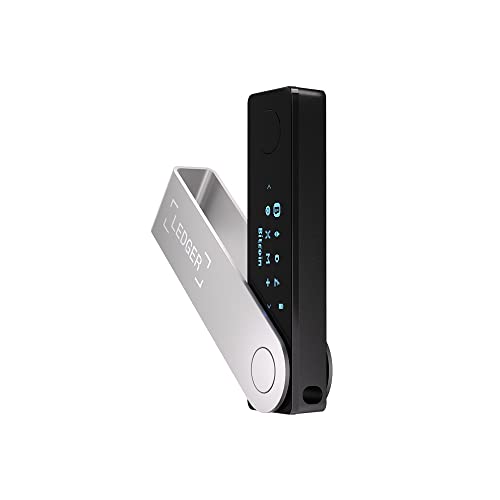
Ledger Nano X
The Ledger Nano X is the flagship hardware wallet from Ledger and the most popular choice for investors managing a multi-coin portfolio. It connects to your phone via Bluetooth in addition to USB-C, allowing you to manage assets through the Ledger Live mobile app without a computer. It supports over 5,500 cryptocurrencies and can store up to 100 apps simultaneously - each representing a different blockchain. The secure element chip (CC EAL5+ certified) keeps private keys isolated from the device's operating environment. Setup takes under 20 minutes for most beginners.
Your crypto is only as safe as your wallet. We compare the top hardware and software wallets of 2026 - from Ledger and Trezor to top mobile options - so you can store assets securely.
Not your keys, not your coins. This principle has been proven repeatedly as exchange hacks and platform insolvencies have cost investors billions. In 2026, whether you hold Bitcoin, Ethereum, or a portfolio of altcoins, using a proper wallet – hardware or software – is the baseline requirement for anyone serious about crypto security. Here are the five best crypto wallets available on Amazon and beyond.
Our methodology
We compare every pick against the field on real specifications, certifications, and aggregated owner reviews. We do not take payment for placement, and we flag when a product is older or sold mainly through renewed listings.
Side by side
| Pick | Best for | Score | |
|---|---|---|---|
| Ledger Nano X | Best all-round hardware wallet | Check price | |
| Trezor Model T | Open-source hardware security | Check price | |
| Ledger Nano S Plus | Budget hardware wallet | Check price | |
| Trezor Model One | Entry-level hardware security | Check price | |
| Coldcard Mk4 | Bitcoin-only maximum security | Check price |
The full reviews
Ledger Nano X
The Ledger Nano X is the flagship hardware wallet from Ledger and the most popular choice for investors managing a multi-coin portfolio. It connects to your phone via Bluetooth in addition to USB-C, allowing you to manage assets through the Ledger Live mobile app without a computer. It supports over 5,500 cryptocurrencies and can store up to 100 apps simultaneously - each representing a different blockchain. The secure element chip (CC EAL5+ certified) keeps private keys isolated from the device's operating environment. Setup takes under 20 minutes for most beginners.

Trezor Model T
The Trezor Model T is the premium offering from SatoshiLabs, and its defining feature is that both the hardware design and firmware are completely open-source - meaning security researchers worldwide can (and do) audit the code. The touchscreen interface makes navigation intuitive, and it supports over 1,000 coins and tokens. Trezor Suite, the desktop and web app, provides a clean portfolio overview and integrated exchange features. If you want a hardware wallet from a company that values transparency and verifiability above all else, Trezor Model T is the pick.

Ledger Nano S Plus
The Ledger Nano S Plus delivers the same secure element chip as the Nano X at roughly half the price, making it the best budget hardware wallet for beginners in 2026. The primary tradeoff is no Bluetooth - it connects via USB-C only - and the storage capacity allows fewer simultaneous coin apps. For investors who primarily hold Bitcoin, Ethereum, and a handful of major tokens, the Nano S Plus covers everything needed without the premium price. It uses the same Ledger Live software as the Nano X, so upgrading later is seamless.
Trezor Model One
The original Trezor - still in production and still a solid choice - the Model One offers Trezor's open-source security at the lowest hardware wallet price point on this list. It uses two physical buttons for navigation (no touchscreen) and connects via Micro-USB. Coin support is slightly narrower than the Model T, but it covers Bitcoin, Ethereum, and the vast majority of ERC-20 tokens that most users hold. For anyone who wants the Trezor open-source philosophy on a tight budget, the Model One delivers.
Coldcard Mk4
The Coldcard Mk4 is built for Bitcoin-only holders who want the highest possible security and are willing to accept a steeper learning curve to get it. It features air-gap signing capability (transactions can be signed on a completely offline device via SD card or NFC), a duress PIN that opens a decoy wallet, and a secure element with advanced anti-tampering features. The device is loved by self-custody maximalists and advanced users who treat Bitcoin storage as a long-term, high-stakes security problem. Not recommended for beginners, but unmatched for serious Bitcoin self-custody.
What matters most
security architecture
(secure element vs. general microcontroller), **coin support** (does it cover your specific holdings), **open-source firmware** (auditable code), **ease of recovery** (seed phrase backup process), and **company track record** (how have they responded to past vulnerabilities). Never buy a hardware wallet from a third-party seller on Amazon - always verify the package seal and check for tamper evidence on arrival.
Our take
For most crypto holders in 2026, the Ledger Nano X or Trezor Model T are the right answer - each offers industry-leading security, broad coin support, and a mature software ecosystem. Budget-conscious beginners should consider the Ledger Nano S Plus or Trezor Model One. Whatever you choose, set it up immediately, store your seed phrase in a secure physical location (never digitally), and move your assets off exchange
Frequently asked
A hardware wallet stores your private keys on a physical device offline, protecting them from internet-based attacks. A software wallet runs on your phone or computer and is more convenient but exposed to malware and phishing risks.
Both are excellent. Ledger offers a slightly more polished app experience and broader coin support, while Trezor is fully open-source hardware and firmware, which appeals to security-focused users who want to verify the code themselves.
For amounts under a few hundred dollars, a reputable software wallet may be sufficient. Once you hold assets you would be upset to lose, a hardware wallet's one-time cost of is well worth the security upgrade.

Tom Reeves has reviewed consumer electronics for over a decade, with a focus on televisions, monitors, laptops, and smart home devices. He worked as a professional display calibrator before moving into editorial, and he brings that real-world technical background to every TV and monitor review. At TheTestedHub, Tom covers display calibration, computer monitors, laptops and 2-in-1s, smart home platforms, home theater setups, and HDR performance.
You might also like
Westcott Rapid Box Switch Octa-S 26-Inch Review (2026): The

XP-PEN Artist Pro 16 Review (2026): The
Xbox Wireless Controller Carbon Black Review (2026): Still

Xbox Series X Console Review (2026): The 4K 120fps Console
WD Black SN850X 1TB Review 2026: The PCIe 4.0 Bargain

Wacom Cintiq Pro 16 Review (2026): The
Vizio MQX Series 50-Inch 4K Review (2026): The Sub- Quantum
