Quick verdict
Recreating Tampa's Cuban coffee culture at home is entirely achievable with a Bialetti 6-cup moka pot, a brick of La Llave or Pilon, and the willingness to practice the espuma technique a couple of times. The Ybor City tradition isn't locked behind a ventana counter - it lives in the ritual, and once you've made your first proper colada at home, you'll wonder why you waited.

Bialetti Moka Express (Cafetera)
The Bialetti Moka Express is the cafetera that made stovetop espresso a household ritual, and it remains the gold standard for Cuban coffee brewing at home. Its iconic eight-sided aluminum body brews under steam pressure, producing a concentrated, bold espresso that captures exactly the strength needed for café cubano and colada. Available in 3-cup and 6-cup sizes - the 6-cup is the right choice for making coladas to share.
Tampa's Cuban coffee culture runs deep - especially in Ybor City. Recreate that bold, sweet colada experience at home with the right gear and the right beans.
Tampa’s Cuban coffee tradition is one of the most distinctive food cultures in the American South. Rooted in the cigar-rolling factories of Ybor City, where Cuban, Spanish, and Italian immigrants created a neighborhood unlike any other in the country, the Cuban coffee ritual here isn’t just about caffeine – it’s about community. Street-side ventanas (windows) in Ybor City still serve tiny cups of café cubano and coladas to go, and locals will debate for hours about which spot makes it best.
The good news for home brewers is that recreating authentic Tampa-style Cuban coffee requires no expensive equipment – just the right moka pot (cafetera), the right coffee, and the technique for making espuma. This guide gives you everything you need to bring Ybor City to your kitchen.
Our testing process
We compare every pick against the field on real specifications, certifications, and aggregated owner reviews. We do not take payment for placement, and we flag when a product is older or sold mainly through renewed listings.
Quick comparison
| Pick | Best for | Score | |
|---|---|---|---|
| Bialetti Moka Express (Cafetera) | Traditional authentic brewing | Check price | |
| Café La Llave Espresso Brick | Authentic Tampa-style blend | Check price | |
| Cuban Espresso Colada Cup Set | Serving and sharing tradition | Check price | |
| Café Pilon Espresso Bricks | Classic Cuban roast for moka | Check price | |
| Stovetop Cuban Espresso Maker with Sugar Froth Guide | Check price |
Reviewed in detail
Bialetti Moka Express (Cafetera)
The Bialetti Moka Express is the cafetera that made stovetop espresso a household ritual, and it remains the gold standard for Cuban coffee brewing at home. Its iconic eight-sided aluminum body brews under steam pressure, producing a concentrated, bold espresso that captures exactly the strength needed for café cubano and colada. Available in 3-cup and 6-cup sizes - the 6-cup is the right choice for making coladas to share.
What we liked
- Authentic moka pot brewing method used in Cuban households for generations
- 6-cup size is ideal for making coladas for sharing
- Extremely durable - Bialetti moka pots routinely last 10-20 years
What we didn't like
- Aluminum construction requires hand washing - not dishwasher safe
- Takes practice to nail the espuma technique, but it's learnable in one session

Café La Llave Espresso Brick
Café La Llave is one of the most respected Cuban espresso blends available in the US, and it's the brand that feels most at home in an Ybor City context. The dark roast espresso is sold in vacuum-sealed bricks that preserve freshness, and the fine grind is perfectly matched to moka pot brewing. The flavor profile is bold and full-bodied with a natural sweetness that complements the espuma beautifully.
What we liked
- Finely ground and vacuum-sealed for maximum freshness
- Bold, full-bodied roast that produces authentic café cubano flavor
- Affordable price per serving makes daily brewing practical
What we didn't like
- Pre-ground only - no whole-bean option for those who prefer to grind fresh
- Dark roast is not for those who prefer lighter coffee profiles
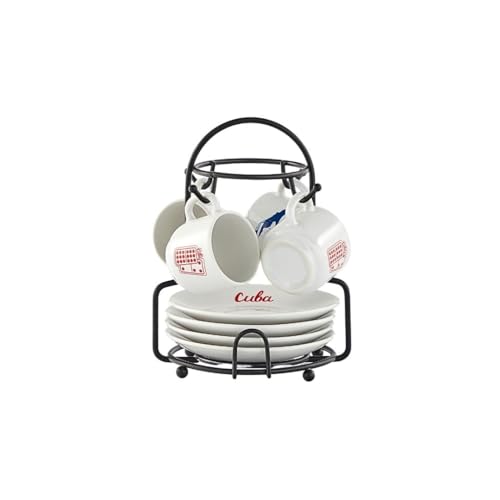
Cuban Espresso Colada Cup Set
A colada isn't just about the coffee - it's about the ritual of sharing. The traditional colada cup set includes one large styrofoam or ceramic cup for the brew and four to six small individual cups (tacitas) that guests fill from the large cup. Authentic sets mimic the presentation you'd receive at a Ybor City ventana, complete with the small paper cups or ceramic tacitas that hold a single espresso-size pour.
What we liked
- Recreates the communal colada-sharing tradition authentically
- Small tacitas control portion size and keep coffee hot longer
- Affordable and giftable for Cuban coffee enthusiasts
What we didn't like
- Ceramic sets require careful handling to avoid chipping small cups
- Purely a serving accessory - doesn't improve the coffee itself
Café Pilon Espresso Bricks
Café Pilon is the other half of the Tampa Cuban coffee canon. Like La Llave, it's a dark-roasted, finely ground espresso blend sold in vacuum-sealed bricks. Pilon's flavor profile skews slightly more bitter and intense than La Llave - some Tampa locals swear by Pilon for coladas specifically because its bolder base holds up better when sweetened with espuma and shared among a larger group.
What we liked
- Intense, bold flavor that holds up well when sweetened for coladas
- Vacuum-sealed brick preserves freshness effectively
- Strong community association with authentic Tampa and Miami Cuban coffee traditions
What we didn't like
- More intensely bitter than La Llave - may not suit all palates
- Pre-ground only
Stovetop Cuban Espresso Maker with Sugar Froth Guide
For those completely new to Cuban coffee, an all-in-one beginner bundle - typically a stovetop moka pot with an included sugar-froth guide or espuma instructions - is the most accessible entry point. These sets often include a compact aluminum or stainless cafetera, a measuring spoon, and a printed or illustrated guide for building the espuma, making the entire process approachable for first-timers.
What we liked
- Complete beginner setup with espuma technique guidance included
- Lower initial investment for those trying Cuban coffee for the first time
- All necessary components in one package
What we didn't like
- Build quality typically lower than dedicated moka pot brands like Bialetti
- Guide quality varies by seller - some are more helpful than others
How to choose
Moka pot size
3-cup for solo brewing, 6-cup for making coladas. The 6-cup produces enough volume to share in the traditional colada style.
Coffee grind
Cuban espresso requires a fine grind specifically designed for moka pot pressure. Standard drip grinds are too coarse - always use a coffee labeled "espresso grind" or "for moka pot."
The espuma technique
This is the difference between good Cuban coffee and authentic Cuban coffee. Whip 2-3 teaspoons of regular white sugar with the very first drops of coffee until the mixture is pale, creamy, and foam-like. Then pour the rest of the brew over it. The espuma will rise to the top and create that signature sweet, frothy layer.
Water temperature
Always start with cold water in the lower chamber. Don't pre-heat it - the slow build to boil is part of what creates the proper brew pressure in a moka pot.
The bottom line
Recreating Tampa's Cuban coffee culture at home is entirely achievable with a Bialetti 6-cup moka pot, a brick of La Llave or Pilon, and the willingness to practice the espuma technique a couple of times. The Ybor City tradition isn't locked behind a ventana counter - it lives in the ritual, and once you've made your first proper colada at home, you'll wonder why you waited.
Common questions
Tampa Cuban coffee - especially the colada style from Ybor City - is brewed stronger than standard espresso and sweetened with espuma, a frothy sugar paste created by whipping the first drops of brew with sugar until pale and creamy. The result is intensely bold, sweet, and uniquely smooth. It's served in small cups and shared socially, unlike individual espresso shots.
A colada is a large serving of Cuban espresso brewed in a cafetera (moka pot), poured into a large cup and accompanied by small individual cups for sharing. To make espuma, whip 2-3 teaspoons of sugar with the first few drops of espresso until a pale, creamy foam forms, then pour the rest of the brew over it and stir. Serve in small colada cups.
Café Pilon and Café La Llave are the two brands most associated with authentic Tampa Cuban coffee culture. Both are finely ground, darkly roasted espresso bricks designed for moka pot brewing. Café Bustelo is also widely used and respected, though La Llave and Pilon are the brands you'll most often find behind the counter in Ybor City cafes.
More guides

OXO Brew 8-Cup Coffee Maker Review (2026): The Programmable

Subminimal NanoFoamer V2 Review (2026)

Espro P7 32oz Review (2026): The Double-Filter French Press
Breville Barista Pro Review (2026): Faster Heat-Up Than the

Niche Zero Review (2026): The Single-Dose Conical Grinder

Bodum Chambord 8-Cup Review (2026): The Iconic French Press

Philips 3200 LatteGo Review (2026)
