Quick verdict
Voice recovery requires rest above all else, but the right supportive products - a quality throat coat tea, a hydrating spray, and demulcent lozenges - can meaningfully shorten your downtime. Combine these with steam inhalation, warm water with honey, and genuine vocal rest for the fastest return to full voice. If hoarseness persists beyond two weeks, see an ENT specialist to rule out vocal fold damage.
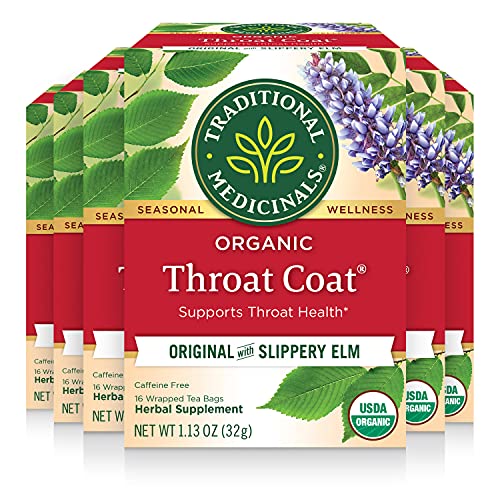
Traditional Medicinals Throat Coat Tea
Throat Coat is one of the most studied herbal teas for vocal support, built around a base of slippery elm bark, licorice root, and marshmallow root - all of which have demulcent properties that coat and soothe irritated mucosal tissue in the throat and larynx. A 2013 clinical study found it provided faster relief of throat discomfort than a placebo in patients with upper respiratory infections. Singers and voice actors have long relied on it as a daily maintenance drink during heavy performance periods.
Whether you're a singer, teacher, or just recovering from illness, these five products support vocal cord healing and help you get your voice back faster.
Medical Disclaimer: This article is for informational purposes only and does not constitute medical advice. Always consult a qualified healthcare provider before starting any treatment.
Losing your voice is more than an inconvenience – for performers, teachers, and professionals who rely on clear communication, it’s a genuine crisis. These five products are chosen specifically for the voice-recovery angle: supporting inflamed vocal cords, maintaining mucosal moisture, and easing the throat irritation that comes with laryngitis or vocal strain.
| Product | Best For | Key Feature |
| — | — | — |
| Traditional Medicinals Throat Coat Tea | Daily vocal membrane support | Slippery elm + licorice root blend |
| Entertainer’s Secret Throat Spray | Immediate vocal fold hydration | Glycerin-isotonic saline formula |
| Comvita Manuka Honey Lozenges | Soothing antimicrobial support | UMF-rated Manuka honey |
| Throat Rescue Herbal Spray | Broad herbal throat relief | Multi-herb blend with propolis |
| Nature’s Way Slippery Elm Lozenges | Mucous membrane coating | Slippery elm bark concentrate |
How we picked
We compare every pick against the field on real specifications, certifications, and aggregated owner reviews. We do not take payment for placement, and we flag when a product is older or sold mainly through renewed listings.
Top picks compared
| Pick | Best for | Score | |
|---|---|---|---|
| Traditional Medicinals Throat Coat Tea | Daily vocal membrane support | Check price | |
| Entertainer's Secret Throat Spray | Immediate vocal fold hydration | Check price | |
| Comvita Manuka Honey Lozenges | Soothing antimicrobial support | Check price | |
| Throat Rescue Herbal Spray | Broad herbal throat relief | Check price | |
| Nature's Way Slippery Elm Lozenges | Mucous membrane coating | Check price |
Our picks up close
Traditional Medicinals Throat Coat Tea
Throat Coat is one of the most studied herbal teas for vocal support, built around a base of slippery elm bark, licorice root, and marshmallow root - all of which have demulcent properties that coat and soothe irritated mucosal tissue in the throat and larynx. A 2013 clinical study found it provided faster relief of throat discomfort than a placebo in patients with upper respiratory infections. Singers and voice actors have long relied on it as a daily maintenance drink during heavy performance periods.
Where it shines
- Evidence-supported herbal formula, not just folk remedy
- Warming and palatable - easy to drink multiple cups per day
Where it falls short
- Contains licorice root, which can interact with blood pressure medications
Entertainer's Secret Throat Spray
Entertainer's Secret is the go-to backstage spray for vocalists and public speakers because its isotonic glycerin-saline formula directly mimics the aqueous layer that keeps vocal folds vibrating cleanly. Unlike numbing sprays that mask symptoms, this product hydrates the surface tissue without anesthetics, making it safe to use immediately before speaking or performing. A few sprays to the back of the throat provide 20-30 minutes of noticeable comfort and smoother voice production.
Where it shines
- Non-numbing - safe immediately before vocal use
- Travel-sized bottle fits in any bag or pocket
Where it falls short
- Effect duration is relatively short; needs reapplication
Comvita Manuka Honey Lozenges
Manuka honey has well-documented antimicrobial and anti-inflammatory properties driven by its high methylglyoxal (MGO) content. Comvita's UMF-rated lozenges deliver a measured dose of authentic New Zealand Manuka honey in a slow-dissolving form that maximizes contact time with the throat tissue. This makes them particularly effective during the viral phase of voice loss, where reducing localized inflammation helps the vocal cords heal faster. The honey also naturally coats and lubricates on contact.
Where it shines
- Genuine UMF-certified Manuka honey - not a diluted blend
- Pleasant taste makes consistent use easy
Where it falls short
- Premium price compared to generic honey lozenges
Throat Rescue Herbal Spray
Throat Rescue combines several herbal extracts - including echinacea, propolis, and sage - into a broad-action spray that targets both the immune and inflammatory aspects of throat and voice problems. Propolis in particular has shown antibacterial and antiviral activity in research settings. The spray format delivers active ingredients directly to the back of the throat and soft palate, bypassing the digestive system for faster local effect.
Where it shines
- Broad herbal profile addresses multiple causes of throat irritation
- Propolis adds antimicrobial action beyond soothing alone
Where it falls short
- Stronger herbal taste that some users find intense
Nature's Way Slippery Elm Lozenges
Slippery elm bark contains mucilage - a gel-forming substance that coats the mucous membranes of the throat, esophagus, and stomach when moistened. Nature's Way packages this in a convenient lozenge that dissolves slowly, providing a prolonged protective film over irritated vocal and throat tissue. Unlike numbing lozenges, there are no side effects that would impair voice quality, making these ideal for use throughout the day when you need sustained relief.
Where it shines
- Pure mucilage action - very gentle, no synthetic additives
- Safe for frequent use throughout the day
Where it falls short
- Mild flavor may be underwhelming for those expecting a medicated sensation
Before you buy
Demulcent ingredients
Slippery elm, marshmallow root, and glycerin are the key actives for coating and protecting vocal cord tissue - prioritize products that list these prominently. - **Avoid numbing agents for performers:** Benzocaine and menthol-heavy products mask pain but don't heal the vocal cords, and they can prevent you from sensing when you're overstraining. - **Hydration format:** Teas and sprays reach the larynx more directly than capsules or pills. For acute voice loss, liquid and spray formats work faster. - **UMF rating on Manuka honey:** Don't buy unlabeled "Manuka-style" honey products - only UMF-certified honey guarantees the active MGO levels that drive the therapeutic effect.
The wrap-up
Voice recovery requires rest above all else, but the right supportive products - a quality throat coat tea, a hydrating spray, and demulcent lozenges - can meaningfully shorten your downtime. Combine these with steam inhalation, warm water with honey, and genuine vocal rest for the fastest return to full voice. If hoarseness persists beyond two weeks, see an ENT specialist to rule out vocal fold damage.
Quick answers
Most cases of voice loss from vocal strain or a virus resolve within 3-7 days with proper rest and hydration. Continuing to whisper or strain the voice delays healing significantly. Herbal remedies like slippery elm and throat coat teas help soothe inflamed vocal folds and maintain mucosal moisture, which shortens recovery time noticeably compared to no treatment at all.
'No - whispering actually strains the vocal cords more than soft, natural speech. Whispering forces the vocal folds into an abnormal adduction pattern, creating friction that worsens inflammation. The best approach is complete vocal rest: communicate through text or writing when possible, stay hydrated, and use throat-soothing products to reduce irritation while the tissue heals.'
Look for sprays containing glycerin, aloe vera, or hyaluronic acid - these coat and hydrate the vocal fold mucosa directly. Slippery elm, marshmallow root, and licorice root are herbal ingredients with long traditions of use for throat membrane support. Entertainer's Secret, for example, uses an isotonic saline and glycerin base specifically formulated to replicate the natural moisture layer over the vocal cords.