Quick verdict
Crank-out windows don't have to mean curtain-free rooms - they just require a bit more planning on the mounting strategy. A tension rod for renters or quick installs, adhesive brackets for a more permanent no-drill solution, or café-style top mounting for kitchens where partial coverage is the goal. Any of these approaches keeps the crank mechanism accessible while adding privacy and style to your casement windows.
Inside-Mount Tension Rod 18-28"
A spring tension rod fitted inside the window frame is the most accessible solution for crank-out windows. Mount it in the upper third of the frame - above the crank path - and pair with a lightweight rod-pocket panel. No drilling, no hardware, and it installs or removes in seconds. Extend range to 18-28" fits most standard casement widths.
Casement and crank-out windows make standard curtain rod placement impossible. These mounting solutions let you add curtains without interfering with the crank mechanism or the window's operation.
Crank-out (casement) windows are popular for their excellent ventilation, but they present a unique curtain challenge: the crank handle lives at the bottom of the frame right where a standard rod mount would go, and the window swings outward – which means a curtain panel mounted too close will tangle in the mechanism. The solutions below work around these constraints without sacrificing style. | Product | Mounting Type | Best For |
| — | — | — |
| Inside-Mount Tension Rod 18-28″ | Tension/no-drill | Zero-damage installation |
| Magnetic Snap-On Window Panel Curtain | Magnetic frame clip | Metal-frame casement windows |
| No-Drill Adhesive Side Bracket Curtains | Adhesive bracket | Rental-safe installation |
| Café Curtain with Rod Pocket (Top-Mount) | Wall-mounted above crank | Partial window coverage |
| Sash Rod 16-28″ (Low-Profile) | Narrow inside-mount | Very shallow window frames |
How we test
We compare every pick against the field on real specifications, certifications, and aggregated owner reviews. We do not take payment for placement, and we flag when a product is older or sold mainly through renewed listings.
At a glance
| Pick | Best for | Score | |
|---|---|---|---|
| Inside-Mount Tension Rod 18-28" | Tension/no-drill | Check price | |
| Magnetic Snap-On Window Panel Curtain | Magnetic frame clip | Check price | |
| No-Drill Adhesive Side Bracket Curtains | Adhesive bracket | Check price | |
| Café Curtain with Rod Pocket (Top-Mount) | Wall-mounted above crank | Check price | |
| Sash Rod 16-28" (Low-Profile) | Narrow inside-mount | Check price |
The picks, reviewed
Inside-Mount Tension Rod 18-28"
A spring tension rod fitted inside the window frame is the most accessible solution for crank-out windows. Mount it in the upper third of the frame - above the crank path - and pair with a lightweight rod-pocket panel. No drilling, no hardware, and it installs or removes in seconds. Extend range to 18-28" fits most standard casement widths.
Reasons to buy
- Zero drilling - ideal for renters or trim you don't want to puncture
- Installs in seconds with no tools
- Works with any rod-pocket curtain panel
Reasons to avoid
- Limited weight capacity - only suitable for lightweight panels
- Can slip with heavier blackout fabrics
- Not as visually polished as mounted hardware
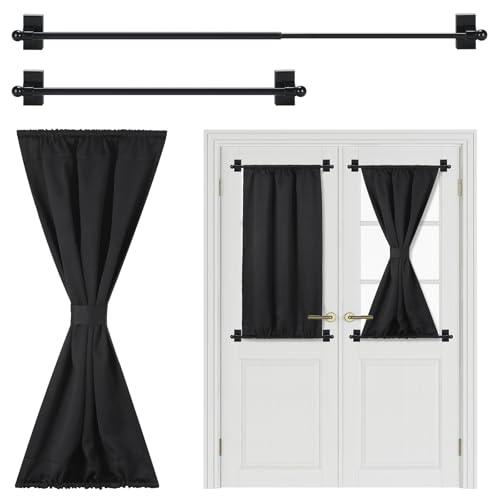
Magnetic Snap-On Window Panel Curtain
For casement windows with metal frames - common in mid-century and industrial-style homes - magnetic curtain clips or snap-on magnetic panels attach directly to the frame without any hardware at all. The magnets hold firmly enough for lightweight to medium panels while releasing easily when you need to open the window.
Reasons to buy
- Completely hardware-free on metal-frame windows
- Easy to remove when opening the window
- Clean, minimal visual profile on the frame
Reasons to avoid
- Only works on metal (ferrous) window frames
- Not suitable for heavier blackout panels
- Magnets can lose strength in cold temperatures
No-Drill Adhesive Side Bracket Curtains
Adhesive curtain rod brackets stick to the wall or window frame surround using heavy-duty mounting tape - no drilling required. These are the best solution for rental spaces or painted trim you don't want to damage. Mount the brackets above the window crank path on the frame or side wall, then hang a standard curtain panel on the rod.
Reasons to buy
- No-drill installation protects trim and walls
- Works with any standard curtain rod
- Removable without leaving visible damage when done correctly
Reasons to avoid
- Adhesive can pull paint if removed carelessly
- Maximum weight capacity is lower than screwed brackets
- Won't hold on textured walls or surfaces with existing wax/oil

Café Curtain with Rod Pocket (Top-Mount)
Café curtains cover only the lower half of the window, which is a smart solution for crank-out windows: mount a slim rod high on the wall above the frame entirely, and the café panel hangs freely without interfering with the crank at all. This approach is especially popular in kitchens with casement windows over the sink, providing privacy without blocking light from the upper panes.
Reasons to buy
- Panel hangs entirely above the crank mechanism - no interference
- Lets light in from upper window while providing lower-sill privacy
- Classic café style suits kitchens and breakfast nooks particularly well
Reasons to avoid
- Doesn't provide full window coverage for privacy-sensitive rooms
- Works best on windows with two distinct pane sections

Sash Rod 16-28" (Low-Profile)
Sash rods are very slim, low-profile curtain rods - typically 3/8" diameter - designed for shallow window frames where a standard rod would protrude too far. For crank-out windows with limited depth in the frame, a sash rod mounted just inside or just above the frame provides a tailored fit that keeps the curtain flat against the glass without the crank handle catching on a projecting rod.
Reasons to buy
- Very slim profile - fits tight frame spaces
- Suitable for shallow-depth window frames
- Lower cost than full curtain rod systems
Reasons to avoid
- Low weight capacity - lightweight panels only
- Limited to windows 16-28" wide without extension
- Very close to glass - curtain may absorb window condensation
What to look for
Measure the frame interior before buying a tension rod
Width varies significantly between casement window brands - measure inside the frame, not the rough opening. - **Mount above the crank path.** Whatever mounting method you choose, ensure the curtain rod sits above the travel path of the crank handle when the window is operated. - **Choose lightweight panels.** Tension rods, adhesive brackets, and sash rods all have lower weight limits than screwed hardware - stick with polyester or linen-look panels rather than heavy velvet. - **Consider how often you open the window.** If you open the casement daily, choose a solution that lets you quickly push the curtain aside - side-stacking panels or pull-back tiebacks help.
Our verdict
Crank-out windows don't have to mean curtain-free rooms - they just require a bit more planning on the mounting strategy. A tension rod for renters or quick installs, adhesive brackets for a more permanent no-drill solution, or café-style top mounting for kitchens where partial coverage is the goal. Any of these approaches keeps the crank mechanism accessible while adding privacy and style to your casement windows.
FAQs
'Yes, but standard rod placement won''t work - you can''t mount a rod inside the frame when the crank handle is in the way. The main approaches are: mounting an inside-mount tension rod in the upper half of the frame above the crank, mounting a rod on the wall above the window frame entirely, using café-style curtains that only cover the lower portion, or using no-drill adhesive bracket systems on the frame sides.'
A tension rod fitted inside the window frame is the easiest no-drill solution. It requires no hardware, no holes, and installs in seconds. Choose a tension rod that fits snugly in the upper section of your frame - above the crank mechanism - and pair it with a rod pocket panel or a lightweight café curtain for a clean result.
They can if mounted too close to the crank mechanism or too close to the window sash. The safest approach is to mount curtains high above the window - either on a rod near the ceiling or at the top of the wall section above the frame. When open, curtains stack to the sides well above the crank path and don't interfere with the window's outward swing.
Related guides

5 Best Curtain Materials of 2026 | Linen, Velvet, Silk & More Compared

5 Best Curtain Lengths for Bedroom of 2026 | Sleep Better, Style Better
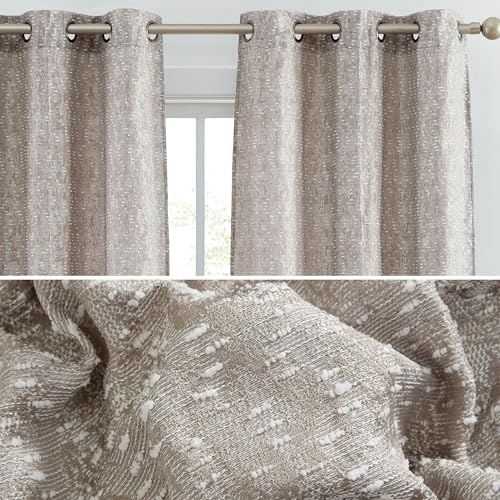
5 Best Curtain Fabrics for Living Room of 2026 | Style Meets Function
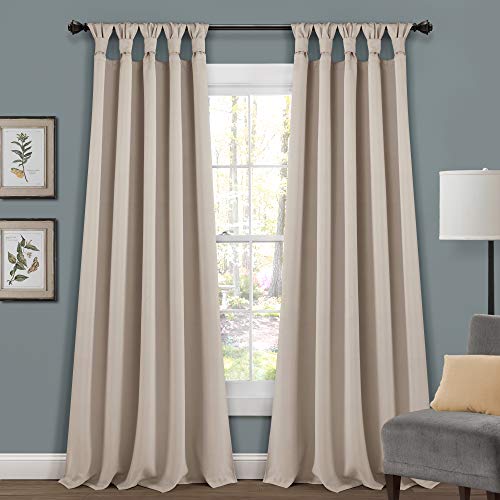
5 Best Curtains for Bedroom Windows of 2026 | Versatile Light-Filtering Picks

5 Best Curtain Fabrics of 2026 | Complete Buyer’s Guide

5 Best Curtains for 3 Windows in a Row of 2026 | Matching Sets That Look Intentional
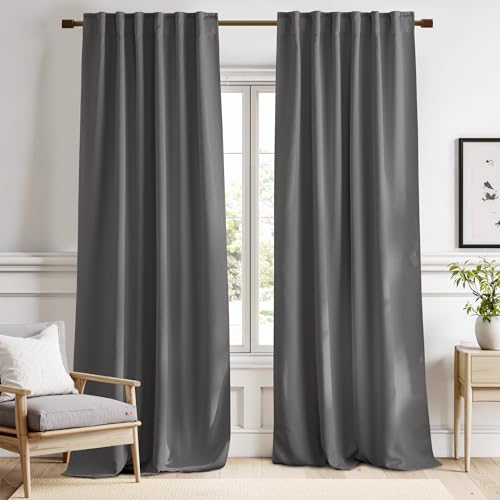
5 Best Curtains for Living Room of 2026 | Stylish Panels That Actually Perform
