Quick verdict
Traditional archery rewards patience, form, and equipment that works with your technique rather than compensating for it. For the serious archer who wants a lifetime bow, Bear Archery Super Kodiak is the choice. For beginners who want to grow into the sport, Samick Sage or Southwest Archery Spyder both deliver excellent value. For a true longbow experience, the Black Hunter delivers. For maximum affordability, the SA
Bear Archery Super Kodiak Recurve
Bear Archery's Super Kodiak is one of the most respected names in traditional recurve bowing, carrying a lineage that stretches back to Fred Bear himself. The Super Kodiak shoots smoothly across its draw weight range, feels balanced in the hand, and is built with the craftsmanship you expect from a bow designed to last decades rather than seasons. For archers who are serious about traditional shooting and want a bow worthy of the commitment, the Super Kodiak is the gold standard at this price level.
The best custom longbows for traditional archers in 2026 - from Bear Archery recurves to SAS wood longbows, find the right draw weight, length, and craftsmanship for your style.
Traditional archery has seen a steady resurgence as recurve and longbow shooting reconnect archers with the fundamentals of the sport – no sights, no stabilizers, just instinctive aim and clean form. Whether you are a first-time traditional archer or upgrading from a beginner bow to something with real craftsmanship behind it, these five bows represent the best options available in 2026 across a range of draw weights, lengths, and price points.
| Product | Best For | Key Feature |
| — | — | — |
| Bear Archery Super Kodiak Recurve | Serious traditional archers | Classic recurve design, smooth draw |
| Samick Sage Takedown Recurve | Beginner to intermediate | Takedown design, wide limb availability |
| Southwest Archery Spyder Takedown | Value-focused buyers | Affordable, solid beginner performance |
| Black Hunter Traditional Longbow | Traditional longbow feel | Straight limb longbow design |
| SAS Courage Traditional Wood Longbow | Budget entry | Wooden traditional aesthetic, affordable |
How we picked
We compare every pick against the field on real specifications, certifications, and aggregated owner reviews. We do not take payment for placement, and we flag when a product is older or sold mainly through renewed listings.
Top picks compared
| Pick | Best for | Score | |
|---|---|---|---|
| Bear Archery Super Kodiak Recurve | Serious traditional archers | Check price | |
| Samick Sage Takedown Recurve | Beginner to intermediate | Check price | |
| Southwest Archery Spyder Takedown | Value-focused buyers | Check price | |
| Black Hunter Traditional Longbow | Traditional longbow feel | Check price | |
| SAS Courage Traditional Wood Longbow | Budget entry | Check price |
Our picks up close
Bear Archery Super Kodiak Recurve
Bear Archery's Super Kodiak is one of the most respected names in traditional recurve bowing, carrying a lineage that stretches back to Fred Bear himself. The Super Kodiak shoots smoothly across its draw weight range, feels balanced in the hand, and is built with the craftsmanship you expect from a bow designed to last decades rather than seasons. For archers who are serious about traditional shooting and want a bow worthy of the commitment, the Super Kodiak is the gold standard at this price level.

Samick Sage Takedown Recurve
The Samick Sage has become the most recommended beginner and intermediate recurve bow in the traditional archery community, and it earns that reputation through consistent quality and the flexibility of its takedown design. Replacing or upgrading limbs to a higher draw weight is a matter of a few minutes and no special tools, which makes the Sage a bow that grows with you rather than one you quickly outgrow. The riser is solid and comfortable, and the bow shoots reliably at ranges from 10 to 40 yards.
Southwest Archery Spyder Takedown
Southwest Archery's Spyder Takedown competes directly with the Samick Sage at a similar price point and comes in slightly ahead on affordability. The riser is available in multiple lengths and the bow is compatible with standard ILF limbs, opening up a wide aftermarket for customization beyond what the manufacturer offers. It is a capable and honest beginner recurve that performs well out of the box and rewards investment in quality arrows and consistent practice.
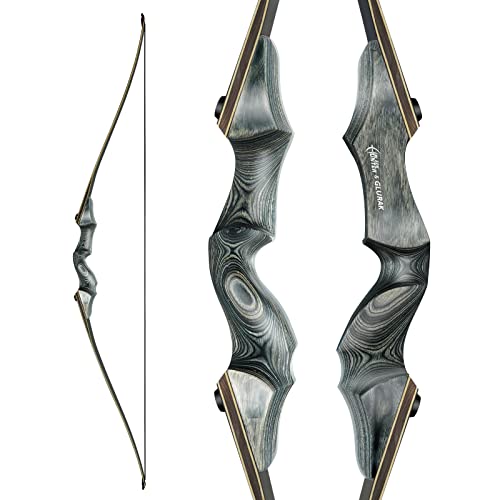
Black Hunter Traditional Longbow
For archers who want the distinct feel and aesthetic of a true longbow rather than a recurve, the Black Hunter delivers an authentic experience at a reasonable price. The straight-limb longbow design requires more physical commitment from the archer - there is no recurve tip geometry to help you - but it rewards that commitment with a deeply satisfying shooting experience that many traditional archers describe as the most connected to the sport's roots. It is available in a range of draw weights suitable for both target shooting and hunting.
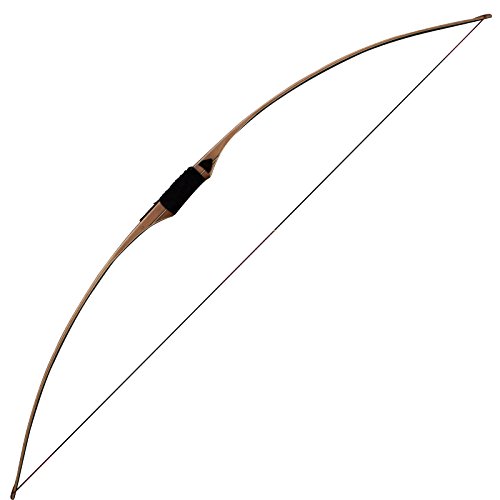
SAS Courage Traditional Wood Longbow
The SAS Courage is the most affordable entry point on this list and makes a strong case as a first longbow for archers who want to try traditional shooting before investing in premium gear. The wooden construction gives it a classic appearance, and it shoots capably at beginner draw weights. It is not a bow you will shoot competitively or take deer hunting at 50 pounds, but as a learning tool and backyard target bow it delivers honest performance for its price.
Before you buy
Draw weight
Match draw weight to your intended use - 20-35 lbs for target practice and beginners, 40-55 lbs for small game and deer hunting. Never start too heavy.
Bow length
Longer bows (64-68 inches) are more forgiving of form errors and better for taller archers. Shorter bows are more maneuverable in field settings.
Takedown vs. one-piece
Takedown bows allow limb replacement and easier transport. One-piece bows often have a more refined draw feel but are less upgradeable.
Arrow spine matching
Arrow spine (stiffness) must be matched to your draw weight and arrow length. Using mismatched arrows is the most common cause of inconsistent accuracy in traditional archery.
The wrap-up
Traditional archery rewards patience, form, and equipment that works with your technique rather than compensating for it. For the serious archer who wants a lifetime bow, Bear Archery Super Kodiak is the choice. For beginners who want to grow into the sport, Samick Sage or Southwest Archery Spyder both deliver excellent value. For a true longbow experience, the Black Hunter delivers. For maximum affordability, the SA
Quick answers
Most archery coaches recommend beginners start between 20 and 35 pounds draw weight. This range is light enough to build proper form and muscle memory without strain, while still being sufficient for target practice and small game hunting. You can always move up in draw weight as your strength and technique improve. Starting too heavy is one of the most common beginner mistakes in traditional archery.
A traditional longbow has a straight or slightly curved limb profile and a single-curve shape when unstrung. A recurve bow has limbs that curve away from the archer at the tips, which stores and delivers energy more efficiently, producing higher arrow speeds from the same draw weight. Recurves are generally more compact and forgiving. Both are widely used in traditional archery and hunting applications.
Yes, traditional longbows and recurves are legal for deer hunting in most US states during archery seasons. Most hunting regulations require a minimum draw weight - typically 40 to 45 pounds - for big game. A 45 to 55 pound recurve or longbow with properly matched arrows and sharp broadheads is fully capable of ethical deer hunting at traditional archery distances of 20 to 30 yards.


