Quick verdict
Ruby cut selection is ultimately driven by the specific stone and its intended use. For engagement rings where color impact is the primary goal, oval and cushion cuts are the professional recommendation. For maximum brilliance in solitaires and studs, round brilliant is the correct choice despite its per-carat premium. Cabochon is the only choice for displaying the star effect that makes asterism rubies so extraordin
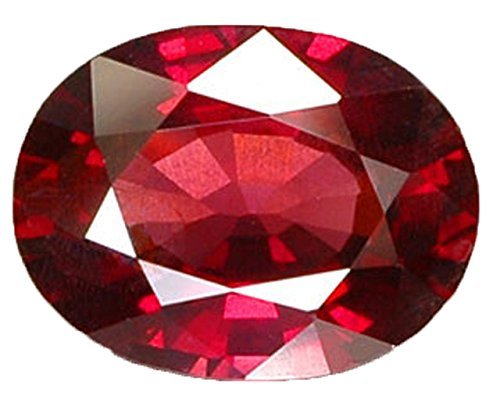
Oval Cut Ruby - Best for Maximizing Red Color Depth in a Flattering Elongated Sh
The oval cut is the preferred choice of most fine ruby dealers and gemological experts when they want to maximize a stone's visual color saturation. The elongated shape concentrates light through the stone's depth axis, allowing the chromium-driven red color to saturate the viewer's eye more intensely than a rounder cut at the same carat weight. Oval cuts also preserve significantly more of the original rough crystal compared to round brilliant cuts - an important factor when working with fine Burmese or Mozambique rubies that command high per-carat prices. In a four or six-prong setting, an oval ruby is simultaneously elegant and practical.
Check price on Amazon →The cut you choose for a ruby dramatically affects its color depth, brilliance, and how well it wears in a setting. These five cuts each serve a different purpose in ruby jewelry.
Ruby is one of the four precious gemstones, and its intense red color – driven by chromium within the corundum crystal structure – responds to faceting decisions in ways that other colored gems do not. The cut not only determines brilliance and shape, but directly influences how the stone’s color is perceived, how much of the original rough is retained, and whether natural optical phenomena like asterism can be preserved. These five cuts represent the most important options for anyone purchasing or setting a ruby in 2026.
Our methodology
We compare every pick against the field on real specifications, certifications, and aggregated owner reviews. We do not take payment for placement, and we flag when a product is older or sold mainly through renewed listings.
Side by side
| Pick | Best for | Score | |
|---|---|---|---|
| Oval Cut Ruby - Best for Maximizing Red Color Depth in a Flattering Elongated Sh | Check price | ||
| Cushion Cut Ruby - Best for Vintage-Style Settings with Exceptional Color Satura | Check price | ||
| Round Brilliant Ruby - Best for Maximum Brilliance and Versatility in Solitaire | Check price | ||
| Cabochon Ruby - Best for Showcasing Natural Asterism (Star Effect) in Rubies | Check price | ||
| Pear Cut Ruby - Best for Elegant Pendant Drops and Elongating the Finger in Ring | Check price |
The full reviews
Oval Cut Ruby - Best for Maximizing Red Color Depth in a Flattering Elongated Sh
The oval cut is the preferred choice of most fine ruby dealers and gemological experts when they want to maximize a stone's visual color saturation. The elongated shape concentrates light through the stone's depth axis, allowing the chromium-driven red color to saturate the viewer's eye more intensely than a rounder cut at the same carat weight. Oval cuts also preserve significantly more of the original rough crystal compared to round brilliant cuts - an important factor when working with fine Burmese or Mozambique rubies that command high per-carat prices. In a four or six-prong setting, an oval ruby is simultaneously elegant and practical.
Cushion Cut Ruby - Best for Vintage-Style Settings with Exceptional Color Satura
The cushion cut - a square or rectangular shape with rounded corners and large, open facets - became the dominant fine gemstone cut before the round brilliant was optimized in the early 20th century, and it remains one of the most beautiful choices for rubies today. Its larger facets allow more of the stone's body color to show rather than reflecting light back as white flashes, which is precisely what you want in a deeply colored ruby. The cushion cut pairs naturally with halo, bezel, and antique-style settings, and produces a distinctly romantic, warm visual character that round brilliants do not replicate.
Round Brilliant Ruby - Best for Maximum Brilliance and Versatility in Solitaire
The round brilliant cut, with its 57 or 58 precisely calculated facets, produces more light return than any other cut geometry. In rubies, this translates to a stone that scintillates intensely - the characteristic red flashes against white light reflections. Round brilliant rubies are the most versatile cut for any setting style and the easiest to source in calibrated sizes for setting purposes. They command a premium per carat over other cuts because more rough material is lost during the cutting process, but for a solitaire ring or stud earring where maximum visual impact is the goal, round brilliant is the clear choice.
Cabochon Ruby - Best for Showcasing Natural Asterism (Star Effect) in Rubies
A cabochon ruby has a smooth, domed top with no facets - the oldest and most fundamental gemstone finishing technique predating faceting by thousands of years. For rubies, the cabochon cut serves a specific and irreplaceable purpose: it is the only way to display asterism, the optical phenomenon that creates a six-rayed star floating on the stone's surface when viewed under direct light. Star rubies - particularly from Myanmar and Thailand - are among the most prized cabochon gems in the world. Beyond star rubies, cabochon cutting is also used for rubies with significant inclusions that would be distracting in a faceted stone, allowing the gem's color rather than its clarity to be the focus.

Pear Cut Ruby - Best for Elegant Pendant Drops and Elongating the Finger in Ring
The pear cut - a teardrop silhouette with a rounded base tapering to a single point - is among the most graceful and distinctive shapes available for ruby gemstones. In pendant settings, the pointed tip naturally orients downward to create an elegant drop effect that catches light and movement beautifully. In ring settings, the point is traditionally oriented toward the fingernail, which visually elongates the finger. Pear-cut rubies require particular attention to setting design at the pointed tip, which is the stone's most vulnerable point and should always be protected by a prong. Choose a pear cut with symmetrical shoulders and a well-defined, sharp point for the most elegant finished appearance.
What matters most
Color is the dominant value factor for ruby
Unlike diamonds where cut grade drives value most directly, ruby value is primarily determined by color - specifically the saturation, hue, and tone of the red. "Pigeon blood" red (vivid, pure red with slight fluorescent glow) from Mogok, Myanmar commands the highest premiums. Mozambique rubies offer excellent color at more accessible prices. Thai rubies trend darker and more brownish-red. Whatever cut you choose, prioritize color quality above all else.
Clarity is secondary but relevant
Rubies almost always contain inclusions - called "jardin" (garden) in trade language. Some inclusions are acceptable and even expected; they can actually confirm natural origin. But inclusions that reach the surface and weaken structural integrity are concerning, especially in pear and oval cuts near the points. Eye-clean or nearly eye-clean rubies are rare and priced accordingly.
Fluorescence is a plus in ruby
Unlike diamonds where strong fluorescence is controversial, ruby fluorescence is generally desirable. Chromium causes most fine rubies to fluoresce strongly red under ultraviolet light, which intensifies the apparent color in sunlight. A ruby with strong red fluorescence will look more vivid outdoors than the same stone viewed under standard indoor lighting.
Certification matters
For any significant ruby purchase, request a certificate from GIA, AGL (American Gemological Laboratories), or Gübelin Gem Lab. These certificates verify natural origin, identify any heat treatment (which is standard and acceptable in the trade), and can confirm Burmese origin for stones that command a geographic premium.
Our take
Ruby cut selection is ultimately driven by the specific stone and its intended use. For engagement rings where color impact is the primary goal, oval and cushion cuts are the professional recommendation. For maximum brilliance in solitaires and studs, round brilliant is the correct choice despite its per-carat premium. Cabochon is the only choice for displaying the star effect that makes asterism rubies so extraordin
Frequently asked
The oval cut is the most popular shape for fine rubies, particularly in engagement rings and pendant settings. Its elongated form is flattering on the finger, and its facet arrangement maximizes the apparent depth of the ruby's red color saturation. Oval cuts also tend to retain more carat weight from the rough stone compared to round brilliant cuts, making them more cost-efficient per carat.
A star ruby displays asterism - a six-rayed star that appears to float on the surface of the stone under direct light. This optical phenomenon is caused by light reflecting off aligned rutile needle inclusions within the crystal. To display the star, a ruby must be cut en cabochon - a smooth, domed surface with no facets. Any faceting would disrupt the asterism and eliminate the star effect entirely.
Yes, cut has an unusually high impact on ruby color appearance because rubies have strong pleochroism - they show different colors (red vs. orangey-red or purplish-red) depending on the viewing angle. A skilled cutter orients the stone to display the most saturated, pure red through the table facet. Cut quality also affects the distribution of red fluorescence, which in fine rubies can dramatically intensify the apparent color in sunlight.