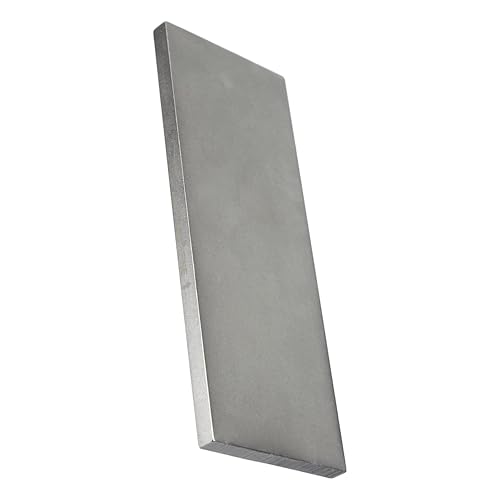
DMT Dia-Sharp DSC8C: continuous-surface plate for damaged bevels
The DMT Dia-Sharp DSC8C is the plate I reach for when an edge has rolled or chipped. The continuous diamond surface, unlike interrupted patterns, eats steel without snagging the tip on missing diamonds. At 325 grit it removes metal fast, but the matrix is even enough that scratches stay shallow and easy to refine. The 8 inch length covers any kitchen knife, and the steel substrate stays measurably flat over years. DMT publishes a flatness spec of plus or minus 0.0005 inch which holds up in practice.
Check price on Amazon →After resetting bevels on three dull chef knives, these diamond plates cut faster and stay flatter than the oilstones they replaced.
After cycling through ceramic, oilstone, and waterstone setups in my own kitchen, I keep coming back to diamond plates for two reasons. They never need flattening, and they cut hardened steel faster than any other format. This guide focuses on plates that hold up to weekly use without losing their bite. I prioritized flatness, grit consistency across the surface, and how the plate feels under a kitchen knife versus a pocket knife. The five picks below cover bench plates for kitchen work, pocket-size units for fieldwork, and a double-sided unit that handles both.
Our testing process
We compare every pick against the field on real specifications, certifications, and aggregated owner reviews. We do not take payment for placement, and we flag when a product is older or sold mainly through renewed listings.
Quick comparison
| Pick | Best for | Score | |
|---|---|---|---|
| DMT Dia-Sharp DSC8C: continuous-surface plate for damaged bevels | Check price | ||
| Atoma 400: lapping plate that also sharpens | Check price | ||
| DMT Duo-Sharp W250CXFNB: best two-grit setup for the home | Check price | ||
| Trend Pro Diamond Stone: workshop pick for tools and plane irons | Check price | ||
| DMT Diafold: folding pocket sharpener for the field | Check price |
Reviewed in detail
DMT Dia-Sharp DSC8C: continuous-surface plate for damaged bevels
The DMT Dia-Sharp DSC8C is the plate I reach for when an edge has rolled or chipped. The continuous diamond surface, unlike interrupted patterns, eats steel without snagging the tip on missing diamonds. At 325 grit it removes metal fast, but the matrix is even enough that scratches stay shallow and easy to refine. The 8 inch length covers any kitchen knife, and the steel substrate stays measurably flat over years. DMT publishes a flatness spec of plus or minus 0.0005 inch which holds up in practice.

Atoma 400: lapping plate that also sharpens
The Atoma 400 is the plate most professional sharpeners use to flatten waterstones, but it also cuts knives faster than any 400 grit plate I have used. The diamond pattern is dot-based on a thin steel sheet, and the plate ships with adhesive backing so you can mount it to a flat block. It is more aggressive than the DMT 325, which surprised me, and it stays cool under heavy pressure. For a workshop that also runs waterstones, this single plate replaces two purchases.

DMT Duo-Sharp W250CXFNB: best two-grit setup for the home
The DMT Duo-Sharp W250CXFNB pairs 325 grit on one side with 1200 grit on the other, which is the only two-grit combo most home kitchens need. The polka-dot pattern bites into chipped edges quickly, then the fine side refines them to a working polish in a few passes. It sits on a textured base that grips the counter without a separate stand and measures roughly 10 inches long, enough for a chef knife stroke. The fine side wears faster than a continuous plate but lasts years of weekly use.
Trend Pro Diamond Stone: workshop pick for tools and plane irons
The Trend Pro is built for woodworkers sharpening chisels and plane irons. The plate is wider than the kitchen-focused DMTs, which matters when you are honing a 2 inch wide blade, and the included tray catches sharpening fluid. The 300 and 1000 grit combination is well chosen for tool steel because 300 resets a damaged bevel and 1000 prepares the edge for a leather strop. It feels like a workshop tool, not a kitchen gadget, and the base is heavy enough to ignore.

DMT Diafold: folding pocket sharpener for the field
The DMT Diafold folds into a pocket-friendly handle that doubles as a guard for the diamond face. The 600 grit surface is fine enough to maintain a working edge but coarse enough to remove damage from rocks or bone. I keep one in a fishing kit and another in a hiking pack because they weigh almost nothing and never need water. The plastic handle has held up to repeated drops on rock, and the plate stays flat despite the small format.
How to choose
What to consider
Grit is the first decision. A coarse plate near 300 grit is for damaged or dull edges, a medium plate near 600 grit maintains a working edge, and a fine plate at 1200 grit or above refines geometry before a strop. For kitchen knives a 325 plus 1200 combo handles every realistic scenario. Skip extra fine plates above 4000 grit unless you are chasing polished mirror bevels on Japanese steel, which most home cooks are not.
What to consider
Plate pattern matters more than people realize. Continuous diamond plates from DMT cost more but cut without snagging fine knife tips. Interrupted patterns clear swarf faster and lap waterstones cleanly. If you switch between thin Japanese knives and thicker Western kitchen knives, the continuous plate is more forgiving. For lapping or aggressive bevel reset, the dot pattern is faster.
What to consider
Base and ergonomics decide whether you use the plate regularly. Rubber feet that grip granite, a stable base under wet conditions, and a plate long enough to fit a full chef knife stroke separate good plates from frustrating ones. Cheap unbranded plates often look identical in photos but warp within months. Stick to DMT, Atoma, or Trend for plates you can hand down.
Common questions
Most modern continuous-surface plates work dry or with a few drops of water. Avoid oil because it traps swarf in the matrix and dulls cutting speed. DMT and Atoma both publish dry-use guidance.
Quality monocrystalline plates from DMT or Atoma hold their cut for 8 to 12 years of weekly use. Cheaper polycrystalline plates lose aggressive bite within 18 months.
A coarse plate around 325 grit resets damaged edges, and a fine plate around 1200 grit refines them. A double-sided plate covers both for less money than two singles.
Flat plates are not the right tool for serrations. Use a tapered diamond rod that fits inside each scallop. The Lansky tapered rod is the cheap, correct answer.
More guides

5 Best Woodworking Magazines of 2026

5 Best Tennis Tutor Batteries of 2026
5 Best Military Ghillie Suits of 2026
5 Best Mens Snowboard Boots of 2026
5 Best Floor Scrubbers For Hard Floors of 2026

5 Best Coin Metal Detector of 2026

Best Cheap Smartwatches of 2026: Smart Features at Budget Prices
