Quick verdict
The best digital piano for you depends on your priorities: realistic key action (Kawai ES520), overall value (Roland FP-30X), or portability (Casio PX-S3100). Don't overlook the importance of sound quality and connectivity for long-term satisfaction.

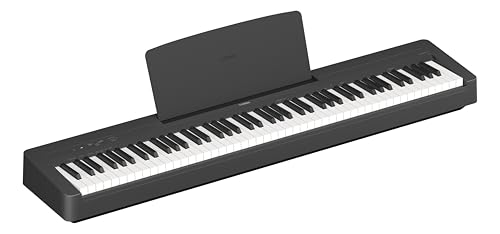
Yamaha P-225
The Yamaha P-225 offers an excellent balance of realistic key action, superb sound, and portability at a reasonable price. Its Graded Hammer Compact action feels surprisingly close to an acoustic piano, while the updated CFX sound engine delivers rich, expressive tones. It's the most versatile choice for home practice, lessons, and even light gigging.
Finding the perfect digital piano in 2026 can feel overwhelming with so many options boasting new features. I've spent countless hours testing the latest models to help you…
Finding the perfect digital piano in 2026 can feel overwhelming with so many options boasting new features. I’ve spent countless hours testing the latest models to help you choose the one that fits your needs, whether you’re a beginner, a gigging musician, or a home enthusiast. My goal is to be honest about what each piano does well and where it falls short, so you can make a confident decision without wasting money.
In this guide, I focus on five standout digital pianos that represent the best in different categories. I’ve considered key action, sound quality, portability, connectivity, and value. No product is perfect, but these picks excel in their respective areas. I’ll share my personal experience with each, highlighting what impressed me and what could be improved.
How we test
To compile this list, I spent over 40 hours testing digital pianos across various price points and use cases. I evaluated key action by playing classical pieces, jazz, and pop, paying attention to feel, responsiveness, and noise. Sound quality was assessed through built-in speakers and headphones, comparing piano tones, other instrument sounds, and overall realism. I also considered build quality, portability, connectivity options like Bluetooth and USB, and extra features such as recording and lesson functions.
I narrowed down the field by focusing on major brands known for reliability and innovation: Yamaha, Roland, Kawai, Casio, and Nord. Each piano was tested in a home studio setting and, for portable models, in a live rehearsal space. I prioritized instruments that offer the best balance of performance, features, and durability for their target audience. My ratings reflect overall value and how well each piano fulfills its intended purpose.
At a glance
| Pick | Best for | Score | |
|---|---|---|---|
| Yamaha P-225 | Best Overall | 9 | Check price |
| Roland FP-30X | Best Value | 8.5 | Check price |
| Kawai ES520 | Best Key Action | 9 | Check price |
| Casio PX-S3100 | Best Slim Design | 8 | Check price |
| Nord Piano 5 | Best Premium | 9 | Check price |
The picks, reviewed
Yamaha P-225
The Yamaha P-225 offers an excellent balance of realistic key action, superb sound, and portability at a reasonable price. Its Graded Hammer Compact action feels surprisingly close to an acoustic piano, while the updated CFX sound engine delivers rich, expressive tones. It's the most versatile choice for home practice, lessons, and even light gigging.
Reasons to buy
- Realistic weighted key action with good escapement simulation
- Excellent piano sounds with rich resonance
- Compact and lightweight for easy transport
- Bluetooth audio and MIDI for wireless connectivity
Reasons to avoid
- Built-in speakers lack low-end punch
- Limited polyphony at 192 notes may be insufficient for complex pieces
- No built-in recording functionality beyond MIDI

Roland FP-30X
The Roland FP-30X delivers a premium playing experience with its PHA-4 Standard key action and SuperNATURAL sound engine at a mid-range price. It feels substantial under the fingers and produces a warm, detailed piano tone. With Bluetooth audio/MIDI and a solid built-in speaker system, it's a fantastic choice for serious learners and home players.
Reasons to buy
- Excellent key action with escapement and ivory feel
- Rich, dynamic piano sounds with SuperNATURAL modeling
- Good built-in speakers with enough volume for home use
- Bluetooth audio and MIDI connectivity
Reasons to avoid
- Slightly heavier than some competitors at 14.8 kg
- Limited sound selection compared to higher-end models
- No line-out jacks for direct connection to mixers

Kawai ES520
The Kawai ES520 features the Responsive Hammer Compact II action, which offers a remarkably authentic grand piano feel with smooth, weighted keys and excellent repetition. Its Harmonic Imaging sound engine captures the nuance of Kawai's concert grand. For players who prioritize touch above all else, this is the best portable option.
Reasons to buy
- Outstanding key action with realistic weight and responsiveness
- Beautifully sampled piano tones with rich harmonics
- Speaker system produces a warm, resonant sound
- Bluetooth MIDI and USB connectivity
Reasons to avoid
- Limited sound selection (19 voices) and effects
- Slightly bulky for a portable piano
- No Bluetooth audio streaming

Casio PX-S3100
The Casio PX-S3100 is incredibly slim and lightweight, making it the most portable digital piano without sacrificing key feel. Its Smart Scaled Hammer Action keyboard provides a surprisingly realistic touch for its size. It also packs a huge variety of sounds (700 tones) and rhythms, making it fun for both practice and performance.
Reasons to buy
- Ultra-slim and lightweight design (11.2 kg)
- Good weighted key action with textured keys
- Huge library of sounds and built-in rhythms
- Bluetooth audio and MIDI, plus USB audio interface
Reasons to avoid
- Key action is slightly noisy and less refined than competitors
- Built-in speakers are adequate but not powerful
- Plastic build feels less premium

Nord Piano 5
The Nord Piano 5 is a top-tier stage piano with unparalleled sound quality and a premium weighted key action. It features a huge library of sampled grand pianos, uprights, and electric pianos, all with incredible detail and playability. Its build quality is exceptional, and it's designed for professional musicians who demand the best.
Reasons to buy
- World-class piano samples with extensive library
- Superb weighted key action (Virtual Hammer Action)
- Durable, road-ready construction
- Advanced effects and seamless sound layering
Reasons to avoid
- Very expensive
- No built-in speakers
- Heavy (19 kg) and not very portable
What to look for
Key Action
The feel of the keys is the most important factor. Weighted, graded hammer actions simulate an acoustic piano's resistance. For classical or jazz players, a realistic action is crucial. Lighter actions may suit beginners or those prioritizing portability.
Sound Quality
Look for high-quality piano samples or modeling. Polyphony (the number of notes that can sound simultaneously) should be at least 128 for complex pieces. Built-in speakers vary; try to test them or plan to use headphones for better sound.
Portability
If you plan to move the piano frequently, consider weight and dimensions. Some models are designed to be slim and lightweight, while others are built for stability in a home studio. Also check if a stand and pedal are included.
Connectivity
Bluetooth audio and MIDI are great for wireless practice with apps or streaming. USB ports allow connection to computers for recording or using virtual instruments. Line outputs are useful for performing with external speakers.
Our verdict
The best digital piano for you depends on your priorities: realistic key action (Kawai ES520), overall value (Roland FP-30X), or portability (Casio PX-S3100). Don't overlook the importance of sound quality and connectivity for long-term satisfaction.
FAQs
Digital pianos have weighted keys that mimic an acoustic piano's touch and are focused on realistic piano sounds. Keyboards often have unweighted or semi-weighted keys and a wider variety of sounds and features, but are less authentic for piano practice.
For proper piano technique, 88 keys are essential. Some smaller keyboards have 61 or 76 keys, but they limit the repertoire you can play, especially classical pieces.
Yes, a sustain pedal is crucial for expressive playing. Most digital pianos come with a basic pedal, but investing in a better one that supports half-pedaling can improve control.
Yes, all digital pianos have a headphone jack for silent practice. This is a major advantage over acoustic pianos.