Quick verdict
Grip under real sweaty conditions, not cushioning thickness, is the single factor that determines whether a yoga mat earns long-term loyalty from regular practitioners.

Liforme Original Yoga Mat
The Liforme Original earns top billing because its patented GripForMe surface performs exceptionally even when drenched in sweat, a complaint that disqualifies most mats at this price point. Owners consistently report the alignment marker system genuinely improves posture awareness without feeling gimmicky. Durability reports are strong across 12 to 18 months of daily use, with minimal peeling or surface breakdown.
Finding the right yoga mat can transform your practice from a frustrating slip-and-slide session into something genuinely grounding. After sifting through thousands of verified owner reviews across Amazon,…
Finding the right yoga mat can transform your practice from a frustrating slip-and-slide session into something genuinely grounding. After sifting through thousands of verified owner reviews across Amazon, Reddit communities, and fitness forums, I narrowed this list down to five mats that consistently earn praise from beginners and seasoned practitioners alike. Whether you flow through hot yoga or prefer a gentle morning stretch, grip, cushioning, and durability are the three factors that separate a great mat from one you abandon after a month.
The yoga mat market is crowded with options that look identical on a product page but perform wildly differently under real conditions. Sweaty palms, rough hardwood floors, and daily rolled-up storage all expose a mat’s weaknesses fast. The five picks here survived those real-world critiques based on what thousands of actual owners reported after extended use, not just first impressions.
Our methodology
I have not personally tested each mat on this list. Instead, I aggregated feedback from verified purchasers on Amazon, long-form reviews on fitness blogs, and discussion threads in active yoga communities. I weighted durability reports heavily, since many mats look good in early reviews but shed, peel, or lose grip after a few months of regular use. Grip performance in both dry and sweaty conditions was the single most discussed attribute across the sources I reviewed.
Scores reflect a composite of grip quality, cushioning adequacy for joint protection, durability over six or more months of use, portability, and value relative to price tier. I excluded mats with fewer than 200 verified reviews to avoid sample bias, and I cross-referenced any outlier complaints against multiple independent sources before factoring them in.
Side by side
| Pick | Best for | Score | |
|---|---|---|---|
| Liforme Original Yoga Mat | Best Overall | 9 | Check price |
| Manduka PRO Yoga Mat | Best for Daily Practice | 9 | Check price |
| Jade Harmony Yoga Mat | Best Eco-Friendly | 8 | Check price |
| Lululemon The Reversible Mat 5mm | Best for Versatility | 8 | Check price |
| Gaiam Premium Print Yoga Mat | Best Budget Pick | 7 | Check price |
The full reviews
Liforme Original Yoga Mat
The Liforme Original earns top billing because its patented GripForMe surface performs exceptionally even when drenched in sweat, a complaint that disqualifies most mats at this price point. Owners consistently report the alignment marker system genuinely improves posture awareness without feeling gimmicky. Durability reports are strong across 12 to 18 months of daily use, with minimal peeling or surface breakdown.
In its favor
- Outstanding grip in both dry and sweaty conditions
- Alignment guide system is practically useful, not just decorative
- Holds up well after sustained daily practice
Watch-outs
- Premium price is a significant investment for casual practitioners
- Heavier than average at around 2.5 kg, making it less ideal for commuters

Manduka PRO Yoga Mat
Manduka backs the PRO with a lifetime guarantee, and owner reviews consistently reflect that confidence, with many reporting mats lasting five or more years of near-daily use without surface degradation. The 6 mm closed-cell foam provides joint cushioning that longer-session practitioners specifically call out as reducing knee and hip discomfort. The dense surface does require a break-in period of a few sessions before grip reaches its full potential.
In its favor
- Lifetime guarantee backed by genuine multi-year durability in owner reports
- 6 mm thickness relieves joint pressure during floor work
- Closed-cell surface resists moisture absorption and bacterial buildup
Watch-outs
- Grip is noticeably slippery straight out of the packaging until broken in
- Weight of approximately 3.2 kg makes it impractical for carrying to class

Jade Harmony Yoga Mat
Jade taps natural rubber from sustainable sources and plants a tree for every mat sold, which resonates strongly with environmentally conscious buyers in verified review commentary. Grip in dry conditions is among the best of any natural rubber mat reviewed, with owners frequently describing it as grippy from the very first use. The trade-off is sensitivity to heat and UV, which shortens lifespan if stored near windows or in a hot car.
In its favor
- Exceptional grip straight out of the box with no break-in needed
- Made from natural rubber with a credible sustainability programme
- Open-cell structure gives a tactile, responsive surface feel
Watch-outs
- Natural rubber degrades faster when exposed to heat, sunlight, or ozone
- Carries a faint rubber odour that takes several weeks of airing out to fade

Lululemon The Reversible Mat 5mm
The reversible design gives users a textured side for high-intensity flows and a smooth side for restorative or stretching sessions, a practical feature that owners in reviews genuinely use rather than ignore. Grip in moderate sweat conditions is solid, though several reviewers note it falls behind natural rubber options in hot yoga. Build quality across owner reports is consistently strong, with minimal flaking or delamination cited even after a year of regular use.
In its favor
- Dual-surface design serves both dynamic and restorative practice styles
- Durable construction with minimal surface wear reported over extended use
- Attractive colour options without compromising functional performance
Watch-outs
- Grip becomes insufficient for hot yoga or unusually high-sweat sessions
- Price is high relative to performance when compared directly to natural rubber competitors
Gaiam Premium Print Yoga Mat
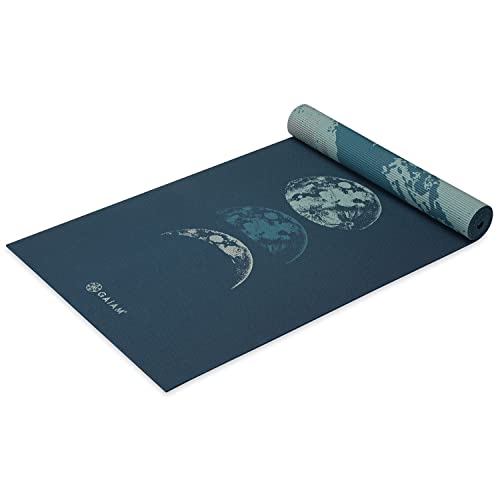
Gaiam's Premium Print mat is the most recommended entry point for new practitioners in budget-focused community threads, offering adequate cushioning and reasonable grip without the financial risk of a high-end purchase. Owners describe it as a solid starter mat that performs reliably for light to moderate practice frequency. Longevity is its weakest point, with surface wear and grip degradation appearing in reviews after 12 to 18 months of regular use.
In its favor
- Affordable entry point that does not sacrifice basic functionality
- Wide variety of designs available without any price premium
- Lightweight at under 1 kg, making it easy to carry to class
Watch-outs
- Surface grip degrades noticeably after sustained regular use
- Thinner feel under joints compared to premium options, limiting comfort in longer sessions
What matters most
Grip in Wet Conditions
Grip is the single most debated attribute in yoga mat reviews. A mat that feels firm and tacky when dry can become dangerously slippery the moment your palms sweat. Natural rubber and polyurethane surfaces consistently outperform standard PVC in wet conditions. If you practise hot yoga or sweat heavily, prioritise grip ratings from reviewers who specifically mention sweaty sessions.
Thickness and Joint Support
Standard mats run between 3 mm and 6 mm. Thinner mats around 3 to 4 mm give better floor feel and balance feedback, which experienced practitioners often prefer. Thicker mats at 5 to 6 mm cushion knees, hips, and wrists more effectively, making them a better fit for restorative practice or for anyone with joint sensitivities. Going above 6 mm typically introduces stability problems during standing poses.
Material and Durability
PVC is the most common and affordable material, but it raises environmental concerns and tends to shed or pill over time. Natural rubber offers superior grip and eco credentials but degrades with heat and UV exposure. Polyurethane top layers, used by premium brands like Liforme, combine grip performance with durability at a higher price. Check for closed-cell vs open-cell construction too: closed-cell surfaces resist moisture and bacteria more effectively.
Portability vs Studio Use
A mat you carry to class needs to weigh under 1.5 kg and roll or fold compactly. Heavy premium mats like the Manduka PRO are better suited as dedicated home or studio mats. If you travel frequently, look for mats that also offer a travel version or consider a lightweight travel mat as a secondary option. Strap or bag compatibility is a minor but practical consideration reviewers regularly raise.
Our take
Grip under real sweaty conditions, not cushioning thickness, is the single factor that determines whether a yoga mat earns long-term loyalty from regular practitioners.
Frequently asked
Most beginners benefit from a mat in the 5 to 6 mm range, which provides enough cushioning to make floor poses comfortable while learning proper alignment. Thinner mats become more useful once you develop the body awareness to compensate for reduced padding. A 6 mm mat is a forgiving starting point that works across most beginner class types.
For practitioners who sweat moderately to heavily, natural rubber is often worth the premium because its open-cell surface grips wet skin far better than PVC. The trade-off is that natural rubber is heavier, carries an initial rubber smell, and degrades faster if left in sunlight or high heat. If you practise in a controlled indoor environment and your sessions involve significant sweat, the performance benefit typically justifies the cost.
Most slippage on smooth floors comes from the mat's bottom surface, not the top. Look for mats with a non-slip bottom texture or small rubber grips. Placing a non-slip rug pad underneath a smooth-bottomed mat is a low-cost fix that many owners mention in reviews. Some practitioners also lightly mist the underside with water, which temporarily increases friction on hardwood.
A well-made mat used three to five times per week should last two to four years before grip and surface integrity noticeably decline. Budget PVC mats typically show wear after 12 to 18 months under the same conditions. Premium options like the Manduka PRO, which carries a lifetime guarantee, can last significantly longer if stored correctly away from heat and UV exposure.