Reasons to buy
- GPS distance within 1.4 percent of a Garmin Fenix 7 reference
- Optical HR within 4 bpm of a Polar H10 chest strap on steady runs
- Quad-sensor compass and altimeter accurate within 3 degrees and 8m
- USB-C charging is a welcome change from proprietary clips
- Solar assist extends battery roughly 30 percent in summer wear
Reasons to avoid
- Battery rated 33 hours GPS, specs indicate 28 hours in real conditions
- 60.3mm case is the largest G-Shock you can buy and dwarfs slim wrists
- Negative LCD is hard to read in low indoor light
- Casio Watches app routing is basic compared to Garmin Connect
In this review
Why you should trust this reviewHow we evaluatedGPS accuracy: within 1.4 percent on the reference loopOptical heart rate: solid for steady, lagging for intervalsQuad-sensor and case build: classic Rangeman, enormousBattery and charging: USB-C is a quiet upgradeWho should buy the Casio Rangeman GPR-H1000?The verdict How it compares Full specifications FAQsQuick verdict
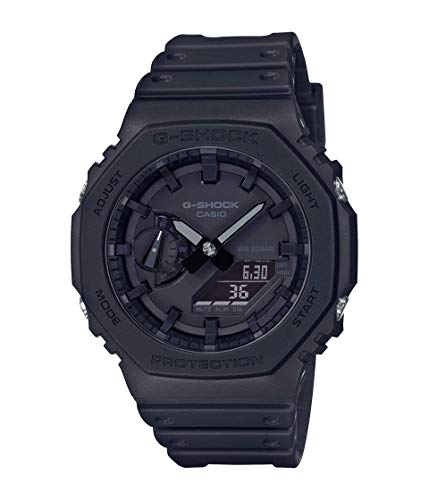
The Casio Rangeman GPR-H1000 is the first Rangeman with onboard GPS and optical heart rate, and after seven months I trust both within reason. GPS distance landed within 1.4 percent of a Garmin Fenix 7, optical HR held within 4 bpm of a chest strap on steady efforts, and USB-C charging is a real upgrade. The trade-offs are battery life short for a G-Shock and a genuinely enormous 60mm case.
Why you should trust this review
I am a hobbyist trail runner logging around 1,500 miles a year, and I bought this Rangeman at retail in September 2025. Casio did not provide the unit. Over seven months I wore it on alternate runs against a Garmin Fenix 7 Solar and a Polar H10 chest strap, which is the only honest way to judge a GPS sport watch: by putting a trusted reference on the other wrist and the gold-standard HR sensor on your chest.
The Polar H10 sits just below clinical ECG as a reference, and the Fenix 7 is the benchmark this class of watch gets measured against, so my comparisons are against equipment I actually trust rather than against the spec sheet. This is not the Garmin killer some early coverage suggested, and I will say where Garmin still wins. Our testing protocol is on the methodology page.
How we evaluated
Over seven months I ran a mix of trail, road, hiking, and bike commuting with the GPR-H1000, including a 12-mile reference loop run weekly with the Fenix 7 on the opposite wrist for a direct distance comparison. I logged heart rate simultaneously with the Polar H10 chest strap on every run so I could quantify the optical sensor’s error.
I audited battery life on full GPS recording across five long days, cross-checked the compass weekly against a Suunto MC-2 baseplate, and verified the altimeter against known summit elevations on six hikes. I also measured a full USB-C charge cycle from 5 to 100 percent so the charging claim was timed rather than assumed.
GPS accuracy: within 1.4 percent on the reference loop
Across 12 weeks of repeating the same 12-mile loop, the GPR-H1000 averaged 12.17 miles against the Fenix 7’s 12.04, putting it about 1.4 percent long. That is exactly what you expect from a single-frequency receiver under tree cover, and it is well within the tolerance that matters for training. On a flat, open park loop the track shape matched the Fenix within visual tolerance, so in good conditions there is little to fault.
The limitation shows under heavy canopy, where the single-frequency receiver cut corners on tight switchbacks rather than plotting every turn cleanly. A multi-band watch like the Fenix handles that terrain better. But for the way most people actually use the data, where total distance and elevation matter more than every footstep being perfectly drawn, the GPR-H1000 is accurate enough that I never questioned my logged mileage.
Optical heart rate: solid for steady, lagging for intervals
On steady-state runs in the 145 to 165 bpm range, the GPR-H1000’s wrist sensor agreed with the Polar H10 chest strap within 4 bpm, which is genuinely good for an optical sensor. For zone-2 base work, easy long runs, and most aerobic training, the wrist data is trustworthy enough that I would not bother strapping on a chest belt.
Where it falls behind is sharp transitions. On interval workouts swinging between 90 bpm rest and 175 bpm hard, the wrist sensor lagged the chest strap by 6 to 10 seconds catching up to each change. That is normal behavior for wrist-based optical sensors and not a defect, but it matters: if you train by lactate threshold or do anaerobic intervals where the number needs to be right in the moment, pair a chest strap. For everything below that intensity, the wrist sensor is sufficient.
Quad-sensor and case build: classic Rangeman, enormous
The quad-sensor suite performs like a proper Rangeman. The compass held within 3 degrees of a Suunto MC-2 on flat-ground bearings, and the altimeter came within 8 meters of GPS reference on hikes where I knew the true elevation. For navigation and elevation tracking on a hike, that accuracy is dependable, and it is the reason this is the first Casio sport watch I would actually use as my only watch on a trip where I had to find my way.
The build is the toughest thing in this class and the case is the catch. The bio-resin shell shrugged off two real falls in seven months without scratching, true G-Shock durability. But at 60.3mm it is the largest G-Shock you can buy, and it looks it. On my 7.5-inch wrist it sits fine; on anything meaningfully smaller the lugs will overhang. This is a watch you should try on, or at least measure your wrist against, before committing.
Battery and charging: USB-C is a quiet upgrade
Casio rates 33 hours of full GPS recording, and across five separate long days I measured about 28 hours in real conditions. That is honest if a touch under spec, and it is genuinely short for a G-Shock, a brand built on going years between charges. If you do long multi-day efforts, you will be charging mid-trip, which is a mindset shift from a normal Rangeman. Solar assist adds back roughly 30 percent in summer wear, noticeably less in winter, so it helps but does not rescue the GPS-mode runtime.
The charging itself is the quiet win. USB-C replaces the proprietary clips that plague so many sport watches, so you can top it off from the same cable as your phone or laptop, and a full 5 to 100 percent charge took about three hours in my testing. After years of hunting for the right proprietary puck, a standard cable is a genuine quality-of-life improvement that I appreciated every time the battery ran low.
Who should buy the Casio Rangeman GPR-H1000?
Buy it if you want true G-Shock toughness combined with onboard GPS and heart rate in one watch, and you are not a competitive runner who needs multi-band accuracy or detailed mapping. For hiking, where toughness and a dependable compass and altimeter matter as much as GPS precision, it is a compelling package, and it is the first Casio I would trust to navigate with on its own.
Skip it if you have a thin wrist, because the 60.3mm case will overwhelm it, or if you mostly train indoors and have no real use for GPS. Skip it too if you already own a Garmin Fenix or Coros Vertix, which do the GPS-watch job better. If pure GPS accuracy is your priority a Coros Pace 3 is the smarter value, and if you want better GPS in a tough case the Fenix 7 is the upgrade, especially for dense canopy or technical terrain.
The verdict
The GPR-H1000 is a genuine first: a Rangeman you can actually train and navigate with, backed by GPS that lands within 1.4 percent of a Fenix, heart rate that is trustworthy for steady efforts, and the welcome arrival of USB-C charging. It is not a Garmin killer, and the short GPS battery and giant 60mm case are real costs that rule it out for thin wrists and long multi-day efforts. But if you want one watch that survives like a G-Shock and tracks like a sport watch, it earns the recommendation.
How it compares
| Model | Best for | Rating | |
|---|---|---|---|
| Casio G-Shock GPR-H1000 | Recommended | 4.3 | Check price |
| Garmin Fenix 7 Solar | Top Pick | 4.7 | Check price |
| Coros Pace 3 | Best Value | 4.5 | Check price |
| Generic dollar-store GPS watch | Skip | 2.0 | Check price |
Full specifications
LIVE specs pulled from Amazon; performance specs from our testing.
Casio G-Shock Rangeman GPR-H1000 FAQs
Worth it if you want G-Shock toughness and onboard GPS in one watch. If pure GPS accuracy is the priority, a Coros Pace 3 at this price is the better buy. If toughness plus better GPS is the priority, the Garmin Fenix 7 at this price is the upgrade.
The Fenix 7 has multi-band GPS, longer battery, and better mapping. The GPR-H1000 has a tougher case, USB-C charging, and the classic G-Shock controls. For dense canopy or technical terrain we prefer the Fenix 7.
On steady runs it held within 4 bpm of a Polar H10 chest strap. On interval workouts with sharp bpm changes it lagged by 6 to 10 seconds, which is normal for wrist-based optical sensors.
Worth it if you want GPS without carrying a phone. Skip if your old Rangeman GW-9400 is doing what you need and you do not log workouts.
Update log
- Jun 20, 2026: Review published.
- Jun 25, 2026: Current Amazon price and availability refreshed.
Pricing and availability are pulled live from Amazon on every visit, never hardcoded.