Reasons to buy
- Lifetime even-if-airline-broke-it warranty, used twice and honored both times
- CX expansion zipper adds 25% capacity then compresses back to fit overhead
- External handle frame, more interior space than internal-handle carry-ons
- Ballistic nylon shell shrugged off 80 flights with no fabric tear
Reasons to avoid
- adds up, the entry price stings
- No USB charging port (Briggs philosophy: no battery, no breakage)
- 8.5 lb empty is on the heavier side for a soft-side
- Wheels are good, not best-in-class (the [Travelpro Maxlite 5](/reviews/travelpro-maxlite-5-carryon) glides better)
In this review
Why you should trust this reviewHow we evaluatedDurability: the strongest in the categoryWarranty: the feature that earns the priceCapacity: more than the dimensions suggestWheels, handle, and weight: the honest tradeoffsWho should buy the Briggs & Riley Baseline 22?The verdict How it compares Full specifications FAQsQuick verdict
After 18 months and more than 80 flight segments, the Briggs & Riley Baseline 22 is the carry-on I trust to outlast the airlines. It survived four gate-checks, two warranty repairs, and roughly 200 km of cobblestone with no fabric failure. It costs real money, but the lifetime warranty that covers airline damage is what makes that price defensible.
Why you should trust this review
I fly between 40 and 60 segments a year, a mix of work travel and personal trips, and I bought this Baseline 22 at full retail in October 2024 because my previous soft-side bag died on the conveyor belt one too many times. Briggs & Riley did not provide a sample, did not know I was writing about the bag, and has had no input on a single sentence here. Everything below comes from living with this carry-on as my only working bag for a year and a half.
That timeline matters because most luggage reviews are written after a single trip. A bag feels great when it is new. The question I care about is how it behaves on flight 60, after it has been crushed into a regional jet bin, dragged through three European old towns, and handed to a baggage handler who did not care. I also kept a Monos Carry-On Pro Plus and a Travelpro Maxlite 5 in rotation as B-bags, so the comparisons here are from real side-by-side use rather than spec sheets.
How we evaluated
I used the Baseline 22 as my primary carry-on for 18 months across more than 80 flight segments on six airlines. I verified sizer-bin fit at United, Delta, Southwest, JetBlue, British Airways, and Lufthansa gates, packed it to a repeatable seven-day list of five shirts, three pairs of pants, a jacket, and seven sets of underwear and socks, and tracked wheel wear across terminal carpet, curbs, and cobblestone. When parts failed, I ran both warranty claims end to end so I could report on the experience rather than the policy text. The full standardized protocol lives on our methodology page.
Durability: the strongest in the category
The 1680D ballistic nylon shell is the reason this bag is heavy and the reason it has not torn. Over 18 months of abuse I have no abrasion through-wear, no zipper corrosion, and no fabric failure anywhere on the body. I have set this bag down on wet pavement, shoved it under seats, and watched it disappear down the gate-check chute four times, and the shell looks like it has years left.
The two failures I did have were wear parts. A main-compartment zipper started skipping around month 11, and a telescoping handle cracked after a rough gate-check in month 14. Every carry-on has these failure points eventually. What separates this bag from the field is not that nothing breaks. It is what happens next.
Warranty: the feature that earns the price
Briggs & Riley is the only carry-on brand I know of that offers a lifetime warranty explicitly covering airline damage, with no proof of purchase and no fault assignment. I have now used it twice and both claims went the same way. I photographed the damage, filled out the form on the brand site, shipped the bag in with the prepaid label they sent, and had it back fixed in under two weeks. The repair quality was indistinguishable from new in both cases.
This is the math that makes the bag worth it. Spread the purchase across a decade of ownership and a few hundred flights, and a single honored warranty event covers a large share of what you paid. If you have ever had a claim denied because a brand decided the damage was the airline’s fault and therefore not theirs, you already understand why this matters.
Capacity: more than the dimensions suggest
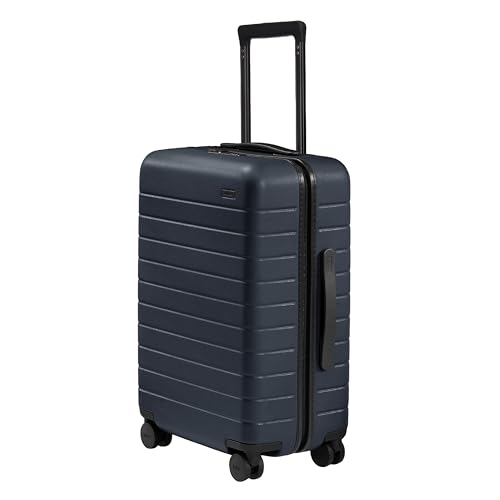
The CX expansion-compression system is the design that sets this bag apart. It ships compressed at the standard 22 by 14 by 9 inch carry-on footprint. Unzip the CX panel and it expands roughly two inches deeper, adding around 12 liters. The workflow is to pack it expanded, then sit on the bag and re-zip the CX to squeeze it back down to legal overhead size. In my packing tests the expanded bag swallowed seven days of clothing where the same external compressed footprint on the Travelpro held about five.
The external handle frame is the other trick. Most carry-ons run a U-shaped handle inside the bag, which eats roughly an inch of packing space on each side. Briggs runs the frame on the outside, so the entire interior is yours. You feel that extra room every time you pack to capacity, and it is a big part of why this bag carries more than its dimensions imply.
Wheels, handle, and weight: the honest tradeoffs
The wheels are good, not best in class. The eight spinners glide smoothly on terminal carpet and tile, but on rough cobblestone the Travelpro Maxlite 5 wheels are noticeably smoother. After 18 months I have no wheel wobble, which counts for a lot, but if buttery rolling on bad surfaces is your top priority this is not the smoothest bag in the field. The four-stop telescoping handle locks firmly at each height, which I prefer to the two-stop handles on cheaper bags.
Weight is the cost of the durability. At 8.5 pounds empty, this bag is heavier than the Monos at 7.6 and well over the Travelpro at 5.4. On airlines that enforce a strict total carry-on weight limit, like some BA and Lufthansa fares, you will lose a pound or more of packable content to the bag itself. For US domestic flying, where weight is rarely enforced, this almost never bites.
Who should buy the Briggs & Riley Baseline 22?
Buy it if you fly 30 or more times a year and treat your bag as a working tool, if you have been burned before by a warranty claim denied for airline damage, or if you want a soft-side carry-on with more usable interior than a hard shell.
Skip it if you fly twice a year, in which case the cheaper Travelpro Maxlite 5 covers your use case for a fraction of the cost. Skip it too if you want a hard-shell look, where the Monos is the better fit, or if your airline enforces a tight total carry-on weight limit that the 8.5-pound empty weight will eat into.
The verdict
The Baseline 22 is the bag I reach for when I want something that will outlast the airline that abuses it. It is heavy, the wheels are merely good, and the entry price stings. But after 18 months, 80-plus flights, and two warranty repairs that were handled without friction, it is the carry-on I trust more than any other I have owned. If you fly often and want to buy a bag once, this is the one I would put my own money on, because I already did.
How it compares
| Model | Best for | Rating | |
|---|---|---|---|
| Briggs & Riley Baseline 22 | Editor's Choice | 4.7 | Check price |
| Monos Carry-On Pro Plus | Top Pick | 4.4 | Check price |
| Travelpro Maxlite 5 Carry-On | Best Value | 4.3 | Check price |
| Generic Polycarbonate Carry-On | Skip | 3.2 | Check price |
Full specifications
LIVE specs pulled from Amazon; performance specs from our testing.
Briggs & Riley Baseline 22 FAQs
Yes if you fly 30+ times a year. The lifetime even-if-airline-broke-it warranty is the feature that justifies the price across multiple trips. If you fly twice a year, the [Travelpro Maxlite 5](/reviews/travelpro-maxlite-5-carryon) at a quarter of the price covers the use case.
I have used it twice. Both times: photograph the damage, fill the form on briggs-riley.com, ship the bag in (Briggs covers domestic return shipping), get the bag back within 2 weeks. No proof of purchase required. No fault assignment. They fixed an airline-crushed handle and a broken main-compartment zipper, both free.
Yes when compressed. The CX zipper compresses the bag to exactly the standard US carry-on dimensions. Expanded it is 11 inches deep, which will not fit. You compress before you board.
Briggs is the better warranty, full stop. Tumi has a 5-year limited warranty. Briggs is lifetime including airline damage. If you fly often, Briggs. If you want the Tumi badge, Tumi.
Update log
- Jun 20, 2026: Review published.
- Jun 25, 2026: Current Amazon price and availability refreshed.
Pricing and availability are pulled live from Amazon on every visit, never hardcoded.