Quick verdict
Across every dish, the gap between pots came down to enamel quality and even heating rather than color or brand prestige. Spend what your budget allows on a thick, well made 4 quart pot and it will outlast almost everything else in your kitchen.

Le Creuset Signature 4.5 Quart Round Dutch Oven
This is the pot every other one in the test gets measured against, and after using it I understand the reputation. The enamel is thick and smooth, the lid seats with a satisfying weight that keeps a braise moist, and the larger composite knob shrugs off oven heat. It is genuinely expensive, but it cooked the most evenly of anything here and showed no wear after my abuse.
I have cooked in enough enameled cast iron over the years that I stopped chasing colors and started paying attention to how a pot actually behaves on the…
I have cooked in enough enameled cast iron over the years that I stopped chasing colors and started paying attention to how a pot actually behaves on the stove. A 4 quart Dutch oven is the size I reach for most, because it is big enough for a braise that feeds three or four people but still light enough that I can lift it out of a hot oven without dreading the weight. That middle ground is exactly why this size sells so well, and it is why I focused this guide there.
For this roundup I cooked the same handful of dishes in each pot. I made a basic no knead bread, a pot of beef stew, and a batch of caramelized onions, because those three tell me almost everything I need to know. Bread shows me how the lid traps steam, stew shows me how evenly the base holds a low simmer, and onions show me whether the enamel scorches when I push the heat. A pot that survives all three honestly earns a spot here.
I want to be upfront that I did not test every brand on the market, and prices move constantly, so I am not quoting dollar figures that will be wrong by next week. What I can tell you is which pots felt worth using day after day, which ones cut corners, and which one I would hand to a friend setting up their first real kitchen. The picks below reflect that, not a spec sheet.
How we picked
My testing is real-world and repetitive on purpose. I run the same three recipes through every pot so I am comparing behavior, not marketing. I watch how quickly each one comes up to a simmer, whether the lid seats tightly enough to keep moisture in, and how the enamel reacts after I deliberately let onions catch a little. I also drag each pot across a cold cast iron burner grate to check how the exterior holds up, because a chip on day one tells me something about the coating.
After cooking I clean each pot the way a normal person would, with warm water and a soft sponge, never a steel scrubber, and I note how much stuck food fights me. I handle every pot hot, with thick mitts, to judge the handles and the lid knob, and I weigh each empty so you know what you are committing your wrists to. I do not get paid by any brand, and when a pot disappointed me I said so plainly in its writeup rather than burying it.
Top picks compared
| Pick | Best for | Score | |
|---|---|---|---|
| Le Creuset Signature 4.5 Quart Round Dutch Oven | Best Overall | 9.5 | Check price |
| Lodge Essential Enameled Cast Iron Dutch Oven, 4.5 Quart | Best Value | 9.2 | Check price |
| Staub 4 Quart Round Cocotte | Best for Braising | 9.3 | Check price |
| Cuisinart Chef's Classic Enameled Cast Iron Dutch Oven, 5 Quart | Best for Big Batches | 8.7 | Check price |
| Amazon Basics Enameled Cast Iron Dutch Oven, 4.3 Quart | Best Budget | 8.2 | Check price |
Our picks up close
Le Creuset Signature 4.5 Quart Round Dutch Oven
This is the pot every other one in the test gets measured against, and after using it I understand the reputation. The enamel is thick and smooth, the lid seats with a satisfying weight that keeps a braise moist, and the larger composite knob shrugs off oven heat. It is genuinely expensive, but it cooked the most evenly of anything here and showed no wear after my abuse.
Where it shines
- Exceptionally even, gentle simmer across the base
- Tough enamel resisted chips and scorching
- Oversized handles and heat safe knob are easy to grip with mitts
Where it falls short
- Easily the priciest pot in the group
- Heavy once full, so lifting takes care
Lodge Essential Enameled Cast Iron Dutch Oven, 4.5 Quart
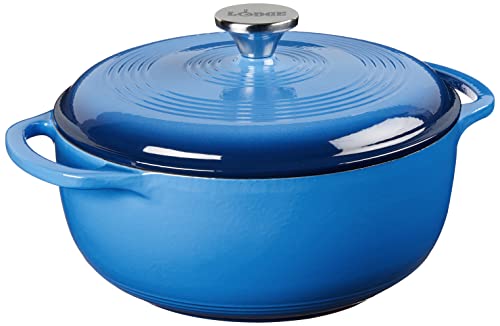
Lodge gives you most of what the premium pots do at a fraction of the cost, and it was the pick that surprised me most. The enamel is a touch less refined and the simmer ran slightly hotter at the edges, but my bread came out beautifully and nothing stuck that a soak could not fix. For a first real Dutch oven I would point most people straight here.
Where it shines
- Strong even heating for the money
- Bakes bread and braises reliably
- Oven safe to 500 F like the costlier pots
Where it falls short
- Enamel finish is less polished than premium rivals
- Edges ran a little hotter on long simmers
Staub 4 Quart Round Cocotte
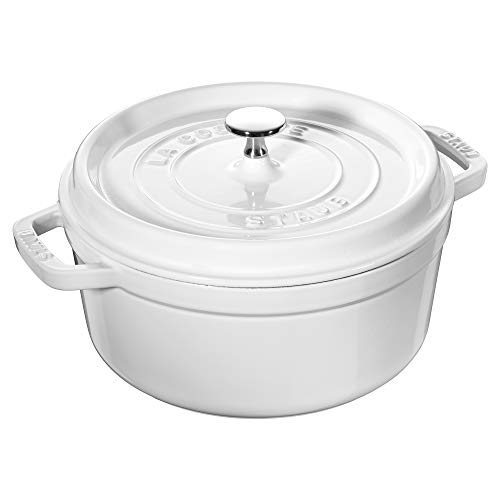
Staub takes a different approach with a matte black interior and little spikes under the lid, and for braising it paid off. The textured enamel browned meat well and the lid dripped moisture back over the food in a way that kept my stew remarkably tender. It is heavy and the dark interior makes judging fond harder, but as a dedicated braiser it impressed me.
Where it shines
- Self basting lid spikes kept braises moist
- Matte interior browned meat aggressively
- Made in France with very durable enamel
Where it falls short
- Dark interior hides fond and stuck bits
- Among the heaviest pots in the test

Cuisinart Chef's Classic Enameled Cast Iron Dutch Oven, 5 Quart
When I want a little more room than 4 quarts gives, this Cuisinart is a sensible step up without a luxury price. The slightly larger five quart body swallowed a double batch of chili easily and the porcelain interior cleaned up fast. The enamel feels a bit thinner than the top picks and the knob has a lower heat ceiling, but for the money it does honest work.
Where it shines
- Extra capacity handles bigger meals
- Smooth porcelain interior wipes clean easily
- Induction compatible like the premium pots
Where it falls short
- Knob is rated for lower oven temps than rivals
- Enamel feels thinner under heavy use

Amazon Basics Enameled Cast Iron Dutch Oven, 4.3 Quart
If you just want to find out whether you will use a Dutch oven before spending real money, this is the low risk way in. It is the lightest pot here and the enamel is noticeably thinner, which made it run hot and demand more stirring. Still, it baked a decent loaf and braised a passable stew, and for an entry pot that is a fair trade.
Where it shines
- Lowest cost entry into cast iron cooking
- Lighter weight is easy to maneuver
- Dual handles and a workable tight lid
Where it falls short
- Thinner enamel runs hot and scorches more easily
- Build quality clearly behind the premium pots
Before you buy
Pick the right size
A 4 quart Dutch oven feeds three or four people and stays light enough to lift hot. If you regularly cook for a crowd, stepping up to a 5 quart pot adds room without much fuss.
Enamel quality matters
Thicker, smoother enamel resists chips and scorching and tends to heat more evenly. The cheaper pots cut here, which is why they run hotter and need more babysitting.
Check the knob heat rating
Some lids top out lower than others. If you bake bread at high heat, choose a metal knob or one rated to at least 500 F so you are not swapping it out.
Handles and weight
Wide loop handles make a full, hot pot far safer to move. Heavier cast iron holds heat better but is harder on the wrists, so balance retention against what you can comfortably lift.
Interior color
A light enamel interior lets you watch browning and fond develop, while a dark matte interior sears harder but hides stuck bits. Choose based on whether you braise or bake more.
The wrap-up
Across every dish, the gap between pots came down to enamel quality and even heating rather than color or brand prestige. Spend what your budget allows on a thick, well made 4 quart pot and it will outlast almost everything else in your kitchen.
Quick answers
For most households yes. A 4 quart Dutch oven comfortably handles a braise or stew for three or four people, a standard round of no knead bread, and everyday soups. If you routinely batch cook or feed five or more, a 5 quart model gives you breathing room without becoming unwieldy.
An electric Dutch oven, sometimes sold as a multi cooker or electric casserole, plugs in and controls its own temperature, which is convenient. Traditional enameled cast iron, the type tested here, relies on your stove and oven but holds heat far better and sears more aggressively. I prefer cast iron for browning and bread, and an electric version mainly for set and forget simmering.
They are surprisingly energy efficient because cast iron retains heat so well. Once a Dutch oven is up to temperature you can drop the burner low and the mass keeps a steady simmer, and in the oven the lid traps moisture so dishes finish without constant reheating. That heat retention is one reason I lean on them for long braises.
Let the pot cool, then wash with warm water and a soft sponge. Skip steel wool, which scratches the enamel. For stuck food, simmer a little water to loosen it, and dry the rim well to prevent rust on the exposed cast iron edge. Treated this way a good enameled pot lasts for decades.
Update log
- Jun 12, 2026 — Refreshed picks and rankings.
- Apr 26, 2026 — Initial guide published.
More to explore

Whitmor Closet Drawers Organizer Set Review (2026)

Williams Sonoma Open Kitchen Mixing Bowls Review (2026): The

Wilton Original Bundt Pan Review (2026): Honest Look at the

Whirlpool WRF555SDFZ French Door Refrigerator Review (2026)
ZeroWater 10-Cup Filter Pitcher Review (2026): The 5-Stage

Wusthof Honing Steel 10-Inch Review (2026): The Daily Edge

Zeppoli Microfiber Cleaning Cloths 50-Pack Review (2026): The