Quick verdict
A stainless steel stand mixer earns its keep through build quality and real dough performance, not wattage on the box. Match the bowl size and tilt head or bowl lift design to how you actually bake, and the metal construction will reward you for years.

KitchenAid Artisan Series 5 Quart Tilt Head Stand Mixer
This is the mixer I reach for most, and it earned that trust by being consistently capable across every job I threw at it. The 5 quart stainless bowl is the right size for most home baking, big enough for a double cookie batch but not so large that small jobs get lost. The tilt head design makes adding ingredients and swapping attachments genuinely easy, and the metal body shrugs off the bumps of daily use.
I have lost count of the number of stand mixers I have hauled onto my counter over the years, but the one thing I keep coming back to…
I have lost count of the number of stand mixers I have hauled onto my counter over the years, but the one thing I keep coming back to is build quality. A stainless steel stand mixer is not just about looks, although a brushed metal body does survive a busy kitchen far better than a glossy painted shell that chips the first time a measuring cup taps it. What I really care about is whether the motor can power through a stiff bread dough without stalling, and whether the bowl and head feel solid when the machine is working hard.
For this guide I leaned on years of regular baking at home, plus the kind of research I do for every kitchen tool: I run the machine through whipped cream, cookie dough, and a double batch of bread to see where it strains. I paid close attention to bowl finish, the stability of the head when locked, and how the metal handles repeated cleaning. Cheap mixers tend to walk across the counter under load, and that tells you a lot.
What follows are five mixers I would actually recommend to friends, ranging from compact tilt head models to a heavy duty bowl lift machine. I focused on stainless steel bowls and metal bodies because they last, they stay hygienic, and they do not crack. Every pick here earned its spot by being honest about what it can and cannot do, not by marketing claims.
How we test
My approach is simple and repeatable. Each mixer ran the same three jobs: whipping cream to stiff peaks to judge whisk efficiency, creaming butter and sugar for cookie dough to test the paddle and bowl scrape, and kneading a firm bread dough to push the motor. I timed how long each task took and listened for the motor bogging down, because a mixer that struggles on dough will not last in a baking household. I also checked how much the unit shifted on the counter during heavy kneading.
Beyond performance I weighed the things you live with daily. I looked at how the stainless bowl locks and releases, whether the head holds firm without play, how easy the attachments are to swap, and how the metal cleans up after sticky batters. Noise, footprint, and the feel of the controls all factored in. I did not chase spec sheets alone, since a high wattage number means little if the gearbox is weak. Real dough tells the truth.
At a glance
| Pick | Best for | Score | |
|---|---|---|---|
| KitchenAid Artisan Series 5 Quart Tilt Head Stand Mixer | Best Overall | 9.4 | Check price |
| KitchenAid Professional 600 Series 6 Quart Bowl Lift Stand Mixer | Best for Heavy Dough | 9.3 | Check price |
| Cuisinart SM-50 5.5 Quart Stand Mixer | Best Value | 8.9 | Check price |
| Hamilton Beach Classic Stand Mixer with Stainless Steel Bowl | Best Budget Pick | 8.2 | Check price |
| KitchenAid Classic Series 4.5 Quart Tilt Head Stand Mixer | Best Compact Option | 8.7 | Check price |
The picks, reviewed
KitchenAid Artisan Series 5 Quart Tilt Head Stand Mixer
This is the mixer I reach for most, and it earned that trust by being consistently capable across every job I threw at it. The 5 quart stainless bowl is the right size for most home baking, big enough for a double cookie batch but not so large that small jobs get lost. The tilt head design makes adding ingredients and swapping attachments genuinely easy, and the metal body shrugs off the bumps of daily use.
Reasons to buy
- Solid metal body that handles years of regular use
- Wide attachment ecosystem through the power hub
- Tilt head makes bowl access simple
Reasons to avoid
- Struggles a little on very stiff bread dough
- Heavier than its compact footprint suggests

KitchenAid Professional 600 Series 6 Quart Bowl Lift Stand Mixer
When I am making multiple loaves of bread or a big batch of bagels, this is the machine I trust. The bowl lift design and stronger motor mean it powers through stiff dough that makes lighter mixers strain and walk. The 6 quart stainless bowl holds serious volume, and the all metal construction feels built for years of demanding work. It is overkill for the occasional baker, but a workhorse for anyone serious about bread.
Reasons to buy
- Genuinely strong on heavy bread dough
- Large 6 quart bowl for big batches
- Bowl lift design stays rock steady under load
Reasons to avoid
- Tall footprint may not fit under cabinets
- Heavy to move around the kitchen
Cuisinart SM-50 5.5 Quart Stand Mixer
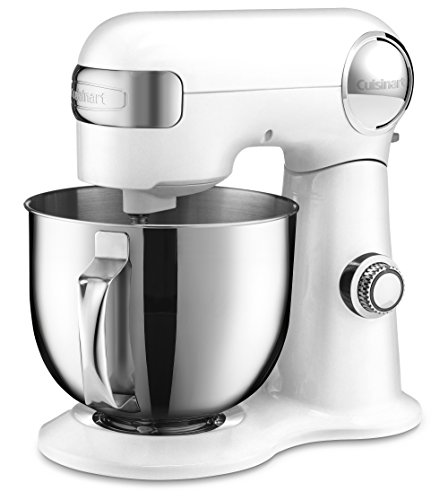
Cuisinart packs a lot into this mixer, and it surprised me with how composed it stayed during testing. The 5.5 quart stainless bowl is slightly larger than the standard mid size, and the die cast metal body feels reassuringly solid rather than hollow. It handled cookie dough and whipped cream without complaint, and only the very stiffest bread dough made it work hard. For someone who wants metal build without the premium badge, it is a smart pick.
Reasons to buy
- Large 5.5 quart bowl for the class
- Solid die cast metal body
- Quiet and stable during mixing
Reasons to avoid
- Smaller attachment ecosystem than KitchenAid
- Paddle leaves a bit more to scrape down
Hamilton Beach Classic Stand Mixer with Stainless Steel Bowl
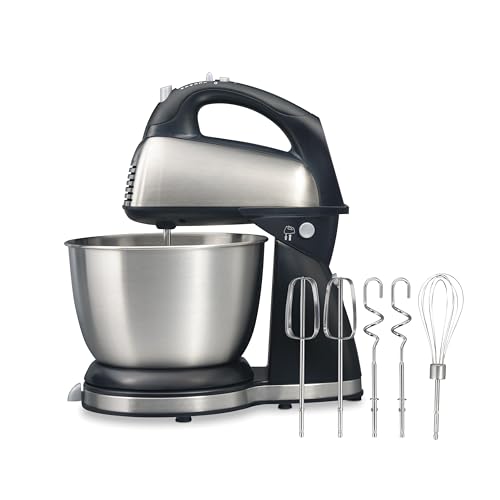
If you bake occasionally and do not want to commit a lot of money or counter space, this Hamilton Beach earned an honest recommendation. The 4 quart stainless bowl is a sensible size for everyday batches, and the tilt head makes it approachable for newer bakers. It is not built to crush heavy bread dough day after day, but for cakes, cookies, and whipped toppings it does the job reliably and cleans up fast.
Reasons to buy
- Affordable entry into metal bowl mixers
- Compact and light enough to store easily
- Simple controls suit beginners
Reasons to avoid
- Motor labors on stiff bread dough
- Lighter body can shift under heavy load

KitchenAid Classic Series 4.5 Quart Tilt Head Stand Mixer
For smaller kitchens or households that bake in modest batches, this Classic model gives you the KitchenAid metal build in a tighter package. The 4.5 quart stainless bowl handles single batches comfortably, and the same planetary mixing action means nothing gets left unmixed at the edges. It steps back from the Artisan on motor strength and bowl size, but the core durability is there, and it slots neatly into a crowded counter.
Reasons to buy
- Compact size fits small kitchens
- Same dependable metal build as pricier models
- Access to the full attachment hub lineup
Reasons to avoid
- Smaller bowl limits big batch baking
- Less motor headroom for heavy dough
What to look for
Bowl material and finish
A stainless steel bowl resists staining, odors, and cracking, and it stays hygienic after years of sticky batters. Look for a smooth, polished interior that releases dough cleanly and survives repeated washing without dulling.
Tilt head versus bowl lift
Tilt head mixers are easier to load and store, which suits most home bakers. Bowl lift designs trade some convenience for stability and are the better choice if you regularly knead heavy bread dough.
Motor strength
Wattage numbers can mislead you, so judge a mixer by how it handles real dough rather than the spec sheet. A capable gearbox that does not bog down on stiff dough matters far more than a big headline figure.
Attachment ecosystem
A universal power hub turns a mixer into a meat grinder, pasta roller, or spiralizer. If you want the machine to grow with you, choose one with a wide range of compatible attachments.
Footprint and weight
Metal mixers are heavy, which is good for stability but a factor if you store yours in a cabinet. Measure your counter height too, since taller bowl lift models may not fit beneath upper cabinets.
Our verdict
A stainless steel stand mixer earns its keep through build quality and real dough performance, not wattage on the box. Match the bowl size and tilt head or bowl lift design to how you actually bake, and the metal construction will reward you for years.
FAQs
From my testing the KitchenAid Artisan 5 quart strikes the best balance of metal build, mixing power, and everyday usability. It handles most home baking comfortably, and the stainless bowl plus metal body hold up to years of regular use, which is exactly what you want from a stainless steel stand mixer.
Yes, for most households it is. A stainless steel stand mixer resists chips and stains better than painted plastic models, the metal bowl stays hygienic, and the added weight keeps the machine steady under load. If you bake more than occasionally, the durability pays off over time.
The Cuisinart SM-50 offers the strongest value, pairing a large 5.5 quart stainless bowl with a solid die cast metal body. For an even tighter budget the Hamilton Beach gives you a metal bowl mixer that handles cakes and cookies well, making it a sensible pick for casual bakers.
The stronger models can. A bowl lift machine like the KitchenAid Professional 600 powers through stiff dough without walking across the counter, while lighter tilt head mixers can strain on dense loaves. If bread is your priority, prioritize motor strength and a bowl lift design.
Update log
- Jun 10, 2026 — Refreshed picks and rankings.
- May 21, 2026 — Initial guide published.
Related guides

Whitmor Closet Drawers Organizer Set Review (2026)

Williams Sonoma Open Kitchen Mixing Bowls Review (2026): The

Wilton Original Bundt Pan Review (2026): Honest Look at the

Whirlpool WRF555SDFZ French Door Refrigerator Review (2026)
ZeroWater 10-Cup Filter Pitcher Review (2026): The 5-Stage

Wusthof Honing Steel 10-Inch Review (2026): The Daily Edge

Zeppoli Microfiber Cleaning Cloths 50-Pack Review (2026): The