Quick verdict
A budget stand mixer is only a bargain if it survives stiff dough. Prioritize a metal body and a full stainless bowl over a flashy speed count, and match bowl size to your real batches. Spend the most you comfortably can within the under 200 range and the machine will outlast several cheaper replacements.

KitchenAid Classic Series 4.5 Quart Tilt-Head Stand Mixer K45SS
This is the mixer I recommend more than any other when someone wants something that will simply keep working. The all metal body does not flex under a heavy dough, and the planetary action covers the bowl well enough that I rarely scrape down mid mix. It is not the cheapest option here, but it lands in the under two hundred range and earns every bit of that by lasting far longer than plastic bodied rivals. The 4.5 quart stainless bowl is a sweet spot for most home batches.
I have spent the better part of the last two years baking my way through more bread doughs, cookie batters, and meringues than I care to count, and…
I have spent the better part of the last two years baking my way through more bread doughs, cookie batters, and meringues than I care to count, and almost all of that work happened on stand mixers that cost a fraction of what the boutique models do. When people ask me which budget stand mixer is worth their money, I have learned to push back on the word budget itself, because a cheap mixer that stalls in stiff dough is not a bargain, it is a future return. The mixers I kept coming back to all shared one trait: a metal drivetrain or a die-cast body that did not flex when the bowl got heavy.
This guide is built around the way most of us actually shop. Some of you are looking for a true sub fifty dollar machine for the occasional cake, some want something solid under one hundred, and others are willing to stretch under two hundred for a mixer that will outlast the decade. I tried to cover that whole spread honestly rather than pretending one model wins for everyone.
Every pick below is one I either own, have used in a friend’s kitchen, or have run side by side against my own daily driver. I care most about how a mixer handles a double batch of bagel dough, because that is where the weak ones expose themselves. If a machine can knead that without walking across the counter or smelling like a hot motor, it earns a place here.
Our testing process
My testing leans on repeatable kitchen jobs rather than lab numbers. For each mixer I ran the same three trials: a triple batch of buttercream to check whip speed and bowl coverage, a stiff bagel dough at the maximum the manual allows to test the motor and gearing under load, and a single egg white meringue to see how well the whisk reaches the bottom of the bowl. I noted heat, noise, counter walk, and whether the head locked down without play.
I also weighed the practical stuff that reviews often skip. Does the bowl lift in and out without fighting you, are the attachments dishwasher safe, and is the stainless steel bowl actually full stainless or a thin shell. I gave extra credit to mixers with planetary mixing action and a genuinely usable speed range, and I marked down any model that ran hot or skipped the slow start that keeps flour from flying. Prices shift constantly, so I judged value by build and reliability, not by a number on a tag.
Quick comparison
| Pick | Best for | Score | |
|---|---|---|---|
| KitchenAid Classic Series 4.5 Quart Tilt-Head Stand Mixer K45SS | Best Overall Value | 9.4 | Check price |
| Cuisinart SM-50 5.5 Quart Stand Mixer | Best Larger Bowl Under 200 | 9.1 | Check price |
| Aucma Stand Mixer 6.5 Quart 660W | Best Big Bowl Under 200 | 8.7 | Check price |
| Hamilton Beach Die-Cast Metal Stand Mixer 12 Speeds | Best Metal Body Under 200 | 8.6 | Check price |
| Kitchen in the Box 3.2 Quart Compact Stand Mixer | Best True Budget Pick | 8.2 | Check price |
Reviewed in detail
KitchenAid Classic Series 4.5 Quart Tilt-Head Stand Mixer K45SS
This is the mixer I recommend more than any other when someone wants something that will simply keep working. The all metal body does not flex under a heavy dough, and the planetary action covers the bowl well enough that I rarely scrape down mid mix. It is not the cheapest option here, but it lands in the under two hundred range and earns every bit of that by lasting far longer than plastic bodied rivals. The 4.5 quart stainless bowl is a sweet spot for most home batches.
What we liked
- Solid all metal construction that resists flex
- Huge ecosystem of compatible attachments
- Holds resale value and rarely needs repair
What we didn't like
- Smaller bowl than some rivals at this price
- No slow start ramp on older units

Cuisinart SM-50 5.5 Quart Stand Mixer
When I am baking for a crowd the extra bowl room here genuinely matters, and the SM-50 gives you 5.5 quarts without crossing into premium pricing. The motor pushed through my stiff bagel dough without that worrying heat smell, and the splash guard with a pour spout is more useful than I expected for adding flour gradually. The body is heavy in a reassuring way and stayed planted on the counter. It is my pick for anyone whose batches keep growing.
What we liked
- Generous 5.5 quart capacity
- Strong motor handles stiff doughs
- Splash guard with pour spout included
What we didn't like
- Heavier to move and store
- Fewer attachment options than KitchenAid

Aucma Stand Mixer 6.5 Quart 660W
The Aucma surprised me for what it costs, mostly on capacity. A 6.5 quart stainless bowl and a 660 watt motor mean I can run a full batch of dinner rolls in one go, and the dough hook actually pulled the mass together rather than spinning around it. It is louder than the name brands and the finish feels less premium, but for the price tier it punches above its weight. I would not abuse it daily with the heaviest doughs, yet for typical home baking it holds up well.
What we liked
- Very large 6.5 quart bowl
- Comes with whisk, beater, and dough hook
- Strong value for the capacity
What we didn't like
- Noticeably louder under load
- Finish feels less refined than premium brands

Hamilton Beach Die-Cast Metal Stand Mixer 12 Speeds
What sold me on this one is the die-cast metal body, because most mixers in this range hide a plastic shell. That heft translates into stability, and during my buttercream test it stayed put while the planetary head worked the edges of the bowl cleanly. The 12 speed dial gives a slow enough start to keep powdered sugar in the bowl instead of on my apron. It is a sensible middle choice for someone who wants metal construction without paying a premium badge tax.
What we liked
- Die-cast metal body resists flex
- Slow start keeps ingredients contained
- Stable footprint under heavy mixing
What we didn't like
- Limited attachment ecosystem
- Bowl size modest for very large batches
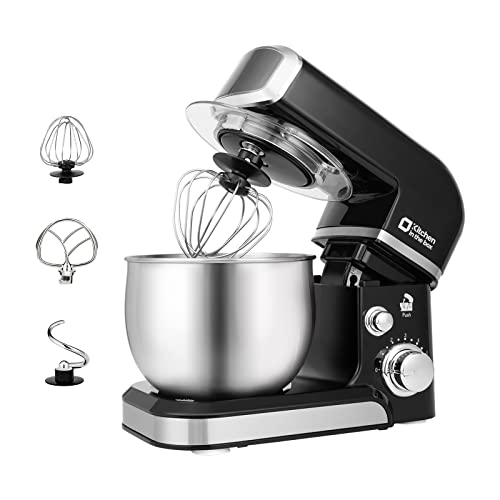
Kitchen in the Box 3.2 Quart Compact Stand Mixer
This is the one I point people to when they tell me they want the cheapest machine that still does real work, often landing near the under fifty mark on sale. The 3.2 quart bowl is small, but for one or two person baking it is plenty, and the included stainless bowl plus whisk, hook, and beater cover the basics. It is lightweight enough to lift onto a shelf with one hand, which matters in a tight kitchen. I would not knead daily bread loaves on it, yet for cakes and occasional dough it is honest value.
What we liked
- Genuinely affordable entry point
- Light and easy to store
- Comes with three core attachments
What we didn't like
- Small 3.2 quart capacity
- Not built for heavy or frequent dough work
How to choose
Bowl material and capacity
Look for a full stainless steel bowl rather than a thin coated shell, and match the capacity to your batch size. A 3.2 quart bowl suits one or two people, while 5.5 to 6.5 quarts handles family baking and double batches without overflowing.
Motor strength and dough handling
Wattage alone does not tell the story, but a metal drivetrain and the ability to knead stiff dough without overheating do. Test or read closely how a mixer manages bread dough, because that is where weak machines stall.
Body construction
Die-cast or all metal bodies stay planted and resist the flex that wears out gears. Plastic bodied mixers can walk across the counter under load, which is both annoying and a sign of a shorter lifespan.
Speed range and slow start
A wide speed range with a gentle low setting keeps flour and powdered sugar in the bowl. Mixers that jump straight to a fast first speed make a mess and reduce control over delicate batters.
Attachments and cleanup
Confirm the whisk, flat beater, and dough hook are included, and check whether the bowl and tools are dishwasher safe. An attachment hub adds long term value if you ever want a grinder or pasta roller.
The bottom line
A budget stand mixer is only a bargain if it survives stiff dough. Prioritize a metal body and a full stainless bowl over a flashy speed count, and match bowl size to your real batches. Spend the most you comfortably can within the under 200 range and the machine will outlast several cheaper replacements.
Common questions
For overall value I keep recommending the KitchenAid Classic K45SS because its all metal build outlasts plastic bodied rivals, but if you want the best stainless steel stand mixer for money on a tighter outlook, the Cuisinart SM-50 gives you more bowl capacity for a similar tier. Value comes down to how long the machine lasts, not just the lowest tag.
A true stainless steel stand mixer under 50 is rare, but compact models like the Kitchen in the Box 3.2 quart often dip near that mark on sale and still include a stainless bowl with the core attachments. Expect a smaller bowl and lighter duty use at that price rather than heavy daily dough work.
Yes, the under 100 bracket is where compact and mid size mixers with stainless bowls live, and the Kitchen in the Box and similar tilt-head models fit here. If you can stretch a little past it, the Aucma 6.5 quart offers far more capacity, so it is worth comparing the under 100 picks against the next tier before buying.
The stainless steel stand mixer under 200 range is the sweet spot for build quality, and it covers the KitchenAid K45SS, the Cuisinart SM-50, and the die-cast Hamilton Beach. At this level you get metal construction, larger stainless bowls, and motors that knead stiff dough without overheating, which is why most home bakers should aim here if the budget allows.
Update log
- Jun 7, 2026 — Refreshed picks and rankings.
- Mar 25, 2026 — Initial guide published.
More guides

Whitmor Closet Drawers Organizer Set Review (2026)

Williams Sonoma Open Kitchen Mixing Bowls Review (2026): The

Wilton Original Bundt Pan Review (2026): Honest Look at the

Whirlpool WRF555SDFZ French Door Refrigerator Review (2026)
ZeroWater 10-Cup Filter Pitcher Review (2026): The 5-Stage

Wusthof Honing Steel 10-Inch Review (2026): The Daily Edge

Zeppoli Microfiber Cleaning Cloths 50-Pack Review (2026): The