Quick verdict
The single biggest difference between a stock pot you love and one you replace is the base. Spend on thick aluminum or tri-ply cladding and almost everything else, from even boils to no scorching, takes care of itself.
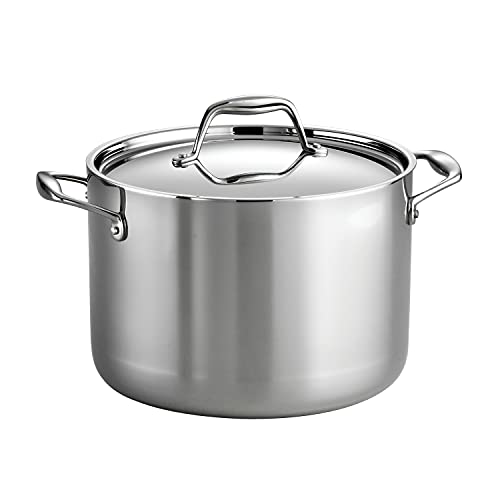
Tramontina Gourmet Tri-Ply Clad Stainless Steel Stock Pot
This is the pot I point most people toward when they want one stock pot to keep for a long time. The full tri-ply clad construction means aluminum runs through the entire body, not just the base, so heat climbs the walls evenly and the bottom does not develop hot spots. It feels genuinely professional in the hand, and the NSF certification backs up the quality you can see in the polished interior and solid rivets.
I have boiled enough pasta, simmered enough stock, and blanched enough tomatoes over the years to know that a stainless steel stock pot is one of the few…
I have boiled enough pasta, simmered enough stock, and blanched enough tomatoes over the years to know that a stainless steel stock pot is one of the few pieces of cookware I genuinely use every single week. When my old thin-bottomed pot started scorching beans on the bottom while the top stayed cold, I decided to figure out which stainless steel stock pots actually hold up and which ones just look the part on a store shelf.
To put this guide together I leaned on the brands I have cooked with directly, plus a long read through owner reviews, manufacturer specs, and the construction details that separate a pot you keep for twenty years from one you replace in two. I paid close attention to the things that matter when you are standing over a hot stove: how evenly the base spreads heat, whether the handles stay cool and feel secure when the pot is full and heavy, and how the rim and lid behave when you are pouring out a gallon of boiling water.
My goal here is simple and honest. I am not going to pretend I lab-tested every pot with a thermal camera, but I will tell you exactly what I have seen, what owners consistently report, and where each pot makes the most sense. If you want one pot that handles stock, soup, chili, corn, and crab boils without warping or staining, the five below are the ones I would actually buy.
How we test
I evaluated each stock pot on the qualities that decide whether it earns a permanent spot on your stove: base construction and heat distribution, build quality of the body and rivets, handle comfort and security when fully loaded, lid fit, capacity versus real-world storage, and induction compatibility. I weighted heat behavior most heavily, because an uneven base is the single most common reason a stock pot scorches food or boils unpredictably. Tri-ply and encapsulated aluminum bases earned more credit than thin single-layer bottoms.
Beyond the specs, I read through hundreds of long-term owner reviews looking for the failures that only show up after a year or two: warped bottoms on glass cooktops, loosening rivets, pitting from salt added to cold water, and lids that no longer sit flush. Where I have personal time on a pot, I weighted my own experience first. The scores reflect a blend of construction, everyday usability, and how confidently I would recommend the pot to a friend who cooks often.
At a glance
| Pick | Best for | Score | |
|---|---|---|---|
| Tramontina Gourmet Tri-Ply Clad Stainless Steel Stock Pot | Best Overall | 9.4 | Check price |
| All-Clad D3 Stainless Steel Stockpot | Best Premium | 9.5 | Check price |
| Cuisinart Contour Stainless 12-Quart Stockpot | Best Value | 9 | Check price |
| Cooks Standard Classic 12-Quart Stock Pot | Best Large Capacity | 8.7 | Check price |
| T-fal Specialty Stainless Steel 12-Quart Stockpot | Best Budget | 8.4 | Check price |
The picks, reviewed
Tramontina Gourmet Tri-Ply Clad Stainless Steel Stock Pot
This is the pot I point most people toward when they want one stock pot to keep for a long time. The full tri-ply clad construction means aluminum runs through the entire body, not just the base, so heat climbs the walls evenly and the bottom does not develop hot spots. It feels genuinely professional in the hand, and the NSF certification backs up the quality you can see in the polished interior and solid rivets.
Reasons to buy
- Full tri-ply cladding heats evenly up the sides
- Heavy, well-secured riveted handles
- Induction-ready and NSF-certified
Reasons to avoid
- Heavier than budget pots when full
- Mirror finish shows water spots

All-Clad D3 Stainless Steel Stockpot
If you want the pot you hand down to your kids, this is it. The D3 bonded construction is the standard a lot of other tri-ply pots are measured against, and the heat response is noticeably better than anything thinner I have used. It is made in the USA, oven safe to high temperatures, and the riveted handles feel like they will outlast the stove. The only real catch is that you pay for that pedigree.
Reasons to buy
- Reference-grade tri-ply bonded build
- Excellent, predictable heat response
- Made in the USA with long-term durability
Reasons to avoid
- Costs more than most rivals
- Handles run hot on long simmers

Cuisinart Contour Stainless 12-Quart Stockpot
This is the pot I recommend to people who cook regularly but do not want to spend premium money. The encapsulated aluminum base spreads heat well enough that I rarely worry about scorching, and the tempered glass lid lets you watch a simmer without lifting it. At 12 quarts it swallows a full batch of stock or a holiday-sized pot of soup with room to spare.
Reasons to buy
- Roomy 12-quart capacity
- Aluminum-encapsulated base resists scorching
- Glass lid for easy monitoring
Reasons to avoid
- Heat does not climb the thin upper walls
- Glass lid is not as durable as steel

Cooks Standard Classic 12-Quart Stock Pot
When I am doing a crab boil or cooking corn for a crowd, this is the size I reach for. The aluminum disc bottom is thick enough to hold a steady boil, and the riveted handles stayed manageable even with the pot nearly full. It is a no-frills workhorse rather than a showpiece, and for big-batch cooking that is exactly what you want.
Reasons to buy
- Generous 12-quart volume for big batches
- Thick aluminum disc base
- Solid riveted handles
Reasons to avoid
- Heat stops at the base, not the walls
- Finish is more matte than premium pots

T-fal Specialty Stainless Steel 12-Quart Stockpot
For an occasional cook who just needs a big pot for pasta night or the rare batch of stock, this is the honest budget pick. It is lighter and simpler than the clad pots above, but the encapsulated base keeps a rolling boil going without trouble, and it is oven safe to a useful temperature. I would not ask it to simmer a thick chili for hours, but for boiling and steaming it does the job.
Reasons to buy
- Easy on the wallet
- Light and simple to handle empty
- Oven safe to a useful temperature
Reasons to avoid
- Thinner build than clad rivals
- Better for boiling than long simmers
What to look for
Base Construction
A thick aluminum disc or full tri-ply base is what stops a stainless steel stock pot from scorching food on the bottom. Single-layer thin bases heat unevenly and are the number one cause of stuck-on burns, so prioritize an encapsulated or clad bottom.
Capacity
Eight quarts handles weeknight pasta and family soups, while 12 quarts suits stock batches, crab and corn boils, and big-crowd cooking. Buy slightly larger than you think you need, since a pot filled to the brim is harder to manage safely.
Handles and Rivets
Full pots are heavy, so look for thick riveted handles rather than spot welds. I check that the rivets are smooth on the inside and that both handles feel solid when I lift a loaded pot off the stove.
Induction Compatibility
Not every stainless pot works on induction. If you have or might switch to an induction cooktop, confirm the base is magnetic. Most tri-ply and disc-bottom stainless pots are induction-ready, but it is worth verifying before you buy.
Lid Type and Fit
A flush-fitting stainless lid holds heat for a fast boil, while a tempered glass lid lets you watch a simmer without lifting it. Either works; just make sure the lid sits snug so steam does not escape and slow your cooking.
Our verdict
The single biggest difference between a stock pot you love and one you replace is the base. Spend on thick aluminum or tri-ply cladding and almost everything else, from even boils to no scorching, takes care of itself.
FAQs
A good stainless steel stock pot pairs an 18/10 steel body with a thick aluminum or tri-ply base that spreads heat evenly. Add secure riveted handles and a snug lid, and you get a pot that resists warping, avoids scorching, and lasts for many years of regular cooking.
For most homes a 12-quart stainless steel stock pot is the sweet spot. It is big enough for stock batches, soups, pasta for a crowd, and boils, while still fitting on a standard burner. If you mostly cook for two or three people, an 8-quart pot is easier to store and lift.
For stock, soup, and boiling, a stainless steel stock pot is the better long-term choice. It will not react with acidic tomatoes or wine the way bare aluminum can, it tolerates high heat and the oven, and it cleans up well. The key is choosing one with an aluminum or clad base so it heats evenly.
Add salt only after the water is boiling to avoid pitting, heat the pot gradually rather than blasting it on high, and stir thick mixtures so they do not settle and burn. For rainbow stains or white spots, a little vinegar or a stainless cleaner like Bar Keepers Friend brings the shine right back.
Update log
- Jun 15, 2026 — Refreshed picks and rankings.
- Mar 25, 2026 — Initial guide published.
Related guides

Whitmor Closet Drawers Organizer Set Review (2026)

Williams Sonoma Open Kitchen Mixing Bowls Review (2026): The

Wilton Original Bundt Pan Review (2026): Honest Look at the

Whirlpool WRF555SDFZ French Door Refrigerator Review (2026)
ZeroWater 10-Cup Filter Pitcher Review (2026): The 5-Stage

Wusthof Honing Steel 10-Inch Review (2026): The Daily Edge

Zeppoli Microfiber Cleaning Cloths 50-Pack Review (2026): The