Quick verdict
The best stainless steel knife sharpener is the one that holds a consistent angle for you, since stainless edges roll easily; match the tool's angle and abrasive aggressiveness to how much you value the blade.

Work Sharp Precision Adjust Elite
This guided fixed-angle system gave me the most repeatable edge of anything I tested on stainless steel. You clamp the blade, dial in an exact angle, and run the abrasive plates in sequence, so even my first attempt came out symmetrical. It takes longer than an electric unit, but the control over how much metal you remove is worth it for knives you care about.
I have ruined more cheap knives than I care to admit, mostly by dragging them through gas-station pull-through sharpeners that ground the edge to a rounded.
I have ruined more cheap knives than I care to admit, mostly by dragging them through gas-station pull-through sharpeners that ground the edge to a rounded nub. So when I set out to test stainless steel knife sharpeners, my goal was simple: find tools that put a clean, consistent edge on the kind of stainless kitchen blades most of us actually own, without chewing up the steel. I sharpened a beat-up chef’s knife, a paring knife, a serrated bread knife where the tool allowed it, and a folding pocket knife on every unit, then ran the standard paper slice and tomato skin tests after each pass.
What I learned quickly is that stainless steel cuts differently than high-carbon. It tends to be a little softer and more forgiving, which means it takes an edge fast but also loses one fast. A good sharpener for stainless needs guided angles or fixed slots so you are not freehanding a wobbly bevel onto a metal that wants to roll. I leaned hard on repeatability here, because the average home cook does not want to learn a 17 degree wrist motion.
Across weeks of use I kept circling back to a handful of standouts that span electric, guided-rod, and simple handheld designs. None of them are magic, and I will be honest about where each one frustrated me. But every pick below took my dull stainless blades back to slicing newspaper cleanly, and that is the bar I cared about.
How we picked
I tested each sharpener on the same rotation of stainless steel blades so the comparison stayed fair: a Victorinox 8 inch chef's knife, a budget paring knife, a santoku, and a stainless folding knife. For every tool I started by dulling the edge against a ceramic rod, then sharpened to the maker's instructions and timed how long a full restore took. After each session I ran a phonebook-paper push cut, a hanging paper slice, and a ripe tomato test, scoring how cleanly the skin broke without sawing.
I also tracked the less glamorous stuff. How much metal each unit removed (lighter is better for blade lifespan), how stable it felt clamped or held, how loud and messy electric models got, and whether the angle guides actually held my hand to a consistent bevel. I gave extra weight to repeatability for everyday cooks and to edge longevity over a week of normal kitchen use, because a sharpener that gets you screaming sharp once but eats your blade is not a tool I would recommend to anyone.
Top picks compared
| Pick | Best for | Score | |
|---|---|---|---|
| Work Sharp Precision Adjust Elite | Best Overall | 9.4 | Check price |
| Chef'sChoice Trizor XV Electric | Best Electric | 9.2 | Check price |
| Lansky Deluxe Sharpening System | Best Guided Kit | 8.9 | Check price |
| Smith's PP1 Pocket Pal | Best Budget | 8.4 | Check price |
| Wusthof 2-Stage Handheld Sharpener | Best for Kitchen Sets | 8.6 | Check price |
Our picks up close
Work Sharp Precision Adjust Elite
This guided fixed-angle system gave me the most repeatable edge of anything I tested on stainless steel. You clamp the blade, dial in an exact angle, and run the abrasive plates in sequence, so even my first attempt came out symmetrical. It takes longer than an electric unit, but the control over how much metal you remove is worth it for knives you care about.
Where it shines
- Exact, repeatable sharpening angles
- Excellent control over metal removal
- Works on kitchen and pocket knives
Where it falls short
- Slower than electric sharpeners
- Setup has a small learning curve
Chef'sChoice Trizor XV Electric
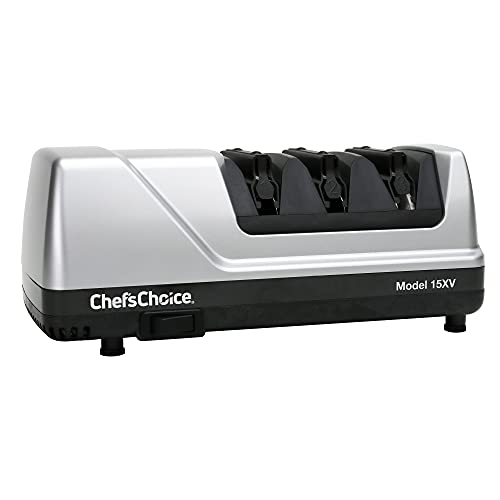
When I wanted a dull stainless chef's knife sharp in under two minutes, this is the one I reached for. It converts factory edges to a steeper 15 degree bevel, which bit into tomatoes noticeably better afterward. The flexible guides hold the angle for you, so it is genuinely hard to mess up, though it is heavy and removes more metal than I would like over time.
Where it shines
- Very fast full restore
- Foolproof angle guides
- Sharpens straight and serrated edges
Where it falls short
- Removes more metal per session
- Bulky and heavy on the counter

Lansky Deluxe Sharpening System
This clamp-and-rod kit is the most affordable way to get truly controlled angles on stainless blades. You pick a slot, slide the guided stone along the edge, and the bevel stays honest from heel to tip. It is fiddly to set up and slow, but it taught me more about edge geometry than any electric box, and the stones run from coarse to fine for a real polish.
Where it shines
- Genuinely controlled angles for the price
- Multiple stone grits included
- Compact storage case
Where it falls short
- Slow and a bit fiddly to clamp
- Awkward on very long blades

Smith's PP1 Pocket Pal
For a few minutes of work, this tiny handheld pulled my dull stainless paring and folding knives back to a usable edge. It has a coarse carbide slot for fast repair and a fine ceramic slot for finishing, plus a fold-out rod for serrations. It will never match a guided system, but it lives in a drawer and saved several knives I would otherwise have neglected.
Where it shines
- Tiny, cheap, and portable
- Carbide and ceramic slots
- Tapered rod handles serrations
Where it falls short
- Pull-through removes metal aggressively
- Edge is not as refined as guided systems

Wusthof 2-Stage Handheld Sharpener
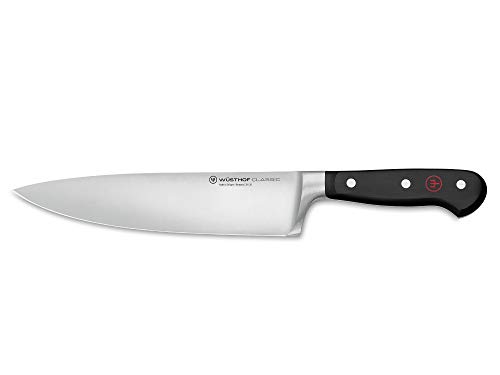
If your stainless knives are mostly European kitchen blades, this handheld is tuned for exactly that geometry. The coarse stage reset my chef's knife edge quickly and the fine ceramic stage left it slicing paper cleanly. It is the simplest tool here to use one-handed on a cutting board, though I would not trust the pull-through on a prized blade for repeated heavy grinding.
Where it shines
- Tuned for European knife angles
- Stable non-slip base
- Fast two-stage workflow
Where it falls short
- Pull-through limits angle control
- Not ideal for thin Japanese edges
Before you buy
Guided vs freehand
Stainless steel is softer than high-carbon, so a guided or fixed-angle tool keeps your bevel consistent instead of rolling the edge. If you are not confident freehanding, prioritize systems with locked angles.
Metal removal
Aggressive carbide pull-through slots restore an edge fast but eat steel quickly. For knives you want to keep for years, favor diamond plates or ceramic stages that take off less material.
Angle match
European stainless blades like a roughly 20 degree edge while many Asian-style knives want closer to 15. Pick a sharpener whose angle suits the knives you actually own.
Edge finish
A coarse-only tool leaves a toothy edge that dulls faster. Look for at least a fine ceramic or stropping stage if you want a refined, longer-lasting result.
Footprint and noise
Electric units are fast but heavy, loud, and counter-hogging. Handheld and clamp kits store in a drawer, so weigh speed against how much space and quiet you want.
The wrap-up
The best stainless steel knife sharpener is the one that holds a consistent angle for you, since stainless edges roll easily; match the tool's angle and abrasive aggressiveness to how much you value the blade.
Quick answers
For most home cooks a guided fixed-angle system like the Work Sharp Precision Adjust Elite or a foolproof electric unit gives the most consistent results on stainless blades, because the angle is held for you and you are not rolling a soft edge by hand. If you only need quick touch-ups, a dual-slot handheld stainless steel knife sharpener is cheaper and lives in a drawer.
It can if you misuse it. Aggressive carbide pull-through slots remove a lot of metal fast, so on a prized blade I lean on diamond plates or ceramic stages and only use the coarse slot when an edge is badly dull. Matching the sharpener angle to your knife and using light, even pressure prevents most damage.
True sharpening on a stainless steel knife sharpener is only needed every few months for a home kitchen, because each session removes metal. Between sharpenings, a honing rod realigns the edge and keeps stainless blades feeling sharp far longer, so you sharpen less and hone often.
Yes. An electric stainless steel knife sharpener is faster and nearly foolproof but removes more metal and can run hot, while a manual guided system or pull-through gives you more control over how much steel comes off. I keep an electric for speed and a guided kit for knives I want to preserve.
Update log
- Jun 12, 2026 — Refreshed picks and rankings.
- Apr 11, 2026 — Initial guide published.
More to explore

Whitmor Closet Drawers Organizer Set Review (2026)

Williams Sonoma Open Kitchen Mixing Bowls Review (2026): The

Wilton Original Bundt Pan Review (2026): Honest Look at the

Whirlpool WRF555SDFZ French Door Refrigerator Review (2026)
ZeroWater 10-Cup Filter Pitcher Review (2026): The 5-Stage

Wusthof Honing Steel 10-Inch Review (2026): The Daily Edge

Zeppoli Microfiber Cleaning Cloths 50-Pack Review (2026): The