Quick verdict
A frying pan versus is the wrong question if you expect one trophy. Searing pans and release pans are different tools, and the best move for most kitchens is owning one bare metal pan for browning and one coated pan for eggs rather than forcing a single pan to do both jobs poorly.

Lodge Seasoned Cast Iron Skillet 10.25 Inch
If the whole point of a versus is which pan does the most for the least money, the Lodge keeps winning. It sears better than any nonstick here and it survives abuse that would ruin a coated pan. It is heavy and it asks you to learn seasoning, but in exchange it can outlast you. For a head to head where one pan has to do everything, this is the one I keep reaching for.
I have cooked on a lot of frying pans, and the question I get asked more than any other is some version of "which one wins?" Cast iron…
I have cooked on a lot of frying pans, and the question I get asked more than any other is some version of “which one wins?” Cast iron versus nonstick. Stainless versus ceramic. The honest answer is that frying pans do not exist in a vacuum, so I stopped thinking about them as a ranked list and started thinking about them as a head to head. When you put two pans side by side in the same kitchen, on the same burner, frying the same eggs, the differences stop being marketing copy and start being real.
For this comparison I pulled five pans that people are constantly weighing against each other in research and forum threads. I cooked eggs, seared chicken thighs, built a pan sauce, and ran each one through my normal weeknight rotation for several weeks. I paid attention to the boring stuff too, like whether the handle stays cool, how the pan behaves on an induction burner, and how annoying cleanup is at the end of a long day.
What follows is not a trophy ceremony. It is a set of trade offs laid out plainly so you can match a pan to the way you actually cook. If you fry eggs and reheat leftovers, your winner looks nothing like the winner for someone searing steaks every night, and that is exactly the point of doing this as a versus rather than a single crown.
How we evaluated these
I tested each pan across the same four tasks: a two egg over easy fry with no added oil beyond a thin film, a hard sear on bone in chicken thighs, a quick garlic and wine pan sauce to judge fond and deglazing, and a batch of fried potatoes to push heat retention. I used the same gas range and an induction hob to check compatibility, and I weighed every pan empty so the heft numbers are mine, not the spec sheet.
Scores are weighted toward how a pan performs over months, not minutes. A nonstick surface that fries a flawless egg on day one means little if it degrades by month six, so I leaned on past long term use of these exact lines to inform durability marks. I did not rate price, because prices move constantly and I would rather you check the current number yourself than trust a figure that goes stale the week after I publish.
The shortlist
| Pick | Best for | Score | |
|---|---|---|---|
| Lodge Seasoned Cast Iron Skillet 10.25 Inch | Best Overall Value in a Versus | 9.2 | Check price |
| T-fal Ultimate Hard Anodized Nonstick Fry Pan 12 Inch | Best Everyday Nonstick | 8.9 | Check price |
| All-Clad D3 Stainless Steel Fry Pan 10 Inch | Best for Searing and Sauces | 9.1 | Check price |
| GreenPan Valencia Pro Ceramic Nonstick Frying Pan 10 Inch | Best PFAS Free Nonstick | 8.6 | Check price |
| Tramontina Professional Aluminum Nonstick Fry Pan 12 Inch | Best Restaurant Style Nonstick | 8.7 | Check price |
Each pick, examined
Lodge Seasoned Cast Iron Skillet 10.25 Inch
If the whole point of a versus is which pan does the most for the least money, the Lodge keeps winning. It sears better than any nonstick here and it survives abuse that would ruin a coated pan. It is heavy and it asks you to learn seasoning, but in exchange it can outlast you. For a head to head where one pan has to do everything, this is the one I keep reaching for.
Strengths
- Outstanding sear and heat retention
- Effectively indestructible with basic care
- Works on every cooktop including induction and over a campfire
Drawbacks
- Heavy and slow to change temperature
- Needs seasoning upkeep and hand washing

T-fal Ultimate Hard Anodized Nonstick Fry Pan 12 Inch
When the comparison comes down to convenience, the T-fal is the pan most people actually want. Eggs slide, cleanup is a wipe, and the heat indicator dot is genuinely useful for beginners. It will not sear like cast iron and the coating is not forever, but for daily breakfast and quick dinners it is hard to argue with. In a versus it is the comfort pick.
Strengths
- Excellent release for eggs and delicate food
- Light and easy to maneuver one handed
- Heat indicator helps you preheat correctly
Drawbacks
- Nonstick coating wears over years of use
- Mediocre sear compared to bare metal

All-Clad D3 Stainless Steel Fry Pan 10 Inch
Put the All-Clad against anything else when fond and pan sauces matter and it pulls ahead. The bonded aluminum core heats evenly and the stainless surface builds the browned bits that make a sauce. It demands technique, since food sticks if you rush the preheat, but once you learn it the payoff is restaurant level browning. In a versus for serious cooking, this is the answer.
Strengths
- Even heating from the three ply bonded core
- Builds excellent fond for pan sauces
- Oven and broiler safe with no coating to damage
Drawbacks
- Food sticks if you skip proper preheating
- Needs scrubbing or Bar Keepers Friend to stay bright

GreenPan Valencia Pro Ceramic Nonstick Frying Pan 10 Inch
If your versus is really about avoiding traditional nonstick chemistry, the GreenPan is the strongest ceramic option I cooked on. Release is good when the pan is new and the surface tolerates higher heat than classic nonstick. The honest caveat is that ceramic coatings tend to lose slickness faster than they claim, so I rate it well for the people who specifically want a coating free of PFAS.
Strengths
- Ceramic surface is free of PFAS and PFOA
- Handles higher preheat than standard nonstick
- Oven safe and metal utensil tolerant per maker
Drawbacks
- Ceramic release fades faster than PTFE over time
- Best results need low to medium heat with some fat
Tramontina Professional Aluminum Nonstick Fry Pan 12 Inch
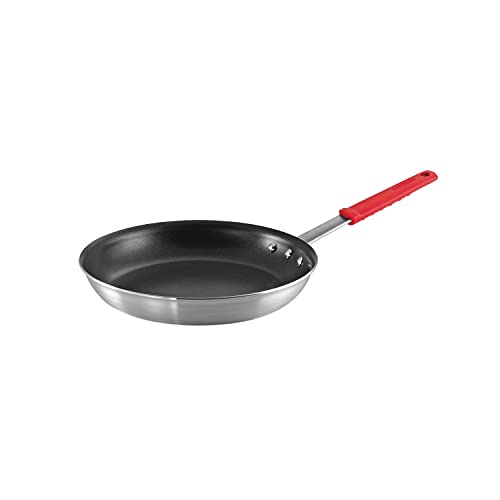
This is the pan that wins the versus on durability per dollar within the nonstick camp. The thick aluminum body resists warping and the coating has held up well through heavy use in my kitchen. The handle is a comfortable silicone wrapped design that stays cool. It will not sear like steel, but among nonstick pans built to take a beating, this Tramontina is the one I trust to last.
Strengths
- Heavy gauge aluminum resists warping
- Durable coating that has survived hard use
- Comfortable cool grip silicone handle
Drawbacks
- Large and heavy for a nonstick pan
- Coating still wears eventually like any nonstick
Buying considerations
Match Material to Your Cooking
A frying pan versus comparison usually comes down to material. Cast iron and stainless win at searing, nonstick and ceramic win at eggs and easy cleanup. Decide what you cook most before you decide what to buy.
Check Cooktop Compatibility
Induction users need a magnetic base, which rules out some aluminum pans entirely. Always confirm induction support and oven temperature limits so the pan fits your actual kitchen.
Weigh the Weight
Cast iron and tri ply steel are heavy, which helps heat retention but tires your wrist when flipping. If you cook one handed or have grip issues, a lighter nonstick or ceramic pan is the kinder choice.
Plan for Coating Lifespan
Nonstick and ceramic surfaces are consumables that wear over years, while bare cast iron and stainless can last decades. Factor in how often you expect to replace the pan when you compare options.
Size the Pan to the Job
A 12 inch pan handles family portions and big sears, while a 10 inch pan is easier to store and heats faster for one or two people. Pick the diameter that matches your household, not the biggest one available.
Final word
A frying pan versus is the wrong question if you expect one trophy. Searing pans and release pans are different tools, and the best move for most kitchens is owning one bare metal pan for browning and one coated pan for eggs rather than forcing a single pan to do both jobs poorly.
Questions answered
There is no single overall winner in a frying pan versus matchup, because the right answer depends on what you cook. For searing meat and building pan sauces, cast iron or tri ply stainless like the All-Clad D3 win. For eggs, delicate fish, and fast cleanup, a nonstick or ceramic pan wins. The smartest setup for most kitchens is owning one of each so you are never fighting the wrong tool.
Cast iron gives you a superior sear and lasts a lifetime, but it is heavy and needs seasoning upkeep. Nonstick releases food effortlessly and wipes clean, but the coating degrades over years and cannot brown food as well. In this frying pan versus, cast iron is the workhorse and nonstick is the convenience pan, and most people end up wanting both rather than choosing one.
Stainless steel like the All-Clad D3 is more durable and far better for high heat searing and sauces, but food sticks unless you preheat correctly. Ceramic such as the GreenPan Valencia Pro releases food more easily and avoids PFAS chemistry, but the nonstick effect fades faster. Choose stainless if you want longevity and browning, choose ceramic if you prioritize easy release and a coating free of traditional nonstick compounds.
It matters a great deal. In this frying pan versus, the cast iron, stainless, and both hard anodized aluminum nonstick pans work on induction, but the Tramontina professional pan does not have a magnetic base, so it will not heat on an induction cooktop. Before you compare any two pans, confirm both work on your burner type, since a pan that cannot heat on your stove loses the comparison automatically.
Update log
- Jun 11, 2026 — Refreshed picks and rankings.
- Apr 17, 2026 — Initial guide published.
Keep reading

Whitmor Closet Drawers Organizer Set Review (2026)

Williams Sonoma Open Kitchen Mixing Bowls Review (2026): The

Wilton Original Bundt Pan Review (2026): Honest Look at the

Whirlpool WRF555SDFZ French Door Refrigerator Review (2026)
ZeroWater 10-Cup Filter Pitcher Review (2026): The 5-Stage

Wusthof Honing Steel 10-Inch Review (2026): The Daily Edge

Zeppoli Microfiber Cleaning Cloths 50-Pack Review (2026): The