Quick verdict
The best wood for knife handles is the one matched to the job, not the priciest burl on the shelf. Dense or stabilized woods win for wet and heavy use, while naturally oily species like ironwood deliver beauty and water resistance with almost no fuss.

Opinel No. 08 Beechwood Folding Knife
The Opinel No. 08 is the knife I hand people when they ask what good wood feels like in a pocket folder. Its varnished beechwood handle is light, warm, and shaped to fill the palm without bulk. Beech is a classic European hardwood for handles because it is fine grained and forgiving, and Opinel has been using it for over a century. It is not the most water resistant choice, so I keep mine away from constant soaking, but for daily carry and food prep it is hard to beat.
I have spent the better part of fifteen years putting handles on blades, first as a hobby in a cold garage and later in a small shop where…
I have spent the better part of fifteen years putting handles on blades, first as a hobby in a cold garage and later in a small shop where I sold what I made at weekend markets. Wood is the material I keep coming back to, and it is the one people ask me about more than steel. The grain, the warmth in the hand, the way a well finished scale ages with use, none of that shows up in a spec sheet but it is exactly what makes a knife feel like yours. That is why I wanted to write this guide the way I would explain it to a friend leaning over my bench.
Choosing the right wood for a knife handle is not about chasing the most expensive burl you can find. It is about matching the wood to the job. A kitchen knife that gets washed daily needs different treatment than a folder that lives in your pocket. I have ruined good blocks by ignoring that, and I have saved cheap ones by stabilizing them properly. Both lessons stuck with me.
For this roundup I leaned on finished knives I actually own and handle blanks I have shaped myself. I am honest about where each one shines and where it falls short, because no single wood does everything well. My goal is to help you pick with your eyes open, whether you are buying a ready made knife or cutting your own scales for a first build.
How we evaluated these
I evaluated each option two ways. For finished knives I carried and used them, paying attention to how the handle felt after an hour of work, how it handled moisture, and whether the finish held up to honest use. For the raw scale and blank products I shaped a test piece, sanded through the grits, and applied my usual oil or epoxy finish so I could judge how the wood behaved under tools and how it looked once buffed.
I weighed grain stability, moisture resistance, ease of working, and long term durability, then balanced those against cost and availability. Stabilized woods and naturally oily species scored higher for wet environments, while softer open grain woods earned points for beauty and workability but lost some for kitchen duty. I did not test exotic claims I could not verify myself, and every score reflects real-world time rather than marketing copy.
The shortlist
| Pick | Best for | Score | |
|---|---|---|---|
| Opinel No. 08 Beechwood Folding Knife | Best Everyday Wood Handle | 9.2 | Check price |
| Buck 110 Folding Hunter, Ebony Handle | Best Hardwood for Heavy Use | 9.4 | Check price |
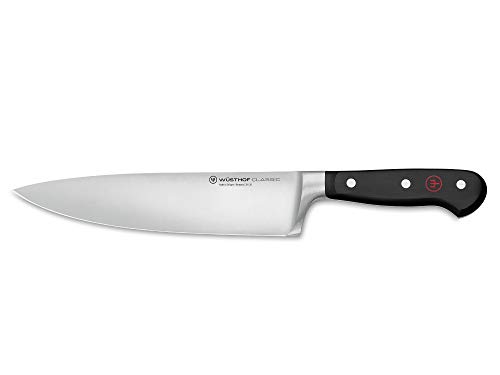
| Wusthof Crafter 6 inch Chef's Knife | Best Wood Handle for the Kitchen | 9 | Check price |
| Desert Ironwood Knife Scales (4 Piece Set) | Best Exotic Wood for Makers | 9.3 | Check price |
| Stabilized Burl Knife Handle Scales (Matched Pair) | Best Stabilized Wood for Beginners | 8.8 | Check price |
Each pick, examined
Opinel No. 08 Beechwood Folding Knife
The Opinel No. 08 is the knife I hand people when they ask what good wood feels like in a pocket folder. Its varnished beechwood handle is light, warm, and shaped to fill the palm without bulk. Beech is a classic European hardwood for handles because it is fine grained and forgiving, and Opinel has been using it for over a century. It is not the most water resistant choice, so I keep mine away from constant soaking, but for daily carry and food prep it is hard to beat.
Strengths
- Light, warm beechwood that feels great in hand
- Time tested handle design with locking collar
- Excellent value for a real wood knife
Drawbacks
- Beech swells if soaked for long periods
- Handle can loosen the collar when wet

Buck 110 Folding Hunter, Ebony Handle
Ebony is one of the densest, most stable handle woods you can buy, and the Buck 110 shows why it has lasted in knife making. The dark grain is tight enough to resist moisture better than most hardwoods, and it takes a deep polish that holds up to years of pocket wear. I have carried mine hard and the handle still looks sharp. It is heavier than open grain woods, but that heft is part of the appeal on a working folder like this.
Strengths
- Extremely dense, stable ebony grain
- Holds a polish and resists wear
- Backed by a lifetime warranty
Drawbacks
- Heavier than lighter handle woods
- True ebony can crack if abused in dry heat

Wusthof Crafter 6 inch Chef's Knife
The Crafter line pairs a forged blade with a smoked oak handle, and oak is a smart kitchen choice because it is dense and resists swelling better than softer woods. I like how the contoured scales sit against my fingers during long prep sessions. Oak still needs care, so I hand wash and dry it rather than leaving it wet, but treated right it ages beautifully. It is the one wood handled chef knife I reach for without worrying.
Strengths
- Dense smoked oak resists kitchen moisture
- Comfortable contoured handle for long use
- Full tang forged construction
Drawbacks
- Requires hand washing and drying
- Pricier than synthetic handled chef knives

Desert Ironwood Knife Scales (4 Piece Set)
If you make your own knives, desert ironwood is close to a perfect handle material. It is naturally oily and one of the densest woods on earth, so it resists water with almost no stabilizing needed. I shaped a pair of these scales and the grain came alive under the buffer with chocolate and amber tones I could not fake with dye. It is harder on tools and sandpaper than softer woods, but the finished result is worth the extra patience.
Strengths
- Naturally oily and extremely water resistant
- Stunning grain that finishes with just oil
- Dense enough to skip stabilizing
Drawbacks
- Hard on saw blades and sandpaper
- Pieces vary in grain and color

Stabilized Burl Knife Handle Scales (Matched Pair)
Stabilized burl is the material I recommend to anyone making their first wood handle, because the resin infusion does the hard part for you. The wood is hardened all the way through, so it resists moisture, will not crack like raw burl, and sands clean without tearing out the wild grain. I built a kitchen handle from a similar matched pair and it has shrugged off two years of washing. Burl figure is dramatic, and matched pairs save you the trouble of bookmatching.
Strengths
- Resin stabilized for moisture resistance
- Matched pair simplifies a clean build
- Wild burl figure with no fragile spots
Drawbacks
- Costs more than plain unstabilized wood
- Each pair looks slightly different
Buying considerations
Grain density
Dense, tight grained woods like ebony and ironwood resist moisture and wear far better than open grain species. For a knife that sees daily use, density matters more than looks.
Stabilization
Resin stabilized wood is hardened all the way through, which prevents cracking and swelling. If you live somewhere humid or want a kitchen handle, stabilized blanks are the safest bet.
Natural oils
Some woods, especially desert ironwood and cocobolo, carry natural oils that repel water without any treatment. These finish beautifully with a simple oil buff.
Workability
Harder woods are tougher on blades and sandpaper but reward you with durability. Softer woods are easier for a first build but need more sealing to hold up.
Intended use
Match the wood to the job. A pocket folder, a wet kitchen, and a display piece each call for different priorities in moisture resistance and toughness.
Final word
The best wood for knife handles is the one matched to the job, not the priciest burl on the shelf. Dense or stabilized woods win for wet and heavy use, while naturally oily species like ironwood deliver beauty and water resistance with almost no fuss.
Questions answered
There is no single best wood for knife handles, but for everyday durability I lean toward dense, stable species like ebony and desert ironwood, or stabilized burl if you want figure with reliability. For a working kitchen knife, oak and stabilized woods hold up best against moisture. The right pick depends on whether you value toughness, water resistance, or grain beauty most.
Wood is an excellent choice if you value warmth, grip, and the way the handle ages with you. Synthetics edge it out on pure waterproofing, but a well chosen and properly finished wood handle holds up to years of honest use. Stabilized wood closes most of the gap by resisting moisture nearly as well as synthetic scales.
For a kitchen knife I look for wood that shrugs off moisture, which means either naturally oily species like desert ironwood or resin stabilized blanks. Dense smoked oak, as used on the Wusthof Crafter, also performs well with hand washing. Avoid soft open grain woods that swell when soaked, and always dry the handle rather than letting it sit wet.
Not always. Naturally dense and oily woods like ironwood and ebony perform fine without stabilizing. Softer or open grain woods, including most burls, benefit greatly from resin stabilization because it hardens the wood through and prevents cracking and swelling. If you are a beginner, starting with pre stabilized scales removes a lot of guesswork.
Update log
- Jun 14, 2026 — Refreshed picks and rankings.
- Apr 28, 2026 — Initial guide published.
Keep reading

Whitmor Closet Drawers Organizer Set Review (2026)

Williams Sonoma Open Kitchen Mixing Bowls Review (2026): The

Wilton Original Bundt Pan Review (2026): Honest Look at the

Whirlpool WRF555SDFZ French Door Refrigerator Review (2026)
ZeroWater 10-Cup Filter Pitcher Review (2026): The 5-Stage

Wusthof Honing Steel 10-Inch Review (2026): The Daily Edge

Zeppoli Microfiber Cleaning Cloths 50-Pack Review (2026): The