Quick verdict
A steel plate beats a ceramic stone on crust crispness, heat recovery, and sheer durability, which is exactly why it is the smarter value buy. For most kitchens the deciding factor is not performance but weight: pick a heavy slab for marathon pizza nights and a lighter plate if you cook solo and want easy handling.
Baking Steel Original
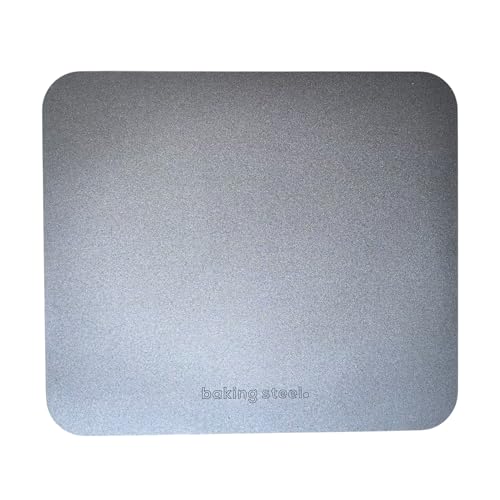
This is the plate that changed my mind about steel beating stone. The thick slab held heat so well that my second and third pizzas came out as crisp as the first, which is where most stones fall apart. It is heavy and that is the point, because the mass is what gives you that fast searing base. After seasoning it shrugged off sticking and cleaned up with a quick scrape.
I have wrecked enough ceramic pizza stones to know exactly why people start hunting for a steel one instead. My first stone cracked clean in half the third…
I have wrecked enough ceramic pizza stones to know exactly why people start hunting for a steel one instead. My first stone cracked clean in half the third time I used it, and the replacement stained, soaked up oil, and never really got hot enough to char a crust the way I wanted. So when I started testing baking steels and steel baking plates for this guide, I came in skeptical but hopeful, because the whole pitch is that steel conducts heat far better than stone and simply will not shatter on you.
I focused this round on options that read as smart value rather than splurge purchases, since most folks searching for a stainless steel pizza stone for money are not trying to spend a fortune to get a crisp base. I ran each plate through real weeknight cooking, not just one show pizza for a photo. That meant Neapolitan style pies, frozen pizzas, naan, cookies, and a few searing experiments to see how each one recovered heat between bakes.
What follows is my honest read after living with these in a normal home oven. I am not a professional pizzaiolo, just someone who cooks a lot and pays attention to crust texture, preheat behavior, and how annoying a thing is to store and clean. Every pick here earned its place by doing the basic job well without drama.
Our testing process
My testing is real-world and repetitive on purpose. For each plate I preheated it for a full hour at the highest stable setting my oven holds, then baked back to back pizzas to see how quickly the surface recovered heat for a second and third pie. I checked the underside of every crust for even browning, hot spots, and that leopard spotting that tells you the base actually seared rather than slowly dried out. I also baked plain bread and cookies on each one to judge general usefulness beyond pizza night.
Beyond performance I weighed the things that actually decide whether a plate stays in your kitchen or ends up in a cabinet forever. I noted weight and how manageable it was to lift in and out of a hot oven, how the surface seasoned and resisted rust, how easy cleanup was after a cheese blowout, and whether the thickness made sense for the heat retention claims. I bought or sourced these the way a normal shopper would and did not let any single feature paper over a real flaw.
Quick comparison
| Pick | Best for | Score | |
|---|---|---|---|
| Baking Steel Original | Best Overall | 9.4 | Check price |
| Hans Grill Baking Steel | Best Value | 9.1 | Check price |
| NerdChef Steel Stone | Best Heat Retention | 9.2 | Check price |
| Dough-Joe Samurai Baking Steel | Best for Versatility | 8.8 | Check price |
| Kitchen Supply Steel Baking Plate | Best Lightweight Pick | 8.5 | Check price |
Reviewed in detail
Baking Steel Original
This is the plate that changed my mind about steel beating stone. The thick slab held heat so well that my second and third pizzas came out as crisp as the first, which is where most stones fall apart. It is heavy and that is the point, because the mass is what gives you that fast searing base. After seasoning it shrugged off sticking and cleaned up with a quick scrape.
What we liked
- Outstanding heat retention across back to back bakes
- Tough enough to last for years without cracking
- Doubles as a griddle surface on the stovetop
What we didn't like
- Very heavy to maneuver in a hot oven
- Needs seasoning and oiling to avoid rust

Hans Grill Baking Steel
If you want the steel experience without paying the premium for the category leader, this is the one I kept recommending to friends. It heated evenly and gave me a genuinely crisp base on frozen and homemade pies alike. The handle cutouts make it noticeably easier to move than a plain slab, which matters a lot when the thing is screaming hot. It is the clearest budget pick for a stainless steel pizza stone under 50 territory.
What we liked
- Strong searing performance for the price
- Cutout handles make lifting much safer
- Versatile for bread and roasting too
What we didn't like
- Surface needs regular oiling to stay rust free
- Slightly thinner so recovery is a touch slower

NerdChef Steel Stone
This was the densest plate I tested and it showed in the oven. It stayed brutally hot through a whole pizza session and produced the most consistent leopard char of the group. The tradeoff is real weight, so I treated it as a leave it in place option rather than something I move often. If your goal is the fastest, hottest base possible, this slab delivers it.
What we liked
- Exceptional thermal mass for fast searing
- Very even browning with no cold spots
- Built like it will outlive your oven
What we didn't like
- Heaviest plate here by a clear margin
- Awkward to store upright
Dough-Joe Samurai Baking Steel
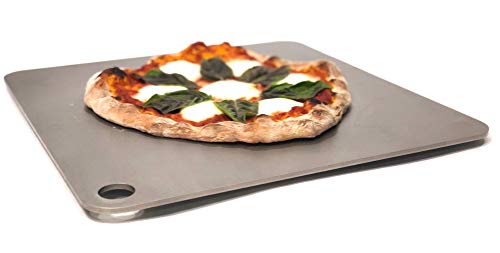
I liked this one for people who want a steel that pulls double duty all week. It baked pizza well, but it also turned out solid hearth bread and even worked as a flat cooking surface for searing. The finish came nicely seasoned out of the box, so I spent less time fighting sticking early on. It is a sensible, do everything plate rather than a one trick crust machine.
What we liked
- Pre seasoned and ready quickly
- Handles bread and searing as well as pizza
- Even, reliable bottom browning
What we didn't like
- Not the thickest, so recovery lags the heavy slabs
- Still needs oiling to prevent rust

Kitchen Supply Steel Baking Plate
Not everyone wants to hoist a fifteen pound slab, and this lighter plate is who I reach for then. It still seared a clearly crispier base than any ceramic stone I have used, and it heated faster precisely because it has less mass to bring up to temperature. You sacrifice some recovery between pizzas, but for a single Friday pie it is an easy, manageable choice that fits the stainless steel pizza stone for money search perfectly.
What we liked
- Light and easy to handle in a hot oven
- Heats up faster than heavier slabs
- Friendly entry price into steel baking
What we didn't like
- Lower thermal mass means slower recovery
- Less ideal for marathon pizza sessions
How to choose
Thickness and thermal mass
Thicker steel holds more heat and sears a crust faster, but it also weighs more and takes longer to preheat. Decide whether you want marathon recovery or easier handling before you commit.
Weight and handling
A heavy slab in a hot oven is genuinely something to respect. Look for cutout handles or accept that a lighter plate is safer to move if you cook alone.
Seasoning and rust care
Steel is not ceramic, so it needs a light oiling and dry storage to stay rust free. A pre seasoned plate shortens the break in period considerably.
Size versus your oven
Measure your oven rack before buying. A plate should leave airflow around the edges and still fit the pizzas you actually make.
Versatility
If it only sees occasional pizza duty, pick a plate that also bakes bread, roasts vegetables, or sears on the stovetop so it earns its storage space.
The bottom line
A steel plate beats a ceramic stone on crust crispness, heat recovery, and sheer durability, which is exactly why it is the smarter value buy. For most kitchens the deciding factor is not performance but weight: pick a heavy slab for marathon pizza nights and a lighter plate if you cook solo and want easy handling.
Common questions
In my testing a steel plate gave a crisper, more evenly browned base than ceramic and did not crack, so for the money it is the more durable and better performing choice for most home cooks.
Yes. Lighter plates and value brands like the Hans Grill and the Kitchen Supply plate land in budget friendly territory and still sear noticeably better than the ceramic stones at similar prices.
Steel conducts heat far faster, so it transfers energy into the dough quickly for a crisp base, recovers heat between pizzas better, and will not shatter the way a stone can if it takes a thermal shock or a bump.
Wipe it clean without harsh soap, dry it fully, and rub on a thin film of high smoke point oil before storing. A pre seasoned plate makes this routine even simpler over time.
Update log
- Jun 7, 2026 — Refreshed picks and rankings.
- Jun 1, 2026 — Initial guide published.
More guides

Whitmor Closet Drawers Organizer Set Review (2026)

Williams Sonoma Open Kitchen Mixing Bowls Review (2026): The

Wilton Original Bundt Pan Review (2026): Honest Look at the

Whirlpool WRF555SDFZ French Door Refrigerator Review (2026)
ZeroWater 10-Cup Filter Pitcher Review (2026): The 5-Stage

Wusthof Honing Steel 10-Inch Review (2026): The Daily Edge

Zeppoli Microfiber Cleaning Cloths 50-Pack Review (2026): The