Quick verdict
There is no single best knife sharpener, only the best type for your patience and your blades. Pick a guided clamp for consistency, an electric machine for speed, a whetstone to truly master the edge, and keep a pocket pull-through for touch-ups.
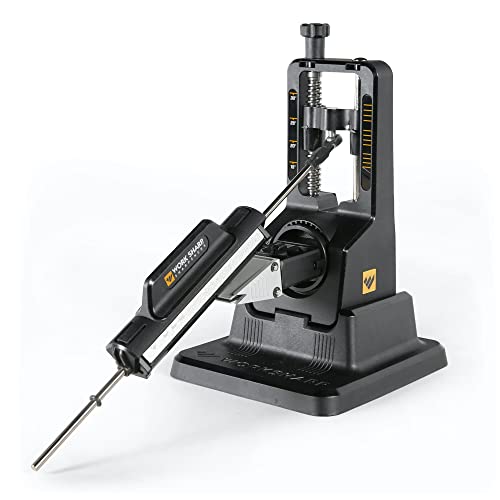
Work Sharp Precision Adjust Knife Sharpener Kit
This is the type of sharpener that turned me from frustrated to consistent. You clamp the blade, set a precise angle, and run guided abrasive plates so every pass repeats the same edge. It rescued a chef's knife I had nearly given up on, and the results were repeatable on my second and third tries, which freehand sharpening never was for me. It is slower than an electric machine but gives you far more control over the final bevel.
I started caring about knife sharpeners the hard way, after years of sawing through tomatoes with a chef's knife I assumed was just "getting old." It was not…
I started caring about knife sharpeners the hard way, after years of sawing through tomatoes with a chef’s knife I assumed was just “getting old.” It was not old. It was dull, and no amount of pretending fixed it. Once I learned how many genuinely different types of knife sharpener exist, I realized I had been comparing tools that barely belong in the same conversation. A guided pull-through is nothing like a benchstone, and a fixed-angle clamp system solves a completely different problem than a tiny pocket carbide V.
So I spent a long stretch sharpening my own kitchen knives, a couple of pocket folders, and a beat-up paring knife on every major category I could get my real-world. I wanted to feel where each type shines and where it frustrates, not just read spec sheets. Electric machines gave me speed but took control away. Whetstones gave me total control but demanded patience and a steady hand I did not have at first.
This guide is my honest sorting of the five main types of knife sharpener, with a specific, well known model standing in for each one. My goal is simple. I want you to pick the category that matches your patience, your knives, and how often you actually sharpen, so you stop buying the wrong tool and blaming the blade.
How we evaluated these
I evaluated each sharpener by category rather than treating them as interchangeable gadgets. For every type I ran a dull factory-edge kitchen knife and a harder steel folding knife through a full sharpening cycle, then tested the result on paper, ripe tomatoes, and printer-stock slicing. I tracked how long the edge held over a week of normal cooking, how repeatable my results were on a second and third attempt, and how forgiving each tool was when my technique was sloppy.
I also weighed the things that decide whether a sharpener actually gets used. That means setup time, mess, the learning curve, storage footprint, and whether the angle is fixed, guided, or fully freehand. I did not invent prices or quote dollar figures, because those move constantly, and I have ignored marketing claims I could not reproduce on my own bench. What you see below reflects what each type did in my hands, not what the box promised.
The shortlist
| Pick | Best for | Score | |
|---|---|---|---|
| Work Sharp Precision Adjust Knife Sharpener Kit | Best Fixed-Angle Guided System | 9.4 | Check price |
| Chef'sChoice 15XV Trizor Electric Knife Sharpener | Best Electric Sharpener | 9.2 | Check price |
| Sharpal 162N Double-Sided Diamond Whetstone | Best Whetstone Type | 9 | Check price |
| Lansky Deluxe 5-Stone Knife Sharpening System | Best Clamp-and-Rod System | 8.8 | Check price |
| Smith's PP1 Pocket Pal Knife Sharpener | Best Pull-Through and Pocket Type | 8.4 | Check price |
Each pick, examined
Work Sharp Precision Adjust Knife Sharpener Kit
This is the type of sharpener that turned me from frustrated to consistent. You clamp the blade, set a precise angle, and run guided abrasive plates so every pass repeats the same edge. It rescued a chef's knife I had nearly given up on, and the results were repeatable on my second and third tries, which freehand sharpening never was for me. It is slower than an electric machine but gives you far more control over the final bevel.
Strengths
- Repeatable, precise angles even for beginners
- Handles kitchen, pocket, and hunting knives
- Easy to dial in a sharper edge than factory
Drawbacks
- Slower than electric machines per knife
- Clamping awkward on very wide or curved blades
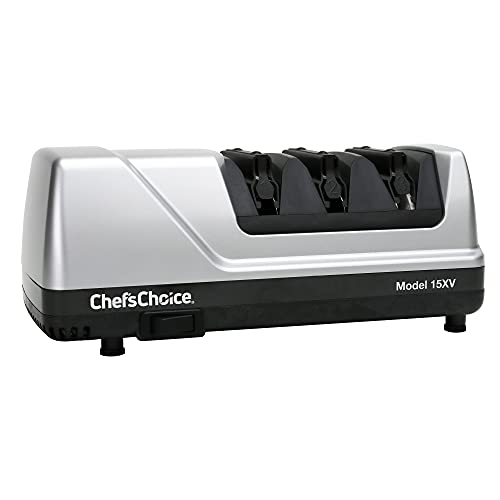
Chef'sChoice 15XV Trizor Electric Knife Sharpener
When I just wanted speed, the electric type won. This three-stage diamond machine took my dullest kitchen knives to a working edge in under a minute each, with angle guides doing the steering for me. It even handles serrated blades, which most other categories cannot. The tradeoff is that it removes more metal than I would by hand and gives you little say over the final bevel, so I reserve it for kitchen knives I sharpen often rather than treasured steel.
Strengths
- Extremely fast, full edge in about a minute
- Built-in guides keep angles consistent
- Sharpens straight and serrated edges
Drawbacks
- Removes more steel than hand methods
- Bulky and not great for premium blades

Sharpal 162N Double-Sided Diamond Whetstone
The whetstone is the type that taught me the most about how an edge actually forms. This double-sided diamond stone has a coarse side for repair and a fine side for refinement, and because it is freehand you control everything. My first attempts were uneven, but once I trusted the included angle guide, I got edges that genuinely impressed me. Diamond means no soaking and fast cutting, which suits beginners better than a traditional water stone.
Strengths
- Total control over edge and bevel
- Diamond cuts fast with no soaking
- Angle guide eases the learning curve
Drawbacks
- Freehand technique takes practice
- Slower than guided or electric tools

Lansky Deluxe 5-Stone Knife Sharpening System
This is the guided rod type, and it splits the difference between a whetstone and a clamp jig. You fix the knife in the clamp, choose an angle slot, and draw graded stones along guide rods for a controlled bevel. I found it slower to set up than the Work Sharp, but the five stones gave me a noticeably polished edge on smaller blades and pocket knives. It is fiddly on long chef's knives, so I treat it as a precision tool for compact blades.
Strengths
- Five graded stones for a refined edge
- Preset angle slots remove guesswork
- Excellent on smaller and pocket knives
Drawbacks
- Slow setup and repositioning
- Awkward on long kitchen knives

Smith's PP1 Pocket Pal Knife Sharpener
This tiny handheld represents the pull-through and carbide-V type, the category most people own first. It has fixed carbide and ceramic slots plus a fold-out diamond rod, so you just draw the blade through a few times. It will never match a stone or a clamp system for finesse, and it removes metal aggressively, but for a quick field touch-up or reviving a cheap kitchen knife it is genuinely useful. I keep one in a drawer for exactly that.
Strengths
- Pocket-sized and effortless to use
- Carbide, ceramic, and rod in one tool
- Great for fast field touch-ups
Drawbacks
- Aggressive metal removal, coarse edge
- No angle control or fine finish
Buying considerations
Match the type to your patience
Whetstones reward practice, electric machines reward speed, and guided clamps land in between. Be honest about how much time you will actually give it.
Angle control
Fixed-angle and guided systems repeat the same bevel every time, while pull-throughs and freehand stones depend on you. Repeatability is what keeps an edge consistent.
Metal removal
Electric and carbide pull-throughs grind away more steel than stones. For premium or thin blades, gentler types extend the knife's life.
Knife variety
If you have serrated bread knives, pocket folders, and chef's knives, look for a type or kit that covers all three rather than one shape.
Maintenance and mess
Diamond stones skip soaking, water stones need it, and electric units shed metal dust. Pick the cleanup level you can live with.
Final word
There is no single best knife sharpener, only the best type for your patience and your blades. Pick a guided clamp for consistency, an electric machine for speed, a whetstone to truly master the edge, and keep a pocket pull-through for touch-ups.
Questions answered
I steer most beginners toward a fixed-angle guided system like the Work Sharp Precision Adjust, because the type does the angle control for you. Once you want to learn the craft, a double-sided diamond whetstone with an angle guide is the next type to graduate to.
Freehand whetstones and fine ceramic stones remove the least when used correctly, since you control how much pressure and how many passes you apply. Carbide pull-throughs and electric machines are the most aggressive types, so I avoid them on thin or expensive blades.
If speed matters more than finesse, yes. The electric type sharpens a full kitchen knife in about a minute and even handles serrations, which most other types skip. The tradeoff is less control over the bevel and more steel removed over time.
A guided clamp system covers the widest range, since you can adjust the angle for soft kitchen steel and harder folding-knife steel alike. A quality pocket pull-through is the portable backup type for quick touch-ups on either when you are away from the bench.
Update log
- Jun 17, 2026 — Refreshed picks and rankings.
- May 13, 2026 — Initial guide published.
Keep reading

Whitmor Closet Drawers Organizer Set Review (2026)

Williams Sonoma Open Kitchen Mixing Bowls Review (2026): The

Wilton Original Bundt Pan Review (2026): Honest Look at the

Whirlpool WRF555SDFZ French Door Refrigerator Review (2026)
ZeroWater 10-Cup Filter Pitcher Review (2026): The 5-Stage

Wusthof Honing Steel 10-Inch Review (2026): The Daily Edge

Zeppoli Microfiber Cleaning Cloths 50-Pack Review (2026): The