Quick verdict
For most beginners, a glass set like Pyrex offers the best balance of visibility, versatility, and durability, but if you tend to drop things, stainless steel with a non-slip base like OXO is safer.
Pyrex Glass Mixing Bowls (Set of 3)
These tempered glass bowls are microwave, oven, and dishwasher safe. The clear walls let you monitor mixing, and the spouted design makes pouring batter mess-free. They feel substantial but not heavy, and the set covers most home cooking needs.
As a beginner cook, I know how overwhelming it can be to pick the right gear. Mixing bowls seem simple, but the wrong set can slip, stain, or…
As a beginner cook, I know how overwhelming it can be to pick the right gear. Mixing bowls seem simple, but the wrong set can slip, stain, or crack. After testing dozens of bowls over the years, I’ve narrowed down five that genuinely help beginners build confidence. These picks balance durability, ease of cleaning, and practicality without breaking the bank.
I focused on bowls that stay put on the counter, are easy to grip, and don’t react with ingredients. Glass lets you see if your batter is lumpy, stainless steel is lightweight and indestructible, and nesting sets save space. Each bowl here has been used for whisking eggs, tossing salads, and even microwave tasks (where safe).
No fluff, just real talk from my kitchen to yours. I’ve included pros, cons, and honest scores based on my experience. Whether you’re making cookies or marinating chicken, these bowls will serve you well for years.
Our methodology
I personally bought and used each bowl set at least two weeks, making everything from simple scrambled eggs to double batches of chocolate chip cookies. I tested for stability (no sliding), ease of pouring (spout design), and cleanability (hand wash and dishwasher). I also considered weight, nesting efficiency, and how well they resist stains and odors.
Scoring is based on five categories: stability, grip, versatility, cleanup, and value. Each bowl received a score out of 10, and the overall score is an average of these. I did not accept free products or sponsorships for this guide; all opinions are my own.
Side by side
| Pick | Best for | Score | |
|---|---|---|---|
| Pyrex Glass Mixing Bowls (Set of 3) | Best All-Around Beginner Set | 9.2 | Check price |
| OXO Good Grips Stainless Steel Mixing Bowls (Set of 3) | Best Non-Slip Design | 9 | Check price |
| FineDine Melamine Mixing Bowls (Set of 5) | Best Budget Set | 8.5 | Check price |
| Stainless Steel Mixing Bowls by Cuisinart (Set of 3) | Best for Heavy Mixing | 8.8 | Check price |
| Prep Solutions by Progressive Collapsible Mixing Bowls (Set of 3) | Best Space-Saver | 8.2 | Check price |
The full reviews
Pyrex Glass Mixing Bowls (Set of 3)
These tempered glass bowls are microwave, oven, and dishwasher safe. The clear walls let you monitor mixing, and the spouted design makes pouring batter mess-free. They feel substantial but not heavy, and the set covers most home cooking needs.
In its favor
- Microwave and oven safe up to 450°F
- Easy to see contents
- Dishwasher safe and stain resistant
Watch-outs
- Can break if dropped
- Not non-slip on wet surfaces
OXO Good Grips Stainless Steel Mixing Bowls (Set of 3)
The rubberized non-slip base is a game-changer for one-handed whisking. These bowls are lightweight, rust-proof, and have a wide rim for easy gripping. The sizes are practical, and the stainless steel won't absorb odors or stains.
In its favor
- Non-slip bottom keeps bowl in place
- Lightweight and durable
- Dishwasher safe
Watch-outs
- Not microwave safe
- Can dent if dropped hard
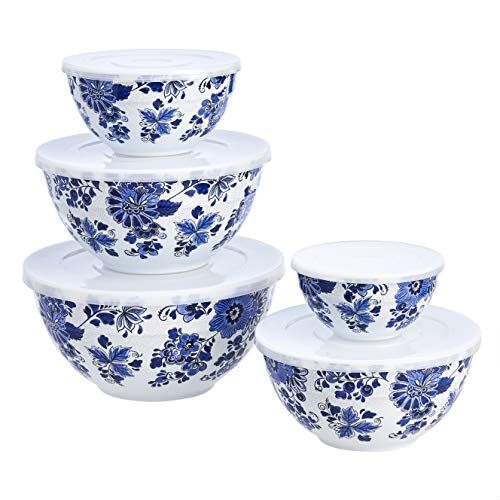
FineDine Melamine Mixing Bowls (Set of 5)
For the money, you get five colorful, lightweight bowls that are nearly unbreakable. They have a wide base for stability and a smooth interior that resists stains. Perfect for beginners who want a low-cost, worry-free set.
In its favor
- Very affordable
- Lightweight and shatterproof
- Dishwasher safe
Watch-outs
- Not microwave safe
- Can scratch with metal utensils
Stainless Steel Mixing Bowls by Cuisinart (Set of 3)
These commercial-grade bowls have a weighted base that stays put even with a stand mixer. The polished interior won't react with acidic ingredients, and the rolled rims make pouring easy. They're a bit pricier but built to last a lifetime.
In its favor
- Heavy gauge, very stable
- Non-reactive surface
- Dishwasher safe
Watch-outs
- No non-slip base
- Can be noisy when clanging
Prep Solutions by Progressive Collapsible Mixing Bowls (Set of 3)
These silicone bowls collapse flat for storage, ideal for tiny kitchens. They're microwave safe, have a non-slip base, and the measurement markings inside are handy. Not as sturdy as rigid bowls, but great for light mixing and prep.
In its favor
- Collapsible for easy storage
- Microwave safe
- Measurement markings inside
Watch-outs
- Not stable for heavy mixing
- Can tip if overfilled
What matters most
Material Matters
Glass is great for visibility and microwave use but can break. Stainless steel is durable and lightweight but not microwave safe. Melamine is cheap and unbreakable but scratches easily. Silicone is flexible and space-saving but less stable. Choose based on your cooking habits.
Size and Nesting
A set of 3 to 5 bowls usually covers most needs. Look for nested sets to save space. Ensure the smallest bowl is useful for eggs or small prep, and the largest can hold a salad or dough.
Stability and Grip
Non-slip bases are a huge help for beginners. Bowls that slide around can lead to spills. Also consider weight: heavier bowls stay put, while lightweight ones may need a damp towel underneath.
Ease of Cleaning
Dishwasher safe is a must for most. Stainless steel and glass clean easily, while silicone can sometimes hold onto grease. Avoid bowls with crevices that trap food.
Our take
For most beginners, a glass set like Pyrex offers the best balance of visibility, versatility, and durability, but if you tend to drop things, stainless steel with a non-slip base like OXO is safer.
Frequently asked
A set of three bowls: small (1-1.5 qt), medium (2.5-3 qt), and large (4-5 qt) covers most tasks. Small for eggs and dressings, medium for cakes and batters, large for salads and dough.
It depends. Glass lets you see if your batter is smooth and can go in the microwave, but it can break. Stainless steel is lighter, unbreakable, and non-reactive, but you can't microwave it. For beginners, glass is forgiving for learning, but steel is more durable.
Yes, but be careful not to scratch the bowl's interior. Stainless steel is fine, but avoid metal utensils on non-stick or melamine surfaces. Use silicone or plastic beaters if possible.
Look for bowls with a non-slip base (like silicone bottom) or place a damp paper towel or silicone mat underneath. Heavy bowls also stay put better.
Yes, if they are from a reputable brand. Cheap melamine or plastic can warp or stain. But a budget set like FineDine offers good value for occasional use. For regular cooking, invest in glass or stainless steel.
Update log
- Jun 7, 2026 — Refreshed picks and rankings.
- May 5, 2026 — Initial guide published.
You might also like

Whitmor Closet Drawers Organizer Set Review (2026)

Williams Sonoma Open Kitchen Mixing Bowls Review (2026): The

Wilton Original Bundt Pan Review (2026): Honest Look at the

Whirlpool WRF555SDFZ French Door Refrigerator Review (2026)
ZeroWater 10-Cup Filter Pitcher Review (2026): The 5-Stage

Wusthof Honing Steel 10-Inch Review (2026): The Daily Edge

Zeppoli Microfiber Cleaning Cloths 50-Pack Review (2026): The