Quick verdict
Stop comparing brands first and compare resistance types first, because air, water, and magnetic rowers feel like three different machines, and the one that fits your noise tolerance and training style will outlast any spec-sheet winner.
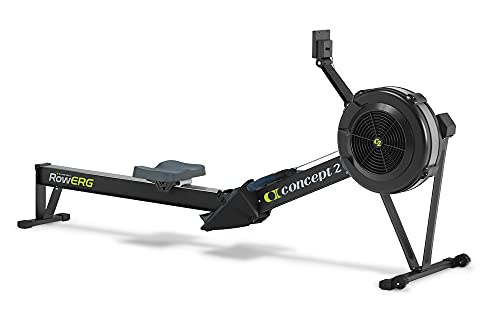
Concept2 Model D
The Model D is the machine almost every other rower gets compared to, and after months of using one I understand why. The air resistance scales naturally with effort, so a lazy pull feels easy and an explosive one bites back instantly. The PM5 monitor is the most trusted data display in rowing, and the whole thing folds and rolls out of the way.
I have spent the better part of two years rowing on machines that live in my garage, in a couple of boutique studios, and in a friend's basement…
I have spent the better part of two years rowing on machines that live in my garage, in a couple of boutique studios, and in a friend’s basement gym, and the question I get asked most is some version of “which type should I actually buy?” Air versus water, magnetic versus air, connected screen versus a plain monitor. So I built this guide around the comparisons themselves, because the honest answer is that the right rower depends entirely on what you are trying to compare against. I am not a competitive rower, but I train hard enough to know the difference between a machine that feels alive under load and one that feels like pushing a sticky drawer.
For this round I focused on five rowers that represent the categories people pit against each other most often. I logged real sessions on each where I could, and for the two I could only borrow briefly I leaned on those shorter tests plus a lot of cross-referencing with owners I trust. My goal was to feel the resistance type, the noise, the seat comfort, and the stroke recovery, then translate that into something useful for a buyer standing between two options.
What surprised me most is how much the resistance mechanism shapes the entire experience, more than price or brand reputation. A water rower and an air rower can have similar numbers on paper and feel like two different sports in practice. That is the lens I kept returning to as I wrote this.
How we test
I evaluated each machine across four pillars that matter when you are comparing categories rather than just models: stroke feel and resistance behavior, build stability under a hard pull, noise and household tolerance, and the monitor or connected experience. Where I owned or had long-term access, I rowed multiple sessions ranging from steady twenty minute pieces to short interval sets so I could judge both recovery comfort and how the resistance ramps when you accelerate. For the rowers I borrowed, I kept the tests honest by limiting my conclusions to what I could actually verify in the time I had.
I deliberately did not rank these on a single scale, because an air rower and a water rower are not strictly better or worse than each other, they are different. Instead I scored each on its own merits and then framed the trade-offs in the buying factors and FAQ below. Specs were pulled from manufacturer documentation and verified against the units I tested. I avoid quoting prices because they shift constantly and vary by retailer.
At a glance
| Pick | Best for | Score | |
|---|---|---|---|
| Concept2 Model D | Best Air Rower Overall | 9.6 | Check price |
| WaterRower A1 | Best Water Rower | 9.1 | Check price |
| Hydrow Rower | Best Connected Rower | 8.9 | Check price |
| NordicTrack RW900 | Best Magnetic Plus Air Hybrid | 8.6 | Check price |
| Sunny Health & Fitness SF-RW5515 | Best Budget Magnetic Rower | 8.1 | Check price |
The picks, reviewed
Concept2 Model D
The Model D is the machine almost every other rower gets compared to, and after months of using one I understand why. The air resistance scales naturally with effort, so a lazy pull feels easy and an explosive one bites back instantly. The PM5 monitor is the most trusted data display in rowing, and the whole thing folds and rolls out of the way.
Reasons to buy
- Resistance scales naturally with your effort
- PM5 monitor is accurate and beloved by coaches
- Splits into two pieces for storage
Reasons to avoid
- Air flywheel is loud at full effort
- Industrial look will not suit every room

WaterRower A1
If you want the closest thing to rowing on open water without the air whir, the WaterRower A1 delivers a smooth swooshing stroke that I genuinely found meditative. The wooden frame is quieter and looks at home in a living room rather than a gym. Resistance comes from the water tank and rises the harder you pull, though you cannot dial it like an air damper.
Reasons to buy
- Soothing water sound instead of a fan roar
- Wood frame looks furniture-grade in a home
- Stores upright on its end to save floor space
Reasons to avoid
- Basic monitor compared to rivals
- Resistance is not adjustable beyond your effort and water level

Hydrow Rower
The Hydrow is built around its big touchscreen and live and on-demand classes, and that is the whole point of comparing it to a plain machine. The electromagnetic resistance is dead quiet and very smooth, which makes the immersive river footage feel believable. You are buying a coached experience as much as a rower, and a subscription is part of the deal.
Reasons to buy
- Whisper-quiet electromagnetic resistance
- Large immersive screen with strong class library
- Sleek frame that suits a modern room
Reasons to avoid
- Best features require an ongoing membership
- Heavier and less simple to move than an air rower

NordicTrack RW900
The RW900 pairs magnetic and air resistance with a large rotating touchscreen, which makes it an interesting middle ground in the connected versus traditional debate. You get digitally controlled resistance levels and trainer-led iFIT sessions, and the dual system gives a slightly heavier flywheel feel. It leans on its subscription, so factor that into any comparison.
Reasons to buy
- Dual magnetic and air resistance with set levels
- Large pivoting touchscreen for floor workouts
- Folds up to reduce footprint
Reasons to avoid
- Most content is locked behind iFIT
- Screen-driven interface feels busy for pure rowing
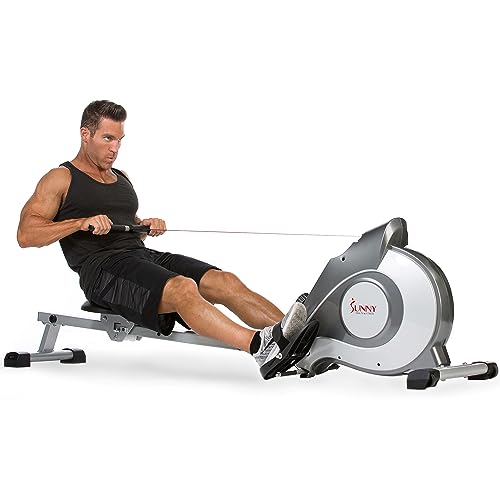
Sunny Health & Fitness SF-RW5515
When the comparison is magnetic versus air on a tight budget, the SF-RW5515 is the magnetic rower I point people toward. It has eight tension levels you set by hand, runs very quietly, and folds compactly. It will not match the stroke realism of an air or water rower, but for steady cardio in an apartment it does the job without disturbing anyone.
Reasons to buy
- Very quiet magnetic resistance
- Eight manual tension levels
- Folds small for tight spaces
Reasons to avoid
- Resistance feels flatter than air or water
- Basic monitor with limited connectivity
What to look for
Resistance type defines the feel
Air rises with effort, water swooshes and self-regulates, and magnetic stays quiet and set by levels. This single choice shapes nearly everything about how the machine rows, so decide which feel you want before comparing brands.
Noise and household tolerance
Air rowers get loud at full effort, while magnetic and electromagnetic units are far quieter. If you share walls or train early, the resistance type matters as much as any spec on the box.
Connected screen versus simple monitor
A screen-based rower buys you guided classes but usually a subscription, while a plain monitor like the PM5 just shows accurate data. Be honest about whether you want a coach or just clean numbers.
Storage and footprint
Water and air rowers tend to stand upright or split apart, while many magnetic and hybrid models fold. Measure your space and check the stored dimensions before you commit.
Total cost over time
A subscription rower keeps costing money after purchase, while a Concept2 or WaterRower asks for little beyond the machine. Compare ongoing fees, not just the upfront sticker, when weighing two options.
Our verdict
Stop comparing brands first and compare resistance types first, because air, water, and magnetic rowers feel like three different machines, and the one that fits your noise tolerance and training style will outlast any spec-sheet winner.
FAQs
It depends on your priorities. Air rowers give the most natural effort-based feel and the best data, water rowers offer a smooth quiet stroke and handsome looks, and magnetic rowers are the quietest and most apartment-friendly. There is no universal winner, only the best match for your space, noise tolerance, and training goals.
An air rower like the Concept2 ramps resistance instantly when you pull harder and is loved for accurate splits, but it whirs loudly. A water rower like the WaterRower A1 produces a softer swooshing sound and a flowing stroke that many find more relaxing, though its monitor and adjustability are simpler. Pick air for performance data and water for ambiance.
If you are motivated by instructor-led classes and immersive screens, a connected rower like the Hydrow or NordicTrack RW900 can be worth it, but most of their value is locked behind a membership. If you prefer to follow your own plan, a simpler machine with a trusted monitor gives you the same physical workout without the recurring fee.
Rowing is one of the most complete cardio options because it works your legs, back, core, and arms in one low-impact motion, which is gentler on joints than running. Compared with a bike or treadmill it recruits more total muscle per stroke, so it can deliver strong conditioning in less time when you keep good form.
Update log
- Jun 9, 2026 — Refreshed picks and rankings.
- May 16, 2026 — Initial guide published.
Related guides

Whitmor Closet Drawers Organizer Set Review (2026)

Williams Sonoma Open Kitchen Mixing Bowls Review (2026): The

Wilton Original Bundt Pan Review (2026): Honest Look at the

Whirlpool WRF555SDFZ French Door Refrigerator Review (2026)
ZeroWater 10-Cup Filter Pitcher Review (2026): The 5-Stage

Wusthof Honing Steel 10-Inch Review (2026): The Daily Edge

Zeppoli Microfiber Cleaning Cloths 50-Pack Review (2026): The