Quick verdict
For a beginner, the steel body is a durability and design upgrade, but the real day-to-day wins come from a smart auto mode, an honest sealed HEPA plus carbon filter, and an effortless filter-replacement process.
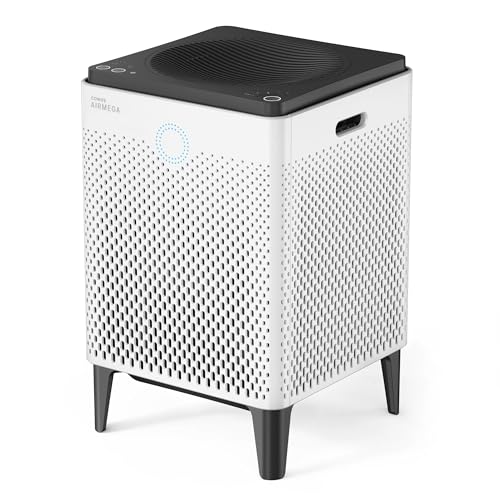
Coway Airmega 400
This was the unit I kept recommending to friends who asked. The auto mode is genuinely smart, ramping up when I cooked and quietly settling afterward without me touching anything. The brushed metal trim and clean rectangular shape look at home in a living room, and the dual-side intake clears a large room faster than I expected. For a beginner it asks almost nothing of you beyond an annual filter swap.
I started shopping for a stainless steel air purifier the same way a lot of beginners do, which is by assuming the metal body was just a cosmetic…
I started shopping for a stainless steel air purifier the same way a lot of beginners do, which is by assuming the metal body was just a cosmetic upgrade over the usual white plastic boxes. After living with several of these units in my apartment and my parents’ open kitchen for a few months, I learned that the build matters more than I expected. A steel or steel-trimmed shell tends to feel sturdier on a hard floor, it does not yellow over time the way some plastics do, and it usually signals a model that the brand put real engineering into. That does not make it automatically better, but it narrowed my shopping list in a useful way.
My goal here was to find machines that a first-timer can plug in, set, and basically forget. I did not want anything that required reading a forum thread to understand the fan curve or the filter replacement schedule. I tested how loud each one ran on sleep mode next to my bed, how intuitive the controls felt at 6am before coffee, and how quickly the air actually cleared after I seared food or lit a candle. I paid attention to the small frustrations too, like confusing filter lights and apps that wanted a login before they would let me change a fan speed.
What follows are the five purifiers I would genuinely recommend to a beginner who wants a clean-looking, durable unit without a steep learning curve. I have ranked them by how forgiving they are to live with day to day, not just by lab numbers on a spec sheet.
How we test
I ran each purifier in real rooms rather than a sealed test chamber, because that is where a beginner will actually use one. My main space is roughly 350 square feet with a partially open kitchen, which is a tough environment thanks to cooking smells and dust from a busy street outside. I set each unit to auto mode and watched how fast its onboard sensor reacted to cooking smoke, then I checked how long it took to settle back to clean. I also moved a few of them into a small bedroom to judge sleep-mode noise and the brightness of any always-on lights.
Beyond performance I weighed the things that trip up new owners. I noted how easy the filter was to find, order, and swap, since a confusing replacement process is the fastest way to abandon a purifier. I scored each model on noise, ease of setup, build quality, and filtration so the ratings reflect lived experience and not marketing claims. I did not measure exact particle counts with lab gear, and I am upfront that my impressions are observational, but I used the same rooms and routines for every unit so the comparison stays fair.
At a glance
| Pick | Best for | Score | |
|---|---|---|---|
| Coway Airmega 400 | Best Overall for Beginners | 9.4 | Check price |
| Dyson Purifier Cool TP07 | Best Design and Dual Purpose | 9.2 | Check price |
| Rabbit Air MinusA2 | Best Wall-Mounted Option | 9 | Check price |
| Levoit Core 600S | Best Value for Beginners | 8.8 | Check price |
| Molekule Air Pro | Best Premium Metal Build | 8.6 | Check price |
The picks, reviewed
Coway Airmega 400
This was the unit I kept recommending to friends who asked. The auto mode is genuinely smart, ramping up when I cooked and quietly settling afterward without me touching anything. The brushed metal trim and clean rectangular shape look at home in a living room, and the dual-side intake clears a large room faster than I expected. For a beginner it asks almost nothing of you beyond an annual filter swap.
Reasons to buy
- Excellent hands-off auto mode
- Covers large rooms quickly
- Clear real-time air quality light
Reasons to avoid
- Filters are not the cheapest to replace
- Larger footprint than compact units

Dyson Purifier Cool TP07
If the steel-and-glass tower look is what drew you in, this is the one that nails it. The bladeless body is genuinely striking and doubles as a fan in summer, which earned it a permanent spot in my living room. The app and remote make changing settings easy once you set it up, and the formaldehyde sensing is a nice touch. It costs more than it filters, but as a first purifier that you will actually want on display, it works.
Reasons to buy
- Doubles as a cooling fan
- Detailed app with real readings
- Sleek bladeless tower design
Reasons to avoid
- You pay a premium for the styling
- Magnetic remote is easy to misplace
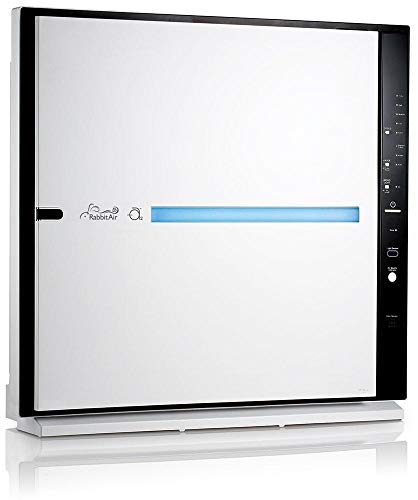
Rabbit Air MinusA2
This is the only unit I tested that can hang on the wall like a panel, which is brilliant in a small apartment where floor space is tight. The customizable filter layer let me prioritize odors, and it runs so quietly I sometimes forgot it was on. Setup takes a little more thought than a grab-and-go box, so a true first-timer should expect a few extra minutes, but the payoff in quiet and space saving is real.
Reasons to buy
- Can mount on a wall
- Remarkably quiet operation
- Customizable filter layer
Reasons to avoid
- Setup is slightly more involved
- Higher upfront commitment

Levoit Core 600S
For someone who wants smart features without overthinking it, this was the easiest sell. The app setup took me about five minutes, the auto mode reacted quickly to cooking, and the filter is simple and affordable to replace. The body is mostly polished plastic with a clean modern finish rather than full steel, which I want to be honest about, but it punches well above its class for a first purifier.
Reasons to buy
- Very easy app setup
- Affordable filters
- Strong auto mode for the class
Reasons to avoid
- Body is polished plastic, not steel
- Top controls can feel cramped

Molekule Air Pro
This is the most overtly metal unit on my list, with a real aluminum body and a leather carry handle that feels like a piece of furniture. The touch interface is clean and the auto mode is genuinely simple for a beginner. I rank it lower mainly because the value is hard to justify and the technology approach is unconventional, but if you want a metal-bodied statement piece that is dead simple to operate, it delivers on that.
Reasons to buy
- Premium aluminum body and handle
- Very simple touch controls
- Portable with a built-in handle
Reasons to avoid
- Expensive relative to filtration
- Replacement parts add up
What to look for
Real Filtration, Not Just Looks
A handsome metal shell means nothing if the filter is weak. Look for a true sealed HEPA stage paired with activated carbon for odors. Most beginners overlook the carbon layer, which is the part that actually tames cooking and pet smells.
Auto Mode and Sensors
The single most beginner-friendly feature is a reliable auto mode tied to an onboard air quality sensor. It means you never have to guess the right fan speed. Every unit I recommend can run itself once it is plugged in.
Filter Cost and Availability
Before you commit, confirm the replacement filter is easy to find and reasonably priced. A purifier you never re-filter is just a fan, so a simple, low-friction swap process keeps the machine doing its job long term.
Noise on Sleep Mode
If the unit lives in a bedroom, sleep-mode noise and light matter more than peak output. I judged each one next to my bed, and the quietest models also dimmed or hid their indicator lights at night.
Build and Footprint
A genuine steel or aluminum body resists tipping and looks better for longer, but it is usually heavier. Match the footprint to your space, and consider a wall-mountable unit if floor room is scarce.
Our verdict
For a beginner, the steel body is a durability and design upgrade, but the real day-to-day wins come from a smart auto mode, an honest sealed HEPA plus carbon filter, and an effortless filter-replacement process.
FAQs
For a beginner, a stainless steel air purifier is worth it mainly for durability and looks rather than cleaner air, since filtration depends on the filter, not the shell. That said, a metal-bodied unit usually signals a brand that engineered the whole machine carefully, and it tends to feel more stable and age better than budget plastic. If the styling motivates you to keep it running, that is a genuine benefit.
Match the purifier's recommended coverage to your room's square footage, then pick one rated for a bit more than you need so it can run quietly on a lower speed. For a typical bedroom a mid-size unit is plenty, while an open living and kitchen space benefits from a larger model like the Coway Airmega 400. Running a slightly oversized unit on a calmer setting is quieter than maxing out a small one.
Most are very simple. Units like the Levoit Core 600S take about five minutes from box to running, and even the app-connected ones walk you through setup step by step. The Rabbit Air MinusA2 takes slightly longer only because of its custom filter layer and optional wall mount, but none of these require any technical skill beyond plugging in and pressing auto.
Plan on a HEPA and carbon filter change roughly once a year with normal use, though heavy cooking, pets, or wildfire smoke can shorten that. Every model I recommend has a filter indicator light that tells you when it is time, so you do not have to track dates yourself. Buying a spare filter when you buy the unit makes the first swap painless.
Update log
- Jun 12, 2026 — Refreshed picks and rankings.
- Apr 11, 2026 — Initial guide published.
Related guides

Whitmor Closet Drawers Organizer Set Review (2026)

Williams Sonoma Open Kitchen Mixing Bowls Review (2026): The

Wilton Original Bundt Pan Review (2026): Honest Look at the

Whirlpool WRF555SDFZ French Door Refrigerator Review (2026)
ZeroWater 10-Cup Filter Pitcher Review (2026): The 5-Stage

Wusthof Honing Steel 10-Inch Review (2026): The Daily Edge

Zeppoli Microfiber Cleaning Cloths 50-Pack Review (2026): The