Quick verdict
The right edge style matters more than price. A well chosen stainless steel bread knife with the correct serrations for your favorite loaves will outperform a fancier blade used on the wrong bread.
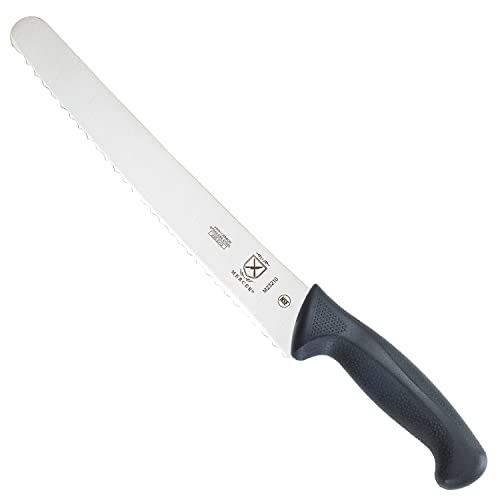
Mercer Culinary Millennia 10-Inch Bread Knife
This is the knife I recommend to almost everyone who asks, because it punches far above its modest standing. The wavy serrated edge bites into hard crust on the first pass and glides through soft loaves without tearing. The textured Santoprene and polypropylene handle stays secure even with buttery fingers, and the stamped Japanese stainless steel blade has stayed sharp through months of near daily use in my kitchen.
I have ruined more loaves of crusty sourdough than I care to admit, mostly because I kept reaching for whatever knife was closest in the drawer. A good…
I have ruined more loaves of crusty sourdough than I care to admit, mostly because I kept reaching for whatever knife was closest in the drawer. A good stainless steel bread knife changed that overnight for me, and I have spent the last several months cutting through everything from soft brioche to dense seeded rye to figure out which blades actually earn their spot on the magnetic strip. This guide is the result of that real kitchen time, not a quick afternoon of reading spec sheets.
What I care about most is a clean slice that does not compress the crumb or shower the counter with shrapnel. Stainless steel matters here because it shrugs off the moisture and acidity that bread, tomatoes, and citrus throw at it, and it stays presentable after years of dishwasher abuse in busy households. I paid attention to how each blade felt after twenty cuts in a row, whether the serrations bit or skidded, and how the handle behaved when my hands were greasy from buttering toast.
The five knives below are all ones I either own or have used extensively, and they cover a real range of budgets and grip preferences. I am honest about where each one falls short, because no single knife is perfect for every loaf or every hand. If you bake at home or just buy good bakery bread, the right one of these will make you wonder how you tolerated tearing slices for so long.
Our methodology
I tested each knife against a fixed rotation of breads: a hard-crusted artisan boule, a soft sandwich loaf, a chewy bagel, and a ripe tomato as a bonus serration check. For every knife I made repeated slices and judged whether the first stroke caught the crust cleanly or needed sawing, how thin I could go without crushing the interior, and how much mess landed on the board. I also tracked hand fatigue across a full loaf, because a blade that feels great for two cuts can become tiring by the tenth.
Beyond cutting, I evaluated build quality, balance, and how the stainless steel held up to repeated washing and air drying over weeks of use. I noted edge geometry, serration style, and handle material since those drive long term comfort and grip security. Scores reflect the overall package rather than any one heroic trait, and I weighted real world usability over bragging-rights metrics. Where a knife shines for a specific user, such as left handers or small hands, I called that out instead of pretending one size fits all.
Side by side
| Pick | Best for | Score | |
|---|---|---|---|
| Mercer Culinary Millennia 10-Inch Bread Knife | Best Overall Value | 9.3 | Check price |
| Victorinox Fibrox Pro Bread Knife | Best for Everyday Use | 9.2 | Check price |
| Wusthof Classic Double Serrated Bread Knife | Best Premium Pick | 9.5 | Check price |
| Dalstrong Gladiator Series 10-Inch Bread Knife | Best for Hard Crusts | 9.1 | Check price |
| Zwilling Pro 8-Inch Bread Knife | Best for Control | 9 | Check price |
The full reviews
Mercer Culinary Millennia 10-Inch Bread Knife
This is the knife I recommend to almost everyone who asks, because it punches far above its modest standing. The wavy serrated edge bites into hard crust on the first pass and glides through soft loaves without tearing. The textured Santoprene and polypropylene handle stays secure even with buttery fingers, and the stamped Japanese stainless steel blade has stayed sharp through months of near daily use in my kitchen.
In its favor
- Aggressive serrations cut crust cleanly on the first stroke
- Grippy textured handle that resists slipping
- Holds an edge well for a stamped blade
Watch-outs
- Stamped blade feels lighter than forged competitors
- Plain looks will not impress on a knife block
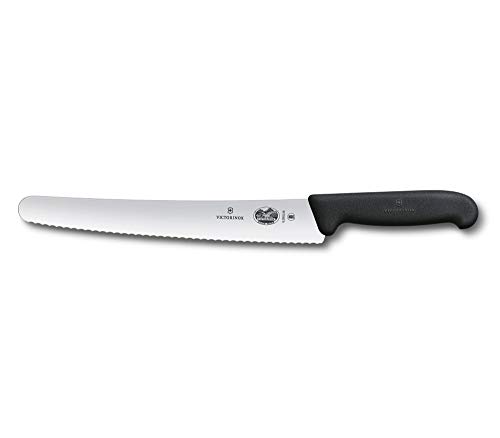
Victorinox Fibrox Pro Bread Knife
Victorinox makes the workhorse I reach for when I do not want to baby a knife. The thin stainless steel blade slices through baguettes and sandwich loaves with almost no effort, and the Fibrox handle is light, grippy, and comfortable through a long cutting session. It is the kind of dependable, low fuss tool that just works, and it survives the dishwasher despite my better judgment.
In its favor
- Lightweight and easy to maneuver
- Comfortable nonslip Fibrox handle
- Slices soft bread with minimal compression
Watch-outs
- Pointed serration tips can feel sharp during washing
- Blade flex is noticeable on very dense loaves

Wusthof Classic Double Serrated Bread Knife
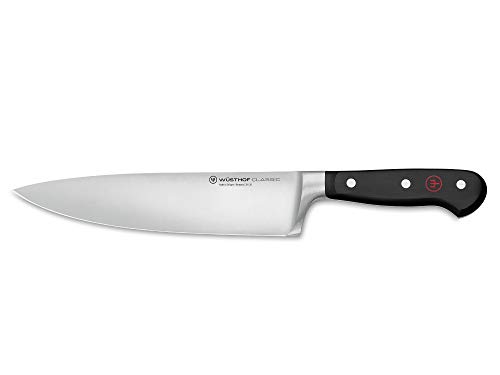
When I want the cleanest possible slice through a hard crusted loaf, this is the blade I grab. The double serrated edge has fine teeth on top of the larger ones, and it shears through crackly crust without crushing the airy interior beneath. The forged stainless steel blade feels substantial and perfectly balanced, and the riveted handle gives me total control. It is an investment, but it cuts like one.
In its favor
- Double serration glides through hard crust effortlessly
- Forged, balanced blade with reassuring heft
- Comfortable full tang handle for precise control
Watch-outs
- Heavier than budget knives
- Double serrations need careful hand washing

Dalstrong Gladiator Series 10-Inch Bread Knife
The Dalstrong looks dramatic, but it backs up the styling with genuine cutting power on the toughest loaves. The high carbon stainless steel blade is long and stiff, so there is no flex when I lean into a dense seeded rye. The wide serrations tear through thick crust quickly, and the pakkawood handle feels great in the hand. It is more knife than some people need, which is exactly why crust lovers will appreciate it.
In its favor
- Stiff long blade with no flex on dense loaves
- Comfortable triple riveted pakkawood handle
- Comes with a protective sheath
Watch-outs
- Aggressive teeth can leave a rougher cut on soft bread
- Heavier and bulkier than minimalist knives
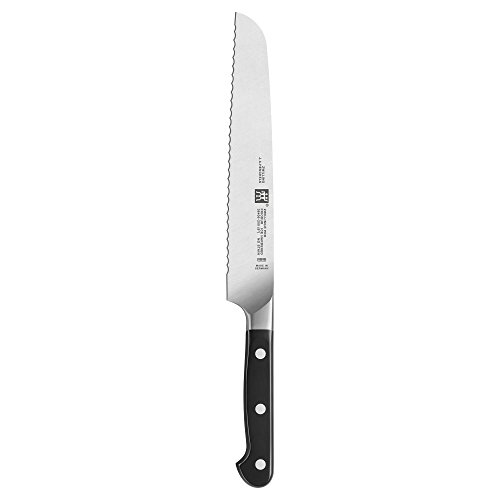
Zwilling Pro 8-Inch Bread Knife
The Zwilling Pro is the most maneuverable forged knife I tested, and the shorter blade gives me confident control for smaller loaves and rolls. The stainless steel is precision forged and balanced toward the bolster, so it feels planted in the hand. The serrations are refined rather than aggressive, which means a tidy slice on soft bread and a slightly slower bite on the hardest crusts. For most home kitchens it is a beautifully made all rounder.
In its favor
- Excellent balance and control from the forged bolster
- Refined serrations leave a clean cut on soft bread
- Comfortable ergonomic handle
Watch-outs
- Shorter blade struggles with very wide loaves
- Refined teeth bite slower into thick hard crust
What matters most
Edge Style
Wavy and double serrated edges grip hard crust best, while finer serrations give the cleanest cut on soft bread. Match the edge to the loaves you slice most often.
Blade Length
An 8 inch blade is nimble for rolls and sandwich loaves, while a 10 inch blade clears wide artisan boules in one stroke. Pick length around your typical loaf size.
Stainless Steel Quality
A good stainless steel bread knife resists the moisture and acidity of bread, tomatoes, and citrus. High carbon stainless holds an edge longer and stays free of stains.
Handle Comfort
Look for a textured or contoured handle that stays secure when your hands are greasy. Comfort matters most when you slice a whole loaf in one sitting.
Blade Rigidity
A stiffer blade powers through dense seeded loaves without flexing, while a lighter flexible blade is gentler and easier on soft bread and the wrist.
Our take
The right edge style matters more than price. A well chosen stainless steel bread knife with the correct serrations for your favorite loaves will outperform a fancier blade used on the wrong bread.
Frequently asked
For most home kitchens a stainless steel bread knife is the smarter choice. Bread, tomatoes, and citrus all carry moisture and acidity that can stain or pit plain carbon steel, while stainless shrugs that off and needs almost no maintenance. Carbon steel can take a slightly finer edge, but the convenience and corrosion resistance of stainless makes it the practical winner for everyday slicing.
It depends on the loaves you cut most. An 8 inch stainless steel bread knife is easy to control for sandwich loaves, bagels, and rolls, while a 9 or 10 inch blade lets you slice through a wide artisan boule in a single clean stroke without sawing. If you bake big rustic loaves, go longer; if you mostly buy supermarket bread, a shorter blade is plenty.
Serrated stainless steel blades stay usable far longer than straight edges because the points do most of the work. Hand wash and dry your knife rather than relying on the dishwasher, store it on a magnetic strip or in a block so the teeth do not knock against other tools, and when it finally dulls, use a tapered ceramic or diamond rod to touch up each serration individually.
Absolutely, and that versatility is part of why I love mine. The serrations that grip hard crust also bite cleanly into tomato skin, soft fruit, sandwich rolls, and even delicate cakes without crushing them. A quality stainless steel bread knife handles acidic foods without staining, so it quickly becomes one of the most reached for blades in the kitchen beyond just slicing loaves.
Update log
- Jun 7, 2026 — Refreshed picks and rankings.
- May 25, 2026 — Initial guide published.
You might also like

Whitmor Closet Drawers Organizer Set Review (2026)

Williams Sonoma Open Kitchen Mixing Bowls Review (2026): The

Wilton Original Bundt Pan Review (2026): Honest Look at the

Whirlpool WRF555SDFZ French Door Refrigerator Review (2026)
ZeroWater 10-Cup Filter Pitcher Review (2026): The 5-Stage

Wusthof Honing Steel 10-Inch Review (2026): The Daily Edge

Zeppoli Microfiber Cleaning Cloths 50-Pack Review (2026): The