Quick verdict
For a home kitchen, one well chosen stainless steel chef knife that you keep sharp will outperform an entire block of neglected blades. Match the weight and handle to your hand, then commit to honing and the right knife pays you back every single meal.

Victorinox Fibrox Pro 8 Inch Chef Knife
This is the knife I recommend to almost everyone starting out, and plenty of professionals keep one in their kit. The high carbon stainless blade takes a genuinely sharp edge, sharpens back easily, and the textured Fibrox handle stays planted even when my hands are slick with chicken juice. It is light, nimble, and shrugs off the abuse a busy home kitchen throws at it without complaint.
I have spent the better part of fifteen years cooking dinner most nights of the week, and the single tool I reach for more than any other is…
I have spent the better part of fifteen years cooking dinner most nights of the week, and the single tool I reach for more than any other is a chef knife. When people ask me what to buy first for a home kitchen, I tell them to skip the giant block of mismatched blades and put their money into one good stainless steel chef knife that feels right in the hand. That is the knife that does eighty percent of the work, from breaking down an onion to slicing a roast, and a good one quietly makes cooking faster and a lot less frustrating.
For this guide I pulled together the five stainless steel chef knives I keep coming back to, either because I own them, have cooked with them in someone else’s kitchen, or have spent real hours testing them side by side. I focused on knives that hold an edge, resist staining and rust the way home cooks expect from stainless, and stay comfortable through a long prep session. I deliberately kept the list to options a normal household would actually consider, not collector pieces that live in a display case.
What follows is honest. I will tell you where each knife shines and where it falls short, because no single blade is perfect for every hand or every budget. My goal is to help you pick one knife you will sharpen, use, and trust for years rather than a drawer full of dull compromises.
Our testing process
I evaluated each knife the way a home cook actually uses it, not on a lab bench. That meant repeated rounds of slicing onions, mincing garlic and herbs, portioning chicken, and cutting through dense items like sweet potatoes and butternut squash. I paid close attention to how cleanly the blade entered food, whether it wedged or stuck, and how my wrist felt after twenty minutes of continuous prep. Stainless steel was a hard requirement here, so I also tracked how each knife handled acidic foods and how it looked after hand washing and air drying over several weeks.
Beyond cutting, I weighed balance, handle grip when my hands were wet, edge retention between sharpenings, and how easy each blade was to bring back to keen with a honing rod and a basic whetstone. I leaned on long term ownership impressions, manufacturer specifications for steel type and hardness, and the consistent feedback of other home cooks I trust. Scores reflect overall value and everyday usefulness for a home kitchen, not bragging rights for the hardest steel or the thinnest edge.
Quick comparison
| Pick | Best for | Score | |
|---|---|---|---|
| Victorinox Fibrox Pro 8 Inch Chef Knife | Best Overall Value | 9.4 | Check price |
| Wusthof Classic 8 Inch Chef Knife | Best Forged Workhorse | 9.3 | Check price |
| Mercer Culinary Genesis 8 Inch Chef Knife | Best Budget Forged | 9 | Check price |
| MAC MTH-80 Professional Hollow Edge Chef Knife | Best Slicing Edge | 9.5 | Check price |
| Zwilling Pro 8 Inch Chef Knife | Best Ergonomic Design | 9.1 | Check price |
Reviewed in detail
Victorinox Fibrox Pro 8 Inch Chef Knife
This is the knife I recommend to almost everyone starting out, and plenty of professionals keep one in their kit. The high carbon stainless blade takes a genuinely sharp edge, sharpens back easily, and the textured Fibrox handle stays planted even when my hands are slick with chicken juice. It is light, nimble, and shrugs off the abuse a busy home kitchen throws at it without complaint.
What we liked
- Razor sharp out of the box and easy to resharpen
- Non slip handle grips well when wet
- Lightweight and forgiving for new cooks
What we didn't like
- Stamped blade feels less substantial than forged knives
- Plain looks will not impress anyone
Wusthof Classic 8 Inch Chef Knife
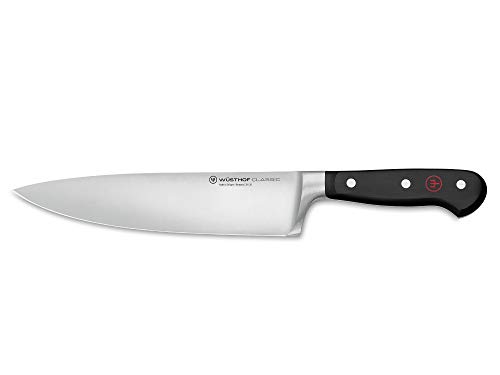
When I want the reassuring heft of a forged German blade, this is the one I grab. The full tang and thick bolster give it real authority through dense vegetables and bone in poultry, and the stainless steel holds a respectable edge. It feels like a serious tool that will outlast most kitchens, and the rounded handle is comfortable for long sessions if you like a bit of weight.
What we liked
- Heavy forged blade powers through dense food
- Full tang and bolster feel rock solid
- Holds an edge well between sharpenings
What we didn't like
- Heavier than some cooks prefer
- Thick spine can wedge in starchy vegetables

Mercer Culinary Genesis 8 Inch Chef Knife
This knife is how culinary students learn knife skills without spending a fortune, and that tells you a lot. It gives you a forged German stainless blade and a comfortable molded grip handle at a price that does not sting. I found it sharp enough for daily prep, sturdy through tough produce, and genuinely pleasant to hold during a long mince. It is the easiest way to get a real forged feel on a tight budget.
What we liked
- Forged blade at an approachable price
- Santoprene handle grips securely when wet
- Comfortable finger guard and bolster
What we didn't like
- Edge needs honing more often than premium blades
- Slightly heavier than nimble stamped knives

MAC MTH-80 Professional Hollow Edge Chef Knife
If pure cutting performance is what you are after, this knife is hard to beat. The thin, hard stainless blade glides through food with almost no resistance, and the hollow edge dimples help release sticky slices of potato and cucumber. It blends Japanese sharpness with a comfortable Western style handle, and I noticed it stays keen longer than most knives I rotate through. It is a joy on a cutting board.
What we liked
- Exceptionally thin and sharp blade
- Hollow edge reduces food sticking
- Holds its keen edge impressively long
What we didn't like
- Thinner edge needs more careful handling
- Premium pricing for a home cook

Zwilling Pro 8 Inch Chef Knife
I appreciate the thoughtful curved bolster on this one, which leaves room for a comfortable pinch grip and full use of the blade all the way to the heel. The forged stainless steel is durable and holds an edge nicely, and the broad blade gives you knuckle clearance for confident rocking cuts. It feels balanced and modern in the hand, and it is a knife I enjoy using for long prep marathons.
What we liked
- Curved bolster allows a true pinch grip
- Forged steel holds an edge well
- Good knuckle clearance for rocking cuts
What we didn't like
- On the heavier side for small hands
- Costs more than basic stainless options
How to choose
Stainless steel grade
Look for high carbon stainless, which balances rust resistance with the ability to take and hold a keen edge. Pure soft stainless dulls quickly, while overly hard steel can chip, so a mid range hardness suits most home cooks best.
Stamped versus forged
Stamped blades are lighter, nimble, and usually cheaper, while forged blades carry more heft and a sturdy bolster. Neither is strictly better. Choose based on whether you prefer a quick agile feel or a substantial workhorse in the hand.
Handle comfort and grip
You will hold this knife for long stretches, so the handle matters as much as the blade. Textured or molded grips stay secure when wet, and a shape that fits your pinch grip prevents fatigue during heavy prep.
Blade length and balance
An eight inch blade is the sweet spot for most home kitchens, long enough for big tasks yet manageable on a standard board. Check that the knife feels balanced near the bolster rather than tip heavy or handle heavy.
Ease of sharpening
A knife is only as good as its current edge. Pick a stainless blade you can comfortably hone with a rod and bring back with a basic whetstone, since regular maintenance keeps any knife performing far better than buying premium and neglecting it.
The bottom line
For a home kitchen, one well chosen stainless steel chef knife that you keep sharp will outperform an entire block of neglected blades. Match the weight and handle to your hand, then commit to honing and the right knife pays you back every single meal.
Common questions
For most households I recommend the Victorinox Fibrox Pro 8 inch. Its high carbon stainless blade is sharp, easy to resharpen, and the non slip handle is forgiving, which makes it the most reliable everyday stainless steel chef knife for home cooks on nearly any budget.
Yes. Stainless steel is the most practical choice for a chef knife at home because it resists rust and staining even when you cut acidic foods or air dry the blade. A high carbon stainless knife gives you that low maintenance benefit while still holding a genuinely sharp edge.
An eight inch blade is the most versatile length for home use. It is long enough to slice large vegetables and roasts yet still easy to control on a standard cutting board. Cooks with smaller hands or boards can consider seven inches, but eight inches suits the widest range of kitchens.
Hone the edge with a honing rod before or after most uses to keep it aligned, then sharpen on a whetstone or a quality pull through sharpener every few months depending on how often you cook. Always hand wash and dry your stainless chef knife rather than leaving it in the sink, since dishwasher cycles dull and pit the edge over time.
Update log
- Jun 11, 2026 — Refreshed picks and rankings.
- May 20, 2026 — Initial guide published.
More guides

Whitmor Closet Drawers Organizer Set Review (2026)

Williams Sonoma Open Kitchen Mixing Bowls Review (2026): The

Wilton Original Bundt Pan Review (2026): Honest Look at the

Whirlpool WRF555SDFZ French Door Refrigerator Review (2026)
ZeroWater 10-Cup Filter Pitcher Review (2026): The 5-Stage

Wusthof Honing Steel 10-Inch Review (2026): The Daily Edge

Zeppoli Microfiber Cleaning Cloths 50-Pack Review (2026): The