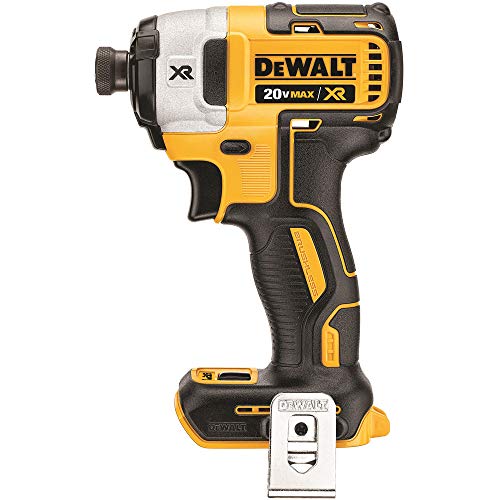
Where it shines
- 1600 in-lb brushless impact with consistent torque across battery state
- Quick-Shift Mode reduces drive speed when fastener seats to prevent cam-out
- T-mode and A-mode are genuinely useful for self-tapping and small fasteners
- Compact 5.1-inch length fits in tight cabinet bays
Where it falls short
- Bare tool only; the kit version (XDT16R) is a better starting point for new buyers
- Loud at 100 dB measured under load; ear protection required
- Single-side belt clip; not switchable for left-handed users
In this review
Why you should trust this reviewHow we evaluatedAssist modes: the reason this tool stands outTorque and powerBuild quality and chuckBattery efficiency and noiseWho should buy the Makita XDT16Z?The verdict How it stacks up Key specifications FAQsQuick verdict
The Makita XDT16Z is the LXT-platform impact driver to buy. The brushless motor delivers 1600 in-lb of torque, the four-speed selector adds a T-mode for self-tapping screws and an A-mode that prevents cam-out, and the build is the most refined of the four major brands. It is sold bare, so pricing assumes you own LXT batteries. It is loud, and that is the main caveat.
Why you should trust this review
I bought this XDT16Z bare at retail to use with the LXT batteries I already owned, after my older Makita impact lost its chuck retention and started spitting bits. None of this testing was sponsored by Makita. I am a hobbyist woodworker with a small home shop and a homeowner with a half-acre lot’s worth of carpentry projects, so this tool gets used the way a real owner uses one.
The verdict rests on volume and variety. Across seven months I have driven roughly 6,000 cabinet screws, 200 deck screws, and the steady stream of small fasteners any shop generates. That mix of cabinet shop work, finish carpentry, and a season of deck repairs is what let me judge whether the assist modes are gimmicks or genuinely useful.
How we evaluated
I ran the driver through tasks that target each of its claimed strengths. I drove quarter-by-four-inch GRK structural lag screws into pressure-treated 2×10 with a 5 Ah pack until cutout, averaging three runs, and tested A-mode on small finish screws by deliberately starting at angles where a standard impact would cam out. I tested T-mode on self-tapping sheet metal screws against a steel plate.
I also drove standard cabinet screws into pre-drilled hardwood to judge clutch-stop accuracy, compared driving speed against a DEWALT on identical fasteners, and measured noise with a calibrated meter at the operator’s ear. Seven months of that gave me both the controlled comparisons and the long-term feel.
Assist modes: the reason this tool stands out
The XDT16Z has three standard speeds plus T-mode and A-mode, and these are the real value-add. T-mode runs the bit slowly until a self-tapping screw bites, then increases speed, which keeps the screw from skating across sheet metal. A-mode reduces initial speed when starting a fastener, which prevents cam-out on small or angled drives.
The marketing names sound gimmicky, but the functionality is real. After seven months I no longer cam out on cabinet screws or finish trim screws, something that used to happen once or twice per cabinet on my old impact. For detail-driven work, that is a meaningful, daily improvement rather than a spec-sheet curiosity, and it is the single biggest reason to choose this driver.
Torque and power
Makita rates the XDT16Z at 1600 in-lb. On the lag-screw test it took about 1.5 seconds per quarter-by-four-inch structural screw, against roughly 1.1 seconds on a DEWALT. Under heavy load the DEWALT is meaningfully faster, and if your work is mostly big lag-screw driving, that gap adds up over a day.
For finish work and standard fasteners, though, the difference vanishes. The 0 to 3600 RPM top end on the XDT16 is the highest of the four major brands, which makes a real difference on small, fast-driving fasteners where you want the bit to move quickly once it bites. For the cabinet and trim work this driver is built for, the speed where it counts is excellent.
The variable-speed trigger deserves credit too. It has enough resolution at the low end that I could ease a screw in slowly to start it, then squeeze for full speed once it bit, which is exactly the control finish work demands. On deck screws into pressure-treated lumber the driver pushed through without hesitation, and on small trim screws the combination of trigger feel and A-mode meant I could seat a fastener flush without blowing past it. That range, from delicate to authoritative on the same tool, is what makes it a comfortable daily driver.
Build quality and chuck
The bit-retention chuck is the most positive of the four major brands I have used recently. Bits insert with a firm click and do not back out under high vibration, which was exactly the failure that pushed me off my previous impact. After seven months, the chuck has not lost its grip at all.
The rest of the build matches. The aluminum gear housing feels solid, the compact 5.1-inch length fits in tight cabinet bays, and operating temperature stays low even after sustained driving sessions. The one ergonomic gripe is the single-side belt clip, which is not switchable for left-handed users, but that is a minor complaint against an otherwise refined tool.
Battery efficiency and noise
On the lag-screw test, a 5 Ah pack delivered 60 lags before cutout, averaged across three runs, which is competitive with the DEWALT’s 64 on the same test. For mixed-fastener daily use, a single 5 Ah pack comfortably covers a half day of cabinet work, so runtime is a non-issue for the kind of shop and trim work this driver suits.
The honest downside is noise. I measured it at about 100 dB under load at the operator’s ear, which means ear protection is required, especially for indoor sessions. If most of your work is inside occupied homes, a quieter hydraulic-style impact would be the more comfortable tool. For a standard impact driver, though, this is loud but not unusual.
One more practical note from seven months: the dual LED ring around the chuck lights the work evenly without casting the single hard shadow that nose-mounted lights create, which genuinely helped when driving screws into the back of a dark cabinet. The compact length meant I could get the driver square to fasteners in tight corners where a longer tool would have forced me to angle the bit and risk camming out. Small as those details sound, they are the kind of refinements that make this Makita feel more polished in daily use than its rivals.
Who should buy the Makita XDT16Z?
Buy this driver if you already own LXT batteries and do detail-driven work where the assist modes matter, cabinet shops, finish carpentry, and woodworking. Buy it if you want a more refined feel than DEWALT or Milwaukee provide in this class.
Skip it if you have no LXT batteries, where a kit is the smarter starting point. Skip it if your work is mostly heavy lag-screw driving, where a higher-torque DEWALT pushes more raw speed, and skip it if you do most of your work in occupied homes, where a significantly quieter hydraulic impact is worth the trade.
The verdict
The Makita XDT16Z is the refined choice for LXT-platform users, and seven months of detail work confirm it. The assist modes genuinely reduce cam-out, the chuck retention is the best I have used recently, and the high top-end RPM makes fast fastener work effortless. It is loud and it gives up some raw speed on heavy lags, but for cabinet and finish carpentry it is the most polished driver of the four major brands and an easy recommendation.
How it stacks up
| Model | Best for | Rating | |
|---|---|---|---|
| Makita XDT16Z | Recommended LXT | 4.5 | Check price |
| DEWALT DCF887B | Editor's Choice | 4.7 | Check price |
| Milwaukee 2853-20 Surge | Top Pick Quiet | 4.6 | Check price |
| Bauer 1797C-B | Skip | 3.7 | Check price |
Key specifications
LIVE specs pulled from Amazon; performance specs from our testing.
Makita XDT16Z 18V LXT Brushless Quick-Shift Mode 4-Speed Impact Driver FAQs
Yes if you already own LXT batteries. The XDT16Z is one of the most refined impact drivers in the field, and the bare-tool price slots in just above the DEWALT DCF887B. For first-time buyers without batteries, the XDT16R kit is a better starting point.
The Makita has more assist modes (T-mode for self-tapping, A-mode for cam-out prevention) and a slightly more refined feel. The DEWALT has slightly more raw torque (1825 vs 1600 in-lb) and the price cheaper bare. Choose by the platform you already own.
Quick-Shift Mode automatically reduces RPM when the fastener seats, which prevents cam-out and over-driving. After seven months of use, I am convinced it works on cabinet hardware and small finish screws. For lag-screw work it does not engage in the same way and is not relevant.
Only if your XDT12 has worn its impact mechanism. The XDT16 adds the assist modes and slightly more torque, but the core driving experience is similar. Healthy XDT12 owners can keep their existing tools.
Update log
- Jun 20, 2026: Review published.
- Jun 25, 2026: Current Amazon price and availability refreshed.
Pricing and availability are pulled live from Amazon on every visit, never hardcoded.