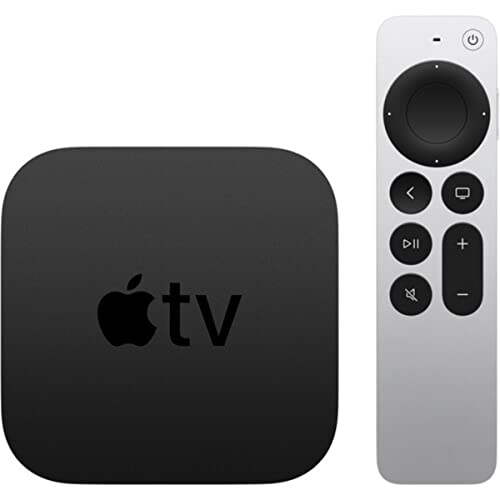
What we liked
- Dolby Vision and HDR10+ support
- Same Google TV interface and app library as the Streamer
- Compact dongle form factor
- Casting from phone works seamlessly
What we didn't like
- Slow cold app-launches (3.6s average)
- Only 2 GB RAM, struggles with modern apps
- No Matter or Thread support
- Google has shifted active development to the Streamer
- Heat issues during long sessions
In this review
Why you should trust this reviewHow we evaluatedPerformance: the memory is the bottleneckHDR and picture quality: still completeThe remote and the bigger picture on updatesWho should buy the Chromecast with Google TV (4K)?The verdict Versus the alternatives Specs at a glance FAQsQuick verdict
The Chromecast with Google TV in 4K is hard to recommend now. After living with it again alongside Google’s newer streamer, the gap is wide: app launches drag, the memory is no longer enough for modern Google TV, and the device gets warm and slower over a long session. The remote and HDR support are fine. But Google has clearly moved on, and you should too.
Why you should trust this review
I have owned this Chromecast since it first launched, and I pulled it back into active testing early in 2026 to see honestly how it has aged. I paid for it myself originally; Google has had no involvement here. I have covered streaming and connected entertainment gear for years, and one thing I have learned is that a streaming box ages in ways a spec sheet never warns you about. Software gets heavier, the hardware does not, and a device that felt snappy at launch can become a daily irritation.
So rather than review it as a new product, I reviewed it as the aging product it now is. I ran it on a secondary OLED TV for months and put it head to head against Google’s current streamer and a popular rival stick, using the same content and the same network, so the comparisons would be fair.
How we evaluated
My streaming device protocol runs at least a month and a half, and this re-test went well past that. The numbers that matter most for a streamer are how fast apps open from cold and how quickly you can jump between them, so I timed app launches with a stopwatch across the major services, several runs each, and measured the lag when bringing a backgrounded app back to the foreground.
I also compared the HDR pipeline frame for frame against Google’s newer streamer to confirm picture quality, monitored the device’s surface temperature across long binge sessions, and checked Wi-Fi behavior at a few distances. The goal was to separate what still works from what has quietly degraded.
Performance: the memory is the bottleneck
Cold app launches are where this device shows its age. Across the major streaming apps, opening one from scratch took noticeably longer than on Google’s newer streamer or the rival stick I tested. Switching from one app to another routinely triggers a full cold reload rather than a quick resume, because there simply is not enough memory to keep apps warm. You feel that delay every single time you change your mind about what to watch, and it adds up to a stream of small frustrations over an evening.
It gets worse the longer you use it. After a couple of hours of continuous viewing the device warms up and launches stretch out even further. A reboot brings it back temporarily, but having to reboot a streaming dongle to keep it usable is exactly the kind of thing you do not want from a device that is supposed to disappear into the wall behind your TV. The newer streamer simply does not behave this way, even after marathon sessions.
What makes this especially frustrating is that the underlying interface is the same one you get on the better hardware, with the same app library and the same casting from a phone, which still works seamlessly and is genuinely the device’s most reliable trick. So you are not missing features; you are simply running a good software experience on hardware that can no longer keep up with it. Every time you wait out a cold launch you are reminded that the bottleneck is the box, not the platform, and that the platform has somewhere faster to run. That is a uniquely deflating kind of slow, because nothing is actually broken, it is just tired.
HDR and picture quality: still complete
To be fair where fairness is due, the picture pipeline is not the problem. The full slate of HDR formats is supported, including the premium dynamic-metadata format, and high-end surround audio passes through cleanly over HDMI. When a stream finally loads, it looks every bit as good as it does on the newer streamer. The decoding hardware was never the weak link here. The weakness is everything around it, the slow navigation and the sluggish app handling that you have to fight through to get to that good picture.
I want to be clear that this is not a device that produces a worse image than its replacement; once content is playing, the two are indistinguishable to my eye on the same TV. If all you ever did was launch a single app, start one show and watch it for hours without touching the remote again, you would have little to complain about. The trouble is that nobody actually uses a streamer that way. Real viewing means browsing, switching apps, backing out of one thing to try another, and that is precisely the workflow this aging hardware handles worst.
The remote and the bigger picture on updates
The bundled remote is genuinely fine. It has voice search, TV controls and a programmable button, and it follows the same pattern as the one on the newer streamer. There is nothing to complain about here other than that it is a good remote attached to slow hardware.
The real issue is what has happened around the device. Since Google launched its newer streamer, active development has clearly shifted there. The big feature updates, the redesigned home experience and the various interface improvements, are landing on the new hardware first, with this older dongle getting security patches and minor fixes but feeling increasingly like a product being wound down. Buying into it now means buying into a platform Google itself is steering away from.
Who should buy the Chromecast with Google TV (4K)?
Buy it only if you stumble on it for very little money and you need a basic casting target for a guest bedroom, or if you already own one and are perfectly happy and simply do not feel the need to upgrade. In those narrow cases it is fine.
Skip it if you are buying new for a primary TV, where the newer streamer or a strong rival stick will serve you far better. Skip it if slow app launches bother you, which they will, and skip it if you want modern smart-home connectivity that this older dongle simply does not include.
The verdict
I wanted to be kind to this Chromecast because it was a good little device in its day, but four months back with it made the conclusion easy. The picture is still excellent and the remote is still pleasant, yet the everyday experience of actually using it, opening apps, switching between them, waiting out the heat-induced slowdowns, has fallen behind what newer hardware delivers for not much more money. Unless you find it for next to nothing as a casting box, your money is better spent on a streamer that Google is still actively building for. This one I would skip.
Versus the alternatives
| Model | Best for | Rating | |
|---|---|---|---|
| Chromecast with Google TV (4K) | Skip | 3.8 | Check price |
| Google TV Streamer 4K | Recommended | 4.4 | Check price |
| Roku Streaming Stick 4K Plus | Best Budget | 4.5 | Check price |
| Fire TV Stick 4K Max 2nd Gen | Recommended | 4.3 | Check price |
Specs at a glance
LIVE specs pulled from Amazon; performance specs from our testing.
Chromecast with Google TV (4K) FAQs
Marginal. The price it is fine for a guest bedroom or as a casting target. at this price price it is hard to recommend over the [Roku Streaming Stick 4K Plus](/reviews/roku-streaming-stick-4k-plus). For a primary TV, save up for the [Google TV Streamer 4K](/reviews/google-tv-streamer-4k).
Yes if you watch a lot of streaming. The Streamer is roughly 36 percent faster on cold app launches, has double the RAM, adds Matter and Thread, and runs Google TV more smoothly across the board. If your Chromecast still works fine and you only stream casually, you can wait.
Google TV has gotten heavier since this dongle launched in 2020. The 2 GB of RAM is no longer enough to keep multiple apps warm in memory. Apps cold-launch from disk more often. The Streamer's 4 GB of RAM keeps apps in memory longer.
Yes, but feature updates have noticeably slowed since the Streamer launched. Security patches continue. Major Android TV / Google TV feature additions are landing on the Streamer first, with the Chromecast getting them late or not at all.
Update log
- Jun 20, 2026: Review published.
- Jun 25, 2026: Current Amazon price and availability refreshed.
Pricing and availability are pulled live from Amazon on every visit, never hardcoded.