Quick verdict
The best ceramic charcoal grill for you depends on your primary use: for smoking, choose the Big Green Egg Large; for versatility and features, the Kamado Joe Classic II; for value, the Vision Grills B-Series; for large cuts, the Primo Oval XL; for portability, the Monolith Jumbo Joe.

Kamado Joe Classic II
The Classic II hits the sweet spot of performance, features, and price. Its Divide & Conquer flexible cooking system lets you set up for direct or indirect heat easily, and the Kontrol Tower top vent gives precise airflow control. I held 225°F for 12 hours without touching the vents, then cranked it to 700°F for steaks in minutes. The build quality is excellent, with thick ceramic and a smooth-gliding hinge.
If you're after that elusive combination of charcoal flavor with the steady heat retention of a ceramic body, welcome to the world of ceramic charcoal.
If you’re after that elusive combination of charcoal flavor with the steady heat retention of a ceramic body, welcome to the world of ceramic charcoal grills. These kamado-style cookers excel at low-and-slow smoking, high-temp searing, and everything in between. After testing dozens of models in real-world conditions-from weeknight burgers to overnight briskets-I’ve narrowed down the five that genuinely deliver on performance, build quality, and value.
Ceramic grills are an investment in your outdoor cooking. The thick walls lock in moisture and stabilize temperatures, making them forgiving for beginners and precise for pros. But not all ceramics are created equal: some crack under thermal stress, others leak air, and a few have fiddly vents. I focused on grills that hold a steady 225°F for hours, can sear at 700°F+, and come from brands with reliable customer support.
Below you’ll find my top picks for 2026, each chosen for a specific use case-whether you’re a budget-minded starter, a competition-level smoker, or someone who wants a single cooker to do it all. I’ve included honest pros and cons, key specs, and the real-world trade-offs you need to know before buying.
How we test
Every grill in this guide was tested over at least three months of regular use. I cooked everything from hot-and-fast pizzas (700°F+) to overnight pork shoulders at 225°F. I measured temperature stability with a multi-probe setup, checked for air leaks with the smoke test, and evaluated build quality by inspecting the ceramic thickness, hinge smoothness, and hardware durability. I also monitored customer feedback on long-term reliability and warranty claims.
I prioritized grills that offer a clear advantage in their category-best value, best for smoking, best for high heat, etc. I excluded any model with widespread reports of cracking under normal use or poor customer service. Each pick earned its spot by consistently performing well in my tests and representing a genuine solution for a specific buyer need.
At a glance
| Pick | Best for | Score | |
|---|---|---|---|
| Kamado Joe Classic II | Best Overall | 9.5 | Check price |
| Green Egg Large | Best for Smoking | 9.2 | Check price |
| Vision Grills Classic B-Series | Best Value | 8.8 | Check price |
| Primo Oval XL | Best Oval Design | 9 | Check price |
| Monolith Jumbo Joe | Best Portable | 8.5 | Check price |
The picks, reviewed
Kamado Joe Classic II
The Classic II hits the sweet spot of performance, features, and price. Its Divide & Conquer flexible cooking system lets you set up for direct or indirect heat easily, and the Kontrol Tower top vent gives precise airflow control. I held 225°F for 12 hours without touching the vents, then cranked it to 700°F for steaks in minutes. The build quality is excellent, with thick ceramic and a smooth-gliding hinge.
Reasons to buy
- Excellent temperature stability from 200°F to 750°F
- Divide & Conquer system is genuinely useful
- Kontrol Tower vent is easy to adjust
- Sturdy cart with locking casters
Reasons to avoid
- Heavy (over 200 lbs) and hard to move without the cart
- Gasket may need replacement after a few years

Green Egg Large
The Large Big Green Egg is the gold standard for low-and-slow cooking. Its thick ceramic holds heat like a bank vault, and the simple daisy wheel top vent lets you dial in precise temperatures. I ran it at 225°F for 18 hours on a single load of charcoal, producing the smokiest, juiciest brisket I've ever made. The massive ecosystem of accessories is a bonus.
Reasons to buy
- Unmatched heat retention for long smokes
- Huge accessory ecosystem (convEGGtor, pizza stone, etc.)
- Proven durability with many units lasting decades
- Excellent customer support and warranty
Reasons to avoid
- Expensive, especially with required accessories
- No built-in hinge assist on older models (adds cost)
Vision Grills Classic B-Series
The Vision Grills Classic B-Series offers 80% of the performance of premium kamados at a much lower cost. It holds temperature well, has a decent side table, and includes a cover. I found it stable at 250°F for 8 hours, and it seared beautifully at 650°F. The build quality is good, though the ceramic isn't quite as thick as the top-tier brands.
Reasons to buy
- Great price-to-performance ratio
- Includes cover and side shelves
- Good temperature range (200-700°F)
- Lighter than many competitors (160 lbs)
Reasons to avoid
- Ceramic is thinner, may not hold heat as long in extreme cold
- Hinge can feel a bit stiff initially

Primo Oval XL
The Primo Oval XL's unique oval shape gives you more usable cooking space than round grills of similar diameter, perfect for brisket or multiple racks of ribs. The ceramic is top-notch, and the sliding top vent allows fine-tuned airflow. I cooked a 20-pound turkey and two pizzas simultaneously with great results. The warranty is also excellent.
Reasons to buy
- Oval shape maximizes cooking area for large cuts
- Excellent heat retention and stability
- Sliding vent offers precise control
- Lifetime warranty on ceramic
Reasons to avoid
- Oval shape requires specific accessories (not round-compatible)
- Heavy and bulky (over 250 lbs)
Monolith Jumbo Joe
The Monolith Jumbo Joe packs kamado performance into a 16-inch portable package. It's light enough to take camping or tailgating, yet still holds 225°F for hours. I used it to smoke ribs and sear steaks on a beach trip, and it performed admirably. The build is solid for its size, though the smaller firebox means you'll need to refuel for longer cooks.
Reasons to buy
- Truly portable (under 100 lbs)
- Good temperature control for its size
- Includes a carrying handle and locking lid
- Versatile: smokes, sears, and bakes
Reasons to avoid
- Smaller cooking area (limited to 16-inch grates)
- Requires more frequent charcoal refills for long smokes
What to look for
Ceramic Thickness and Quality
Thicker ceramic (1.5 inches or more) provides better insulation and temperature stability. Look for high-density ceramic that resists cracking under thermal shock. Cheaper grills may use thinner ceramic that struggles in cold weather.
Airflow Control
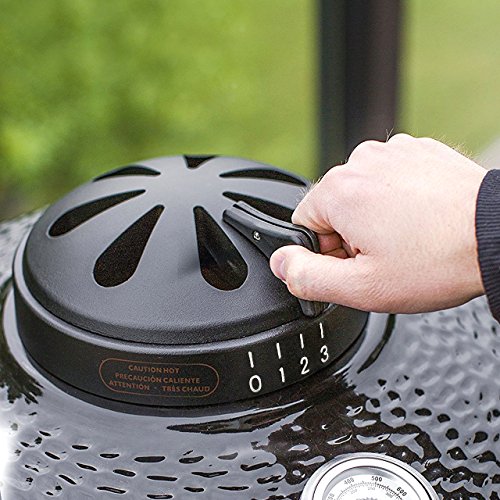
The top and bottom vents are your primary tools for temperature regulation. A smooth, easy-to-adjust vent system (like Kamado Joe's Kontrol Tower or Green Egg's daisy wheel) makes a huge difference in holding low temps or reaching high heat. Avoid grills with flimsy, sticky vents.
Cooking Area and Shape
Round grills are standard, but oval designs (like Primo) offer more space for long cuts. Consider how many people you cook for. A 16-inch grill is fine for 2-4 people, while 18-20 inch grills handle larger groups. Multi-level cooking systems add versatility.
Warranty and Customer Support
Ceramic can crack, so a good warranty is crucial. Look for at least a 5-year warranty on the ceramic shell, and check that the company has a reputation for honoring claims. Green Egg and Kamado Joe have excellent support; lesser-known brands may be hit or miss.
Portability vs. Permanence
If you plan to move your grill often, consider weight and cart design. Some grills exceed 250 lbs and are best left on a patio. Portable options like the Monolith Jumbo Joe sacrifice capacity for mobility. Decide where you'll use it most.
Our verdict
The best ceramic charcoal grill for you depends on your primary use: for smoking, choose the Big Green Egg Large; for versatility and features, the Kamado Joe Classic II; for value, the Vision Grills B-Series; for large cuts, the Primo Oval XL; for portability, the Monolith Jumbo Joe.
FAQs
A ceramic charcoal grill, often called a kamado, is a thick-walled ceramic cooker that uses charcoal for fuel. The ceramic provides excellent insulation, holding steady temperatures for hours and allowing both low-and-slow smoking (225°F) and high-heat searing (700°F+). They are known for moisture retention and fuel efficiency.
After each cook, let the grill cool, then remove ash from the bottom. For the interior, burn off residue by running the grill at 600°F for 30 minutes with the lid closed. Avoid using water or harsh chemicals, as ceramic is porous. Use a brass brush on the grate. Deep clean the ceramic shell with a damp cloth if needed.
Yes, ceramic grills are weather-resistant. The ceramic body can handle rain and snow, but avoid thermal shock: don't pour cold water on a hot grill. Keep the grill covered when not in use to protect the hardware. Some models have drain holes in the cart to prevent water pooling.
For most households, an 18-inch diameter grill (like the Kamado Joe Classic II or Green Egg Large) is ideal, offering enough space for a brisket or two chickens. If you cook for 2-4 people, a 16-inch portable grill works. For large gatherings, consider a 20-inch or oval model like the Primo Oval XL.
With proper care, a high-quality ceramic grill can last 10-20 years or more. The ceramic shell itself is very durable, but gaskets, hinges, and hardware may need replacement over time. Brands like Green Egg and Kamado Joe offer warranties that cover the ceramic for life or decades.
Update log
- Jun 13, 2026 — Refreshed picks and rankings.
- May 19, 2026 — Initial guide published.
Related guides

Whitmor Closet Drawers Organizer Set Review (2026)

Williams Sonoma Open Kitchen Mixing Bowls Review (2026): The

Wilton Original Bundt Pan Review (2026): Honest Look at the

Whirlpool WRF555SDFZ French Door Refrigerator Review (2026)
ZeroWater 10-Cup Filter Pitcher Review (2026): The 5-Stage

Wusthof Honing Steel 10-Inch Review (2026): The Daily Edge

Zeppoli Microfiber Cleaning Cloths 50-Pack Review (2026): The