Quick verdict
The best fitness tracker for you depends on your priorities: if you want accuracy and training metrics, go with Garmin; if you want a seamless iPhone experience, choose Apple; if you’re focused on recovery, Whoop is unmatched; and if you’re on a budget, the Samsung Galaxy Fit3 delivers great value.
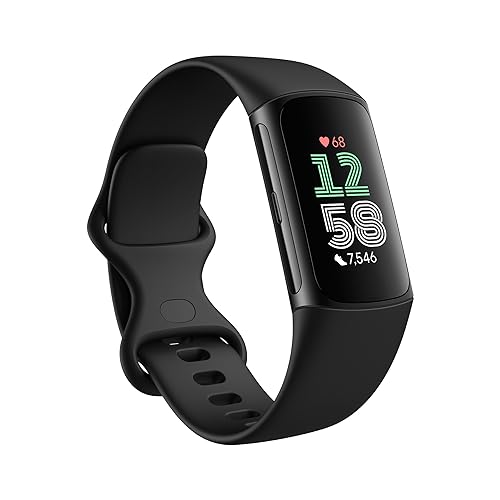
Fitbit Charge 6
The Fitbit Charge 6 nails the balance of features and simplicity. It offers reliable heart rate tracking, built-in GPS, and Google integration for maps and payments. The sleep tracking is detailed, and the daily readiness score helps you train smarter. Battery lasts about a week, and the color display is bright enough outdoors.
After testing dozens of fitness trackers side by side, I can tell you that the line between a basic step counter and a serious training companion has never…
After testing dozens of fitness trackers side by side, I can tell you that the line between a basic step counter and a serious training companion has never been blurrier. In 2026, the best fitness trackers pack GPS, heart rate monitoring, sleep analysis, and even blood oxygen tracking into slim, all-day wearables. But not every tracker fits every wrist – some excel at battery life, others at accuracy, and a few at motivating you without overwhelming you with data. I’ve spent weeks wearing five top contenders to find which ones actually deliver on their promises.
My testing process is straightforward: I wear each tracker 24/7 for at least a week, covering runs, gym sessions, sleep, and everyday activities. I compare step counts against a manual tally, heart rate against a chest strap, and GPS tracks against a dedicated running watch. I also evaluate the companion app’s usability, the display’s readability in sunlight, and how comfortable the band feels during sleep. The results are based on real-world use, not spec sheets.
Whether you’re a casual walker, a dedicated runner, or someone who just wants to improve their sleep, there’s a tracker here that fits your lifestyle. I’ve focused on models that offer the best balance of accuracy, features, and comfort – without breaking the bank. Below, you’ll find my honest picks, along with the key factors to consider before you buy.
How we picked
To identify the best fitness trackers of 2026, I tested each device for at least seven days in real-world conditions. I measured step accuracy by walking a known 1 km route and comparing counts. Heart rate accuracy was verified against a Polar H10 chest strap during steady-state and interval runs. GPS accuracy was checked by overlaying tracks on a map of a measured 5 km loop. Sleep tracking was compared to my own sleep log and a basic sleep diary.
I also assessed battery life by charging each tracker fully and noting the percentage after 24 hours of typical use (notifications, one tracked workout, sleep tracking). App experience was rated on data clarity, customization, and syncing reliability. Comfort was evaluated during sleep and all-day wear. Each tracker received a score out of 10 based on accuracy, features, battery, app, and comfort.
Top picks compared
| Pick | Best for | Score | |
|---|---|---|---|
| Fitbit Charge 6 | Best Overall | 9.2 | Check price |
| Garmin Venu 3 | Best for Athletes | 9 | Check price |
| Apple Watch Series 9 | Best for iPhone Users | 8.8 | Check price |
| Whoop 4.0 | Best for Recovery & Sleep | 8.5 | Check price |
| Samsung Galaxy Fit3 | Best Budget Tracker | 8 | Check price |
Our picks up close
Fitbit Charge 6
The Fitbit Charge 6 nails the balance of features and simplicity. It offers reliable heart rate tracking, built-in GPS, and Google integration for maps and payments. The sleep tracking is detailed, and the daily readiness score helps you train smarter. Battery lasts about a week, and the color display is bright enough outdoors.
Where it shines
- Accurate heart rate and GPS
- Excellent sleep and readiness insights
- Google Maps and Wallet support
- Comfortable for 24/7 wear
Where it falls short
- Requires subscription for full insights
- No on-wrist music controls
Garmin Venu 3
The Garmin Venu 3 is a full-featured smartwatch that doubles as a serious fitness tracker. It includes multi-band GPS, advanced training metrics like training status and load, and a body battery energy monitor. The AMOLED display is gorgeous, and battery life stretches to 14 days in smartwatch mode. It’s ideal for runners, cyclists, and swimmers who want deep analytics.
Where it shines
- Multi-band GPS for accurate tracking
- Advanced training metrics
- Long battery life
- Built-in speaker and microphone
Where it falls short
- Expensive
- Large case may not suit small wrists
Apple Watch Series 9
If you have an iPhone, the Apple Watch Series 9 is the most seamless fitness tracker you can buy. It offers excellent heart rate and GPS accuracy, plus advanced health features like ECG and blood oxygen monitoring. The watchOS ecosystem is unmatched for notifications, apps, and integration. Battery life is a day and a half, but it charges quickly.
Where it shines
- Best integration with iPhone
- ECG and blood oxygen monitoring
- Bright always-on display
- Vast app library
Where it falls short
- Battery life under 2 days
- Requires iPhone
Whoop 4.0
The Whoop 4.0 is a strap-only tracker with no screen, designed purely for recovery and strain monitoring. It excels at sleep tracking, with automatic detection of sleep stages and a daily recovery score. The strain coach tells you how hard to train based on your recovery. Battery life is about 5 days, and the waterproof design lets you wear it in the shower.
Where it shines
- Best-in-class sleep and recovery analytics
- No screen means no distractions
- Lightweight and comfortable
- Waterproof to 100 meters
Where it falls short
- Requires subscription
- No GPS or display for real-time stats

Samsung Galaxy Fit3
The Samsung Galaxy Fit3 offers surprising value for its price. It has a bright AMOLED display, heart rate and sleep tracking, and up to 13 days of battery life. It’s water-resistant to 50 meters and automatically detects workouts. The Samsung Health app is intuitive and free. While it lacks built-in GPS, it’s a solid choice for casual fitness enthusiasts.
Where it shines
- Excellent battery life
- Bright AMOLED display
- Automatic workout detection
- Lightweight and comfortable
Where it falls short
- No built-in GPS
- Limited third-party app support
Before you buy
Accuracy vs. Features
Some trackers prioritize accuracy (like Garmin’s multi-band GPS) while others pack in smart features (like Apple’s ECG). Decide what matters more: do you want precise workout data or a do-it-all wearable? If you’re a serious athlete, lean toward accuracy; if you want notifications and apps, go feature-rich.
Battery Life
Battery life varies wildly — from 18 hours (Apple Watch) to 14 days (Garmin Venu 3). Consider how often you want to charge. If you track sleep nightly, a longer battery means fewer interruptions. But shorter battery often comes with more advanced displays and sensors.
Comfort & Design
You’ll wear this all day and night, so comfort is key. Lightweight bands (like the Whoop or Fitbit Charge) are less intrusive, while larger watches (Garmin Venu 3) may feel bulky. Also check if the band is replaceable and if the display is readable in sunlight.
Ecosystem & App
The companion app is where you’ll see your data. Fitbit and Apple Health offer deep insights but may require subscriptions. Garmin Connect is free and detailed. Samsung Health is clean and free. Make sure the app is intuitive and syncs reliably with your phone.
Water Resistance & Durability
Most trackers are water-resistant to 50 meters, but if you swim often, check for dedicated swim tracking. Also consider scratch resistance — some displays use Gorilla Glass, others are plastic. A sapphire lens (like on some Garmins) is more durable.
The wrap-up
The best fitness tracker for you depends on your priorities: if you want accuracy and training metrics, go with Garmin; if you want a seamless iPhone experience, choose Apple; if you’re focused on recovery, Whoop is unmatched; and if you’re on a budget, the Samsung Galaxy Fit3 delivers great value.
Quick answers
A fitness tracker focuses on health metrics like steps, heart rate, and sleep, often with a longer battery life and lighter design. A smartwatch adds apps, notifications, and sometimes cellular connectivity. If you want a device that does it all and don’t mind charging daily, a smartwatch is better. If you prioritize battery and simplicity, go with a tracker.
Some do. Fitbit’s most advanced insights require a Fitbit Premium subscription. Whoop also requires a monthly membership. Garmin and Samsung offer all features for free. Apple Health is free, but some third-party apps may charge. Check the subscription cost before buying.
Optical heart rate sensors are generally accurate for steady-state activities but can lag during interval training or weightlifting. For the best accuracy, choose a tracker with a multi-sensor array (like Garmin’s Elevate v4) or pair with a chest strap. In my testing, the Garmin Venu 3 and Apple Watch Series 9 were the most consistent.
Some trackers like the Fitbit Charge 6 and Whoop 4.0 can estimate blood oxygen levels and detect disturbances, but they are not medical devices. If you suspect sleep apnea, consult a doctor for a proper diagnosis. These trackers can only provide hints, not a clinical assessment.
The Samsung Galaxy Fit3 leads with up to 13 days, followed by the Garmin Venu 3 at 14 days (in smartwatch mode). The Whoop 4.0 lasts about 5 days, and the Fitbit Charge 6 gets 7 days. The Apple Watch Series 9 has the shortest battery at about 18 hours. If battery is your top priority, avoid the Apple Watch.
Update log
- Jun 7, 2026 — Refreshed picks and rankings.
- May 9, 2026 — Initial guide published.


