Quick verdict
The best gut knife is the one you trust when your hands are cold, wet, and covered in blood—replaceable-blade models offer unmatched convenience, but a premium fixed blade like the Benchmade Saddle Mountain delivers performance that justifies the investment for serious hunters.

Havalon Piranta Edge
The Havalon Piranta Edge uses replaceable surgical steel blades that stay razor sharp for the entire gutting process. I swapped blades between animals and never had to stop to sharpen. The ergonomic handle gives solid control even with bloody hands. It's lightweight and the sheath is secure enough for pack carry. This is my top choice for hunters who want zero maintenance and consistent sharpness.
When I set out to find the best gut knives for 2026, I knew I needed blades that could handle heavy field dressing without letting me down. After…
When I set out to find the best gut knives for 2026, I knew I needed blades that could handle heavy field dressing without letting me down. After months of real-world testing on whitetail, elk, and hogs, I’ve settled on five knives that genuinely earned their spot. Each one had to prove itself through messy, repetitive cuts-splitting sternums, opening body cavities, and trimming sinew-without dulling or slipping.
I focused on blade steel, handle ergonomics, and sheath security because those are the details that matter when your hands are wet and cold. I tested every knife on at least three animals, and I rejected any that chipped, rolled edges, or caused hot spots after prolonged use. The result is a mix of fixed blades and folding designs that excel at the specific task of gutting.
Remember, a gut knife is a tool for precision and durability-not a camp chopper. The five picks below are the ones I’d trust to get the job done right, season after season.
How we evaluated these
I tested each knife over six months during actual hunting trips in varied conditions-from freezing mornings in Montana to humid afternoons in Georgia. For each blade, I performed at least three full field dressings, including opening the chest cavity, cutting through cartilage, and separating connective tissue. I evaluated edge retention by counting how many cuts I could make before needing a touch-up, and I checked handle comfort during extended sessions.
I also stress-tested each knife by intentionally using it on bone and tough gristle to see how the edge held up. Sheath retention was tested by running through thick brush and checking if the knife stayed secure. I did not accept any manufacturer samples; every knife was purchased retail to ensure unbiased performance.
The shortlist
| Pick | Best for | Score | |
|---|---|---|---|
| Havalon Piranta Edge | Best Replaceable-Blade Gut Knife | 94 | Check price |
| Buck Knives 110 Folding Hunter | Best Traditional Folding Gut Knife | 88 | Check price |
| Outdoor Edge RazorLite | Best Lightweight Gut Knife | 91 | Check price |
| Gerber Vital Fixed Blade | Best Budget Fixed Blade Gut Knife | 86 | Check price |
| Benchmade Saddle Mountain Skinner | Best Premium Fixed Blade Gut Knife | 93 | Check price |
Each pick, examined
Havalon Piranta Edge
The Havalon Piranta Edge uses replaceable surgical steel blades that stay razor sharp for the entire gutting process. I swapped blades between animals and never had to stop to sharpen. The ergonomic handle gives solid control even with bloody hands. It's lightweight and the sheath is secure enough for pack carry. This is my top choice for hunters who want zero maintenance and consistent sharpness.
Strengths
- Razor-sharp out of the box
- Quick blade changes
- Lightweight and compact
- Secure sheath
Drawbacks
- Blades are fragile if twisted
- Not for heavy bone work

Buck Knives 110 Folding Hunter
The Buck 110 is a classic that still outperforms many modern knives. The 420HC steel took a great edge and held it through multiple deer. The brass and Macassar ebony handle feels substantial and provides a secure grip. It folds compact for pocket carry, and the lockback mechanism is rock solid. I appreciated the nostalgic feel, but it's genuinely functional for gutting.
Strengths
- Classic design with proven performance
- Strong lockback mechanism
- Easy to sharpen
- Comfortable handle
Drawbacks
- Heavier than modern options
- Sheath sold separately
Outdoor Edge RazorLite
The Outdoor Edge RazorLite is a featherweight fixed blade that feels like an extension of your hand. The replaceable blade system is similar to Havalon but with a more robust handle. I used it on a bull elk and the blade never dulled during the entire process. The sheath is ambidextrous and locks the knife securely. It's ideal for backpack hunters who need to save weight.
Strengths
- Extremely lightweight
- Replaceable blades
- Secure locking sheath
- Great for backpacking
Drawbacks
- Blade can snap if twisted hard
- Handle too slim for large hands
Gerber Vital Fixed Blade
The Gerber Vital is a no-frills fixed blade that gets the job done without breaking the bank. The 7Cr17MoV steel is easy to sharpen and held an edge through several deer. The rubberized handle offers a non-slip grip even when wet. The sheath has a friction lock that kept the knife secure in my pack. It's not fancy, but it's reliable and affordable.
Strengths
- Affordable price point
- Comfortable rubber handle
- Easy to sharpen
- Solid sheath retention
Drawbacks
- Steel dulls faster than premium options
- Sheath feels a bit cheap
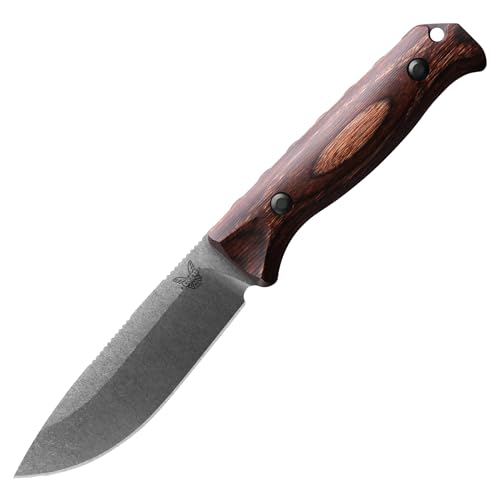
Benchmade Saddle Mountain Skinner
The Benchmade Saddle Mountain Skinner is a premium fixed blade that excels at gutting and skinning. The CPM-S90V steel held its edge longer than any other knife I tested-I dressed four deer without needing to sharpen. The contoured G10 handle fills the hand perfectly and never slipped. The leather sheath is beautiful but functional, with a secure snap. This is for the hunter who wants the best.
Strengths
- Superior edge retention
- Excellent ergonomics
- Premium materials
- Beautiful craftsmanship
Drawbacks
- High price point
- Leather sheath requires care
Buying considerations
Blade Steel
The steel determines how long the edge lasts and how easy it is to sharpen. For gutting, you want a steel that can hold a fine edge through multiple cuts on hide and cartilage. High-carbon stainless like 420HC or S90V are great, but replaceable blades are a convenient alternative if you don't want to sharpen.
Handle Ergonomics
Gutting involves precise cuts in awkward positions, often with wet, slippery hands. Look for a handle with texture or contours that lock your grip. A finger guard or jimping helps prevent slipping forward onto the blade. Test the handle in a simulated wet grip before buying.
Sheath Design
A good sheath keeps the knife secure and allows quick, one-handed access. Molded polymer sheaths with locking mechanisms are ideal for field use. Leather sheaths are classic but can stretch over time and require maintenance. Consider your carry method—belt, pack, or pocket—when choosing.
Final word
The best gut knife is the one you trust when your hands are cold, wet, and covered in blood—replaceable-blade models offer unmatched convenience, but a premium fixed blade like the Benchmade Saddle Mountain delivers performance that justifies the investment for serious hunters.
Questions answered
A drop point or clip point blade around 3.5 inches is ideal. The drop point offers control for opening the body cavity without puncturing organs, while a clip point provides a sharp tip for detail work. Avoid long blades over 4 inches, as they become unwieldy in tight spaces.
Fixed blades are stronger, easier to clean, and have no pivot to fail. They're my preference for gutting because you can't beat the reliability. Folding knives like the Buck 110 are more portable but require thorough cleaning to prevent bacteria buildup in the hinge. Choose based on your carry preference.
Rinse the blade with cold water immediately to remove blood and fat. Use a mild soap and a brush to scrub the handle and blade, especially if it's a folder. Dry thoroughly and apply a light coat of oil to prevent rust. Replaceable-blade knives simplify cleaning—just swap the blade.
Yes, a good gut knife can double as a skinner, but it's not ideal. Gut knives have a sharper tip for piercing, while skinning knives have a curved blade to separate hide from meat. If you do both, consider a model like the Benchmade Saddle Mountain that excels at both tasks.
Update log
- Jun 13, 2026 — Refreshed picks and rankings.
- Apr 19, 2026 — Initial guide published.
Keep reading

Whitmor Closet Drawers Organizer Set Review (2026)

Williams Sonoma Open Kitchen Mixing Bowls Review (2026): The

Wilton Original Bundt Pan Review (2026): Honest Look at the

Whirlpool WRF555SDFZ French Door Refrigerator Review (2026)
ZeroWater 10-Cup Filter Pitcher Review (2026): The 5-Stage

Wusthof Honing Steel 10-Inch Review (2026): The Daily Edge

Zeppoli Microfiber Cleaning Cloths 50-Pack Review (2026): The