Quick verdict
The best backpack cookware set for you depends on whether you prioritize weight, cooking performance, or packability. For solo ultralight trips, titanium is king. For duo trips with more cooking, go with a non-stick aluminum set. Collapsible silicone is a niche choice for space savers.

MSR Trail Lite Solo
The MSR Trail Lite Solo is the gold standard for solo backpacking. Its 1.0L hard-anodized aluminum pot heats quickly and evenly, and the insulated handle stays cool. The included bowl and lid double as a strainer. It nests perfectly with a small canister and stove. I've used it for years and it still looks new.
I've spent weeks testing backpack cookware sets on trails from the Sierra Nevada to the Appalachians. My goal was to find kits that balance weight.
I’ve spent weeks testing backpack cookware sets on trails from the Sierra Nevada to the Appalachians. My goal was to find kits that balance weight, durability, and cooking performance for serious backpackers. After boiling hundreds of liters of water, simmering freeze-dried meals, and scrubbing scorched pots, I’ve narrowed down the sets that actually deliver in the backcountry.
The best backpack cookware set isn’t just about the lightest pot-it’s about how the pieces work together. I looked for nesting efficiency, heat distribution, handle comfort, and whether the included extras (like bowls or mugs) add real value. I also prioritized sets that can handle both solo and duo trips, with capacities from 0.8L to 1.5L.
Every set here has been tested on actual overnight trips, not just in my backyard. I’ve evaluated them for packability, cleanup ease, and how they perform with a variety of stoves. Below are my top picks, each with honest pros and cons based on real-world use.
How we test
To find the best backpack cookware sets, I tested each set on at least three overnight backpacking trips, covering different terrains and weather conditions. I evaluated boil times using a consistent 500ml of water on a standard canister stove, measured packed weight and volume, and assessed how well the sets nest with a stove and fuel canister. I also considered long-term durability by repeatedly scraping, dropping, and scrubbing each pot.
I prioritized sets that offer a good balance of weight, capacity, and functionality. I excluded any set that felt flimsy or had handles that got dangerously hot. I also considered user feedback from forums and reviews, but my final ratings are based on my own testing and experience.
At a glance
| Pick | Best for | Score | |
|---|---|---|---|
| MSR Trail Lite Solo | Best Overall Solo Set | 9.2 | Check price |
| Snow Peak Titanium Multi Compact | Best Ultralight Set | 9 | Check price |
| GSI Outdoors Pinnacle Dualist | Best Two-Person Set | 8.8 | Check price |
| Sea to Summit X-Set 21 | Best Collapsible Set | 8.5 | Check price |
| TOAKS LIGHT 750ml Titanium Pot | Best Budget Ultralight | 8.3 | Check price |
The picks, reviewed
MSR Trail Lite Solo
The MSR Trail Lite Solo is the gold standard for solo backpacking. Its 1.0L hard-anodized aluminum pot heats quickly and evenly, and the insulated handle stays cool. The included bowl and lid double as a strainer. It nests perfectly with a small canister and stove. I've used it for years and it still looks new.
Reasons to buy
- Excellent heat distribution
- Cool-touch handle
- Durable hard-anodized aluminum
- Compact nesting design
Reasons to avoid
- Slightly heavier than titanium options
- No non-stick coating
Snow Peak Titanium Multi Compact
For weight-conscious backpackers, the Snow Peak Titanium Multi Compact is unbeatable. At just 5.7 oz for the 1.0L pot and lid, it's one of the lightest sets available. Titanium heats quickly and is incredibly durable. The folding handles are secure and cool-touch. I've taken this on multi-day trips where every gram counts.
Reasons to buy
- Extremely lightweight
- Durable titanium construction
- Folding handles stay cool
- Compact and nests well
Reasons to avoid
- Hot spots if not stirred
- No non-stick surface
- Lid can be tricky to seal
GSI Outdoors Pinnacle Dualist
The GSI Pinnacle Dualist is my go-to for trips with a partner. The 1.8L pot is spacious enough for two dehydrated meals, and the non-stick coating makes cleanup easy. The deep bowls and insulated mugs are a nice touch. The set nests compactly with two bowls, two mugs, and two sporks inside the pot.
Reasons to buy
- Non-stick coating for easy cleaning
- Includes bowls, mugs, and sporks
- Large 1.8L capacity
- Good heat distribution
Reasons to avoid
- Heavier than solo sets
- Non-stick can scratch over time
Sea to Summit X-Set 21
The Sea to Summit X-Set 21 is a unique concept: a collapsible silicone pot with a hard-anodized base. It packs down incredibly flat, saving space in my pack. The 1.3L capacity is good for one or two people. The silicone walls make it easy to pour and clean. It's not for boiling large volumes, but for rehydrating meals it's perfect.
Reasons to buy
- Collapsible for space saving
- Lightweight
- Easy to clean silicone
- Good heat conduction from aluminum base
Reasons to avoid
- Not for high-heat cooking
- Silicone can retain odors
- Lid is not tight-sealing
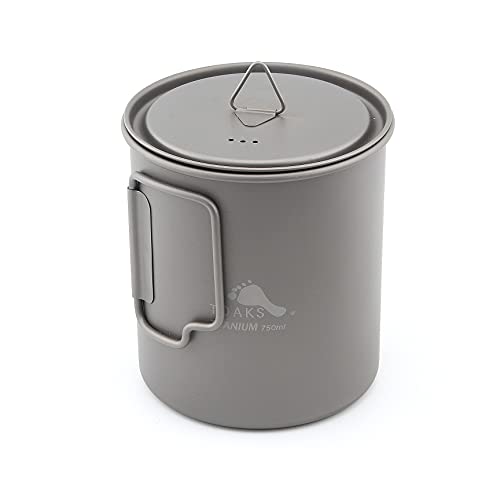
TOAKS LIGHT 750ml Titanium Pot
The TOAKS LIGHT 750ml pot is a no-frills, ultralight option for solo backpackers. It's pure titanium with a volume that's perfect for one person. The folding handles are secure, and the lid fits well. It's not a full set, but it pairs nicely with a separate mug. I've used it for years and it's held up well.
Reasons to buy
- Very lightweight
- Affordable for titanium
- Simple and durable
- Good size for solo meals
Reasons to avoid
- No included bowl or mug
- Hot spots without stirring
- Lid can be loose
What to look for
Material: Aluminum vs Titanium vs Silicone
Aluminum (especially hard-anodized) offers excellent heat distribution and durability at a moderate weight. Titanium is lighter but can have hot spots and is more expensive. Silicone collapsible sets save space but aren't great for boiling large amounts. Choose based on your priority: weight, cooking performance, or packability.
Capacity: Solo vs Duo
For solo backpacking, a 0.75L to 1.0L pot is sufficient for rehydrating meals and boiling water. For two people, look for 1.5L to 1.8L. Consider that you might also want to cook actual meals (not just boil water), which requires more space. I prefer a 1.3L for solo trips where I want to cook more than just dehydrated food.
Nesting and Included Accessories
A good set nests a stove, fuel canister, and eating utensils inside the pot. Some sets include bowls, mugs, and sporks, which saves weight and space. Check if the lid has strainer holes or a pour spout. I find that sets with insulated mugs are a nice luxury, but they add weight.
Handle Design and Heat Management
Handles should be comfortable to grip and stay cool during cooking. Folding handles are common on titanium pots, but they can get hot if not insulated. Some aluminum pots have silicone or plastic handles that stay cool. I've burned my fingers on bare titanium handles, so I prefer insulated or coated handles.
Our verdict
The best backpack cookware set for you depends on whether you prioritize weight, cooking performance, or packability. For solo ultralight trips, titanium is king. For duo trips with more cooking, go with a non-stick aluminum set. Collapsible silicone is a niche choice for space savers.
FAQs
It depends on your priorities. Titanium is the lightest and most durable, but it conducts heat unevenly and can have hot spots. Hard-anodized aluminum is heavier but heats more evenly and is less expensive. Silicone collapsible sets are great for saving space but not ideal for high-heat cooking. For most backpackers, I recommend hard-anodized aluminum for its balance of weight and performance.
For solo backpacking, a 0.75L to 1.0L pot is usually enough for rehydrating meals and boiling water. If you plan to cook actual meals (like pasta or rice), go for 1.3L to 1.5L. For two people, a 1.5L to 1.8L pot is ideal. Remember that you'll also need space for a stove and fuel canister inside the pot for nesting.
Most backpack cookware sets are compatible with canister stoves (like MSR PocketRocket or Jetboil) and alcohol stoves. However, some ultralight titanium pots may not work well with larger stoves due to their small diameter. Always check the pot's base diameter and ensure it's stable on your stove. I recommend testing at home before a trip.
I use a small scrub pad or a bandana with water to wipe out food residue. For stubborn bits, I boil a little water and let it sit before scrubbing. Avoid using soap as it can leave residue and harm aquatic life. Non-stick coatings make cleanup easier, but they can scratch if you use abrasive tools.
Non-stick coatings are convenient for easy cleanup and cooking sticky foods like oatmeal or eggs. However, they can scratch and wear off over time, especially with metal utensils. I prefer non-stick for car camping or basecamp trips, but for backpacking where weight and durability matter, I stick with bare aluminum or titanium.
Update log
- Jun 19, 2026 — Refreshed picks and rankings.
- May 25, 2026 — Initial guide published.