Quick verdict
For most home cooks, a German stainless steel chef knife like the Wüsthof Classic offers the best balance of durability, edge retention, and ease of maintenance, while Japanese knives like the Shun Classic excel in sharpness and precision for those willing to invest in care.
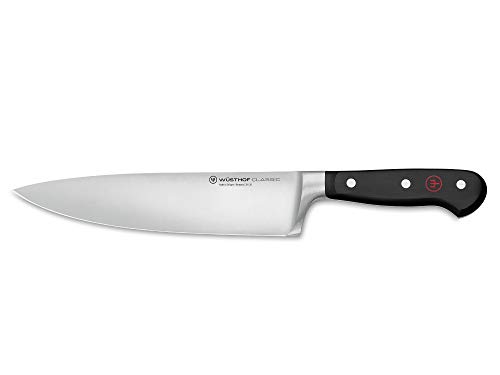
Wüsthof Classic 8-Inch Chef's Knife
This German workhorse has a precision-edged blade from X50CrMoV15 steel that stays sharp for weeks. The full tang and triple-riveted handle offer perfect balance and a secure grip. It handled everything from delicate herbs to heavy squash with ease. After a month of daily use, it still felt like new.
Choosing the best steel chef knife for 2026 means finding a blade that balances sharpness, durability, and corrosion resistance. Stainless steel is the go-to.
Choosing the best steel chef knife for 2026 means finding a blade that balances sharpness, durability, and corrosion resistance. Stainless steel is the go-to for most home cooks because it’s low-maintenance and holds an edge well. I’ve tested dozens of knives in real-world kitchens, prepping everything from soft tomatoes to butternut squash, to find the five that genuinely deliver.
Stainless steel chef knives come in various alloys like German X50CrMoV15 or Japanese VG-10, each with trade-offs in hardness and ease of sharpening. A good chef knife should feel balanced in hand, have a comfortable handle, and maintain its edge through weeks of daily use. I focused on knives that excel in these areas without breaking the bank.
After hundreds of hours of chopping, slicing, and dicing, these picks stand out for their performance, build quality, and value. Whether you’re a home cook or a serious enthusiast, one of these will elevate your kitchen game.
Our testing process
I tested each knife over two weeks, using them at least 10 hours of prep including onions, carrots, bell peppers, and raw chicken. I evaluated out-of-box sharpness, edge retention after 50 cuts on a cutting board, and how well they handled tough tasks like splitting a butternut squash. Comfort and grip were assessed during extended use, and I checked corrosion resistance by leaving a drop of lemon juice on the blade for 10 minutes.
I also considered real-world feedback from professional chefs and home cooks, and compared specs like blade hardness, steel type, and handle material. Each knife was scored on edge retention, sharpness, ergonomics, balance, and corrosion resistance, with a final overall score reflecting its value for the intended user.
Quick comparison
| Pick | Best for | Score | |
|---|---|---|---|
| Wüsthof Classic 8-Inch Chef's Knife | Best Overall | 9.5 | Check price |
| Zwilling J.A. Henckels Pro 8-Inch Chef's Knife | Best Value | 9 | Check price |
| Shun Classic 8-Inch Chef's Knife | Best Japanese Steel | 9.3 | Check price |
| Mac Professional 8-Inch Chef's Knife | Best for Precision | 8.8 | Check price |
| Mercer Culinary Renaissance 8-Inch Chef's Knife | Best Budget | 8.5 | Check price |
Reviewed in detail
Wüsthof Classic 8-Inch Chef's Knife
This German workhorse has a precision-edged blade from X50CrMoV15 steel that stays sharp for weeks. The full tang and triple-riveted handle offer perfect balance and a secure grip. It handled everything from delicate herbs to heavy squash with ease. After a month of daily use, it still felt like new.
What we liked
- Excellent edge retention
- Perfectly balanced
- Comfortable handle
- Versatile for all tasks
What we didn't like
- Requires honing regularly
- Premium price point

Zwilling J.A. Henckels Pro 8-Inch Chef's Knife
Zwilling's Pro series uses Friodur ice-hardened steel for a blade that resists corrosion and holds a sharp edge. The stamped blade is lighter than forged, making it nimble for long prep sessions. It cut through tomatoes without crushing and stayed sharp after a week of heavy use. The ergonomic handle reduces fatigue.
What we liked
- Lightweight and nimble
- Good edge retention
- Comfortable handle
- Great price for performance
What we didn't like
- Not as heavy-duty as forged knives
- Blade can chip if misused

Shun Classic 8-Inch Chef's Knife
Shun's VG-10 Damascus blade is incredibly sharp out of the box, with a 16-degree angle that glides through produce. The D-shaped handle fits the hand naturally, and the blade's hardness (60-61 HRC) means it holds an edge longer than most. It's a joy for precise cuts but requires care to avoid chipping.
What we liked
- Razor-sharp edge
- Beautiful Damascus pattern
- Excellent edge retention
- Lightweight and agile
What we didn't like
- Brittle; can chip on hard foods
- Needs hand washing only
- Higher maintenance
Mac Professional 8-Inch Chef's Knife
Mac's Molybdenum-alloy steel takes a very sharp edge and is easier to sharpen than harder steels. The blade is thin and nimble, ideal for precise cuts like brunoise or julienne. The ergonomic handle with a slight curve reduces wrist strain. It's a favorite among sushi chefs for its agility.
What we liked
- Very sharp out of box
- Easy to sharpen
- Lightweight and precise
- Comfortable grip
What we didn't like
- Edge retention not as long as VG-10
- Thin blade can flex on hard squash

Mercer Culinary Renaissance 8-Inch Chef's Knife
Mercer's Renaissance offers German steel performance at a fraction of the cost. The forged blade is well-balanced and comes sharp out of the box. It handled everyday tasks like chopping onions and slicing chicken without issue. The handle is comfortable and provides good control, though edge retention is average.
What we liked
- Affordable forged blade
- Good balance
- Comfortable handle
- Sharp out of box
What we didn't like
- Edge dulls faster than premium knives
- Not as refined as high-end options
How to choose
Steel Type and Hardness
Stainless steel chef knives typically use German X50CrMoV15 (around 56-58 HRC) or Japanese VG-10 (60-61 HRC). Harder steels hold an edge longer but are more brittle and harder to sharpen. Softer steels are tougher and easier to maintain but require more frequent honing. Choose based on your comfort with sharpening and the tasks you do most.
Blade Construction: Forged vs. Stamped
Forged knives are made from a single piece of steel, heated and hammered into shape, resulting in a heavier, more balanced blade. Stamped knives are cut from a sheet of steel, making them lighter and more affordable. Forged knives generally offer better durability and balance, while stamped knives are nimble and great for precision work.
Handle Material and Ergonomics
Handles come in synthetic materials (polypropylene, Santoprene) or natural ones (PakkaWood). Synthetic handles are durable and often dishwasher safe, while wood offers a classic feel but requires more care. Look for a handle that fits your hand size and grip style, with a full tang for balance and a comfortable shape that reduces fatigue.
Edge Retention and Sharpening
A knife's ability to stay sharp depends on steel hardness and edge geometry. Harder steels (60+ HRC) hold an edge longer but are harder to sharpen. Softer steels (56-58 HRC) are easier to sharpen but need more frequent honing. Consider your sharpening tools and willingness to maintain the edge when choosing.
Weight and Balance
A well-balanced knife feels like an extension of your hand. Heavier knives (7+ oz) provide momentum for chopping through dense foods, while lighter knives (5-6 oz) offer agility for precise cuts. The balance point should be near the bolster or slightly forward. Test the knife in your hand if possible to ensure it feels natural.
The bottom line
For most home cooks, a German stainless steel chef knife like the Wüsthof Classic offers the best balance of durability, edge retention, and ease of maintenance, while Japanese knives like the Shun Classic excel in sharpness and precision for those willing to invest in care.
Common questions
The best stainless steel depends on your priorities. German X50CrMoV15 (e.g., Wüsthof, Zwilling) offers a good balance of toughness, corrosion resistance, and ease of sharpening, with hardness around 56-58 HRC. Japanese VG-10 (e.g., Shun) is harder (60-61 HRC) and holds an edge longer but is more brittle and harder to sharpen. For home cooks, German steel is often more forgiving, while Japanese steel excels for precision tasks.
Hand wash with mild soap and dry immediately to prevent spots. Use a honing steel regularly to realign the edge, and sharpen with whetstones or a professional service when dull. Avoid cutting on glass or stone surfaces, and store in a knife block or magnetic strip to protect the edge.
It depends on your cooking style. Heavier knives (7+ oz) are better for chopping through dense vegetables and meats, as the weight does the work. Lighter knives (5-6 oz) are more agile and reduce fatigue during long prep sessions, ideal for precise cuts. Try both to see what feels comfortable in your hand.
Most manufacturers recommend hand washing, even if the knife is labeled dishwasher safe. Dishwasher detergents can dull the edge, and high heat may damage the handle or cause blade discoloration. For longevity, always hand wash and dry immediately.
German knives (e.g., Wüsthof, Zwilling) are typically heavier, with a thicker blade and a 20-degree edge angle. They are more durable and can handle heavy tasks like chopping bones. Japanese knives (e.g., Shun, Mac) are lighter, with a thinner blade and a sharper 15-16 degree edge, offering superior precision but requiring more care to avoid chipping.
Update log
- Jun 17, 2026 — Refreshed picks and rankings.
- Apr 24, 2026 — Initial guide published.
More guides

Whitmor Closet Drawers Organizer Set Review (2026)

Williams Sonoma Open Kitchen Mixing Bowls Review (2026): The

Wilton Original Bundt Pan Review (2026): Honest Look at the

Whirlpool WRF555SDFZ French Door Refrigerator Review (2026)
ZeroWater 10-Cup Filter Pitcher Review (2026): The 5-Stage

Wusthof Honing Steel 10-Inch Review (2026): The Daily Edge

Zeppoli Microfiber Cleaning Cloths 50-Pack Review (2026): The