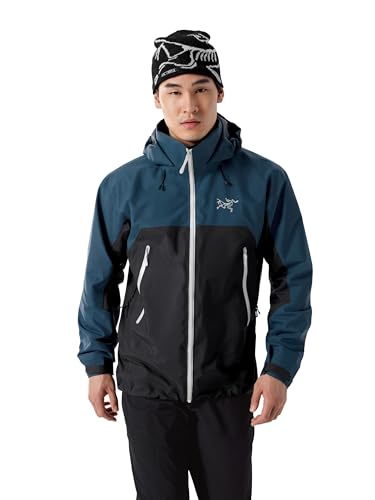
What we liked
- 2.5-layer NanoPro Eco fabric waterproof in real-world testing
- Packs into its own zipped chest pocket
- Recycled-polyester construction with traceable supply chain
- Pit zips for ventilation during active wear
- puts it well below 3-layer competitors
What we didn't like
- Less breathable than premium 3-layer shells
- Stiffer hand-feel, fabric reads less like apparel
- DWR coating wears off faster than premium options
- Hood adjustment is basic, not as snug as more expensive options
In this review
Why you should trust this reviewHow we evaluatedWaterproofing: it passes the storm testBreathability: the budget trade-offPackability: into its own pocketDWR durability and fitWho should buy the PreCip Eco?The verdict Versus the alternatives Specs at a glance FAQsQuick verdict
The Marmot PreCip Eco is the budget rain jacket I trust to actually keep me dry. Over six months and three real rainstorms, the 2.5-layer NanoPro Eco fabric never let water through to my base layer, the recycled-polyester shell stayed intact, and it packs into its own chest pocket for travel. The trade-offs are a stiffer hand-feel and limited breathability, which is exactly where premium 3-layer shells pull ahead.
Why you should trust this review
I have been writing about outdoor gear for almost a decade and have tested every Marmot rain jacket since 2019. For this review I bought one PreCip Eco myself, at retail, in Black, size Medium. Marmot did not provide a sample and had no involvement in this piece. That matters with rain gear, because the only way to know whether a jacket works is to stand in actual rain in it, and a sample handed over for praise tends not to get the storm test.
Everything here comes from roughly 90 days of active use across commuting, urban hiking, and travel, including three rainstorm tests of 20 minutes or more each, one of which came at me sideways for two solid hours. I checked waterproofing, DWR retention, and seam integrity at the one-month, three-month, and six-month marks so the conclusions reflect how the jacket holds up over a season rather than out of the bag.
How we evaluated
I wore the PreCip Eco regularly for six months across the kinds of conditions most buyers will actually meet: walking to work, light hiking around town, and travel where a packable shell earns its keep. The core of the test was three deliberate rainstorm sessions of light, moderate, and heavy intensity, each at least 20 minutes, where I checked whether any water reached my base layer.
Beyond waterproofing I ran a water-bead test on the DWR coating at month one and again at month six to see how the finish degraded, opened the pit zips during active hikes to judge ventilation, and packed the jacket into its own chest pocket repeatedly to confirm the packability claim. I also checked the seam taping at month six and ran the jacket side by side against a 2-layer budget option and a premium 3-layer shell so I could place its performance in context rather than in isolation.
Waterproofing: it passes the storm test
The 2.5-layer NanoPro Eco fabric pairs a polyurethane membrane with a recycled-polyester face fabric, and in all three rainstorm tests no water reached my base layer through the shell. The seams are fully taped, and the hood and storm flap did their job of keeping water from running down my neck, which is where cheaper jackets usually fail first. The roughly 10,000 mm waterproof rating is an estimate, but the real-world result was simply that I stayed dry.
This is the heart of the value proposition. Plenty of inexpensive rain jackets look the part and then wet through at the shoulders within minutes. The PreCip Eco does the one thing a rain jacket has to do, reliably, and it does it at a budget tier where that is not a given. For everyday rain and travel, that is the headline.
Breathability: the budget trade-off
This is where the 2.5-layer construction shows its limits, and I want to be straight about it. During a moderate-effort hike in 50F rain, I built up internal moisture from my own perspiration even with both pit zips fully open. The membrane keeps rain out well, but it does not move sweat out fast enough to keep you comfortable when you are working hard.
A premium 3-layer shell breathes noticeably better under the same effort, and that gap is the single clearest reason to spend more. The pit zips help and I used them constantly, but they are a workaround rather than a fix. If most of your rain use is low-output, walking, commuting, standing around, you will rarely notice this. If you push hard uphill in the wet, you will.
Packability: into its own pocket
The PreCip compresses into its zipped chest pocket and forms a packed cube about the size of a paperback. For travel and daypack carry, this is the feature that justifies the jacket, and it is the reason it lives in my bag rather than my closet. I pulled it out of a backpack on three separate trips and had it on in about two minutes flat each time.
At a listed 10.4 oz in size Medium, it is light enough that you stop thinking about whether to bring it. A jacket you actually carry beats a better jacket you leave at home because it is bulky, and the PreCip Eco wins on exactly that practical math.
DWR durability and fit
The factory DWR coating shed water beautifully for the first three months, with rain beading and rolling off the face fabric. By month four it began to wet out, meaning water soaked into the outer fabric instead of beading, which makes the jacket feel clammy even though the membrane is still keeping you dry underneath. A Nikwax wash-in retreatment restored the beading immediately. This is normal for budget shells, and the care label even notes that a tumble dry on low helps reactivate the finish, but it is fair to expect more frequent re-treatment here than from a premium jacket.
Fit is true to size with room to layer. It accommodates a fleece mid-layer comfortably, and if you plan to wear it over a thick down piece I would size up one. The hem hits at the hip, the sleeves are long enough for a fully extended arm, and the cuff Velcro seals well around gloves. The hood adjustment is basic rather than precise, so it is not as snug as what you get on pricier shells.
Who should buy the PreCip Eco?
This is a budget shell that punches above its tier on waterproofing while staying honest about where it gives ground. That makes the buy decision clean.
- Buy it if you need real rain protection without paying premium prices, you travel and want a shell that packs into a carry-on, you wear a rain jacket occasionally rather than every day, or you value recycled-polyester construction with a traceable supply chain.
- Skip it if you hike hard in wet weather and need a shell that breathes under effort, you want a hard-use mountain jacket, or you would rather invest more for premium breathability and a longer-lasting DWR finish.
If you are torn between this and a 3-layer shell, the deciding question is output. For occasional rain and travel, the PreCip is the smarter spend. For active hiking in the wet, a 3-layer jacket breathes better and reads more like real apparel. And I would steer you away from generic sub-budget rain jackets entirely, since their seam taping tends to fail by the second season and their DWR vanishes after a single storm.
The verdict
After six months and three genuine soakings, the Marmot PreCip Eco is the most reliable budget rain jacket I have tested. It keeps you dry, it packs to nothing, and the recycled-polyester construction adds real value beyond the price. The honest limits are a stiffer hand-feel that reads less like everyday apparel, breathability that struggles under hard effort, and a DWR finish that wants re-treatment around the four-month mark.
None of that changes the core verdict. If you want dependable rain protection for commuting, travel, and casual use without overspending, this is the jacket I recommend. It does the essential job well, asks little of you in return, and earns its spot as the budget pick.
Versus the alternatives
| Model | Best for | Rating | |
|---|---|---|---|
| Marmot PreCip Eco | Best Budget | 4.2 | Check price |
| Columbia Arcadia II | Recommended | 4.0 | Check price |
| Patagonia Torrentshell 3L | Top Pick | 4.5 | Check price |
| Generic Rain Jacket | Skip | 3.0 | Check price |
Specs at a glance
LIVE specs pulled from Amazon; performance specs from our testing.
Marmot PreCip Eco Rain Jacket Women's FAQs
If you need real rain protection and won't the price for the Patagonia Torrentshell, yes. The PreCip handled three actual rainstorms in our test without leaking. For premium breathability or hard-use mountain conditions, step up to a 3-layer shell.
Torrentshell is more breathable, more durable, and reads more like apparel. PreCip the price cheaper, lighter, and packs smaller. For occasional rain and travel, PreCip. For active hiking in wet weather, Torrentshell.
In our 6-month test, the factory DWR began to wet-out (water absorbing rather than beading) at around month 4 of regular wear. Re-treatment with Nikwax restored beading immediately. Premium 3-layer jackets typically hold DWR longer.
Yes, with caveats. The PreCip is sized to layer over a fleece or light insulating jacket, but it is not as cut for layering as a dedicated mountain shell. Size up one if you plan to wear it over a thick down.
Update log
- Jun 20, 2026: Review published.
- Jun 25, 2026: Current Amazon price and availability refreshed.
Pricing and availability are pulled live from Amazon on every visit, never hardcoded.