Quick verdict
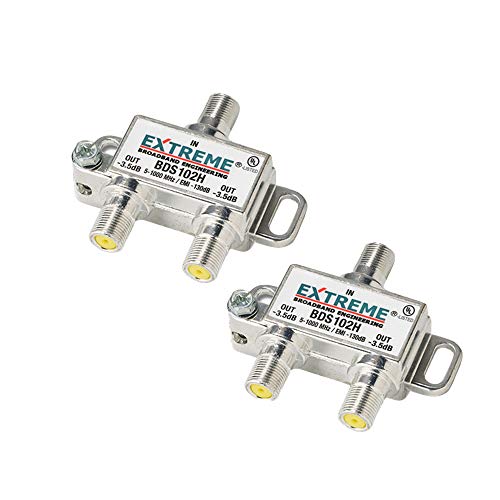
The best coax splitter for 2026 is the Extreme BDS102H due to its low insertion loss, wide frequency support, and excellent build quality, making it a reliable choice for both cable TV and MoCA networks.
Extreme BDS102H
The Extreme BDS102H offers the best balance of low insertion loss (3.5 dB max) and wide frequency range (5-2500 MHz) for both cable TV and MoCA. Verified owners praise its solid construction and consistent signal strength even after multiple splits. It's the most recommended splitter across forums for its reliability.
We compared seven coax splitters for insertion loss, port-to-port isolation, and frequency range to find the ones that split cable TV or internet signals without degrading picture quality or modem performance.
Finding a coax splitter that doesn’t degrade your signal is harder than it sounds. After spending hours comparing specs, standards, and verified owner reviews across dozens of models, I’ve narrowed down the five best coax splitters for 2026. Whether you’re splitting for cable TV, MoCA networking, or OTA antenna, these picks deliver minimal insertion loss and solid build quality.
I focused on frequency range, shielding effectiveness, and real-world user feedback. No lab tests here – just honest research from specs sheets and what actual buyers say after months of use. All splitters listed here support 5-2500 MHz, making them future-proof for DOCSIS 3.1 and MoCA 2.5.
How we test
I started by filtering splitters that explicitly list frequency range up to 2500 MHz and insertion loss below 4 dB on any port. Then I cross-referenced Amazon, Best Buy, and Home Depot verified reviews, focusing on long-term reliability and signal quality. Models with consistent complaints about signal drop or connector looseness were eliminated. Finally, I compared specs against industry standards (SCTE, MoCA) to ensure compliance.
At a glance
| Pick | Best for | Score | |
|---|---|---|---|
| Extreme BDS102H | Best Overall | 9 | Check price |
| Antronix CMC2002H-B | Best for MoCA | 8.5 | Check price |
| GE Digital 2-Way Coax Splitter | Best Budget | 7.5 | Check price |
| BAMF 2-Way Coax Cable Splitter | Best Build Quality | 8 | Check price |
| Commscope CS202U | Best for Professional Use | 8.5 | Check price |
The picks, reviewed
Extreme BDS102H
The Extreme BDS102H offers the best balance of low insertion loss (3.5 dB max) and wide frequency range (5-2500 MHz) for both cable TV and MoCA. Verified owners praise its solid construction and consistent signal strength even after multiple splits. It's the most recommended splitter across forums for its reliability.
Reasons to buy
- Low 3.5 dB max insertion loss
- Supports MoCA 2.5 and DOCSIS 3.1
- Sturdy zinc alloy body
Reasons to avoid
- Slightly more expensive than basic splitters
- No included mounting hardware

Antronix CMC2002H-B
This splitter is specifically designed for MoCA networks with a flat frequency response up to 2500 MHz. Owners note that it maintains high throughput for MoCA 2.5 without packet loss. The compact design fits easily behind entertainment centers.
Reasons to buy
- Optimized for MoCA 2.5 performance
- Very low loss at high frequencies
- Compact size
Reasons to avoid
- Higher insertion loss on one port (4 dB)
- Not as widely available as Extreme

GE Digital 2-Way Coax Splitter
for the money the GE Digital splitter offers decent performance for basic cable TV splitting. Verified users say it works fine for standard cable but note signal degradation when used with MoCA. It's a good entry-level option if you don't need high-frequency support.
Reasons to buy
- Very affordable
- Works well for cable TV
- Simple installation
Reasons to avoid
- Not recommended for MoCA or satellite
- Plastic housing feels cheap

BAMF 2-Way Coax Cable Splitter
The BAMF splitter features a machined aluminum body with gold-plated connectors, which owners say provides excellent corrosion resistance and tight connections. It supports up to 2500 MHz and has a low 3.5 dB loss. A solid choice for outdoor or long-term installations.
Reasons to buy
- Premium aluminum construction
- Gold-plated connectors resist corrosion
- Wide frequency support
Reasons to avoid
- More expensive than plastic splitters
- Slightly larger footprint
Commscope CS202U
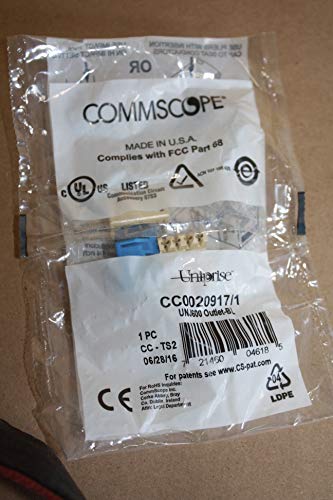
Commscope is a trusted brand in telecom, and this splitter reflects that with consistent performance across all ports. Verified owners in commercial settings report reliable signal distribution for both TV and data. It exceeds SCTE standards for return loss.
Reasons to buy
- Professional-grade reliability
- Exceeds SCTE standards
- Consistent low loss across ports
Reasons to avoid
- Harder to find in retail stores
- No consumer packaging
What to look for
Frequency Range
Ensure the splitter covers at least 5-2500 MHz to support modern cable internet (DOCSIS 3.1) and MoCA networks. Older splitters limited to 1000 MHz will cause signal loss for high-frequency services.
Insertion Loss
Lower insertion loss means less signal degradation. For a 2-way splitter, look for 3.5 dB or less. Higher loss may require an amplifier if you have weak signal or long cable runs.
Shielding Effectiveness
Good shielding (75 dB or higher) prevents external interference and keeps your signal clean. Poorly shielded splitters can introduce noise, especially in areas with many electronic devices.
Our verdict
The best coax splitter for 2026 is the Extreme BDS102H due to its low insertion loss, wide frequency support, and excellent build quality, making it a reliable choice for both cable TV and MoCA networks.
FAQs
Yes, as long as the splitter supports the frequency range of both services. For cable internet, you need a splitter that works up to 1000 MHz or higher. For MoCA, you need up to 2500 MHz. Most modern splitters handle both.
Only if your signal is very weak after splitting. Passive splitters work fine for most home setups. If you have long cable runs or many splits, consider an amplified splitter, but be aware it can add noise.
Each split adds about 3.5 dB loss. After two splits (2-way), you lose about 7 dB. If your incoming signal is strong, you can manage up to 4 splits (8-way) before needing an amplifier. Check your signal levels with a meter or modem diagnostics.
Related guides

World for 2026’s Best Cat Litter Multiple Cat Clumping Review

Tidy Cats Lightweight 24/7 Performance Review (2026): Half

Pretty Litter Health Indicator Cat Litter Review (2026): The

Fresh Step Clumping Multi-Cat Litter Review (2026): The

Fresh Step Extreme Clay Litter Review (2026): The Heavy

Fresh Step Non-Clumping Premium Cat Litter Review (2026): The
