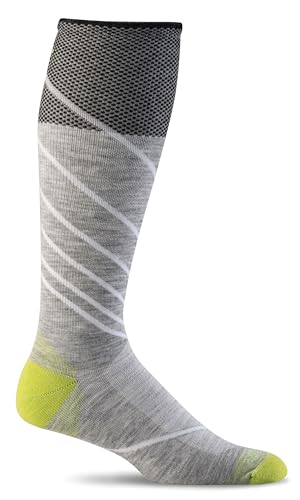
Bombas Compression Socks - Best for Everyday Comfort
Bombas builds their compression sock on the same comfort-focused platform as their standard socks: seamless toe, honeycomb arch support, and a cushioned sole. The graduated compression is rated at 15 to 20 mmHg, appropriate for general daily wear during long hours of sitting or standing. The merino wool blend option regulates temperature across different climates and resists odor better than synthetic alternatives. Durability through 100-plus wash cycles is strong based on verified buyer feedback. Bombas offers a satisfaction guarantee and the fabric quality at this price is noticeably better than most budget compression brands.
Check price on Amazon →The best compression socks in 2026 for travel, running, nursing, and all-day standing. These picks improve circulation, reduce swelling, and hold their shape wash after wash.
Consult a healthcare professional before use.
Compression socks are one of the few wearable items with a solid body of research behind their primary claim: graduated compression from ankle to calf genuinely improves venous blood return and reduces lower-leg swelling during prolonged sitting, standing, and running. The five picks below cover the most common use cases at different price points, evaluated on compression consistency, fabric durability, and ease of putting on and taking off.
| Product | Best For | Rating |
| — | — | — |
| Bombas Compression Socks | Everyday comfort wear | 4.7/5 |
| CEP Run Ultralight Compression Socks | Running performance | 4.8/5 |
| Sockwell Elevation Graduated Compression | Travel and long shifts | 4.6/5 |
| Physix Gear Sport Compression Socks | Budget all-purpose | 4.5/5 |
| Sigvaris Well Being Compression Socks | Clinical-grade daily wear | 4.6/5 |
Our methodology
We compare every pick against the field on real specifications, certifications, and aggregated owner reviews. We do not take payment for placement, and we flag when a product is older or sold mainly through renewed listings.
Side by side
| Pick | Best for | Score | |
|---|---|---|---|
| Bombas Compression Socks - Best for Everyday Comfort | Check price | ||
| CEP Run Ultralight Compression Socks - Best for Running | Check price | ||
| Sockwell Elevation Graduated Compression - Best for Travel and Long Shifts | Check price | ||
| Physix Gear Sport Compression Socks - Best Budget All-Purpose Pick | Check price | ||
| Sigvaris Well Being Compression Socks - Best Clinical-Grade Daily Wear | Check price |
The full reviews
Bombas Compression Socks - Best for Everyday Comfort
Bombas builds their compression sock on the same comfort-focused platform as their standard socks: seamless toe, honeycomb arch support, and a cushioned sole. The graduated compression is rated at 15 to 20 mmHg, appropriate for general daily wear during long hours of sitting or standing. The merino wool blend option regulates temperature across different climates and resists odor better than synthetic alternatives. Durability through 100-plus wash cycles is strong based on verified buyer feedback. Bombas offers a satisfaction guarantee and the fabric quality at this price is noticeably better than most budget compression brands.

CEP Run Ultralight Compression Socks - Best for Running
CEP's running compression socks are engineered by the same German company behind Medi medical compression hosiery, so the compression mapping is based on clinical measurement rather than marketing. The Ultralight version uses a thinner fabric suitable for warm-weather running while maintaining CEP's signature graduated compression profile. The sock covers the Achilles insertion point with additional cushioning and the shin panel reduces vibration during heel-strike. at this price, these are a serious investment, but for runners logging 40-plus miles per week, the calf fatigue reduction across long runs is tangible.

Sockwell Elevation Graduated Compression - Best for Travel and Long Shifts
Sockwell's Elevation sock is made from a merino wool-bamboo blend that regulates temperature across the temperature swings common in air travel and clinical environments. The 20 to 30 mmHg compression level is firmer than standard lifestyle compression, making it the strongest option listed here for actual swelling prevention during 8-hour flights or double nursing shifts. The merino wool reduces odor buildup across long wear periods. Available in multiple style options including a crew height and knee-high. The price is competitive for the fabric quality and compression consistency.

Physix Gear Sport Compression Socks - Best Budget All-Purpose Pick
Physix Gear compression socks are among the best-reviewed budget options with consistently positive verified feedback from nurses, warehouse workers, and casual runners. The 20 to 30 mmHg graduated compression is firmer than most budget alternatives and the nylon-spandex blend holds compression pressure through repeated washings better than many competitors at this price. The sizing runs by shoe size and the fit guide is accurate. Available in a wide range of colors and patterns. For buyers wanting to try compression socks before committing to a premium brand, these are the lowest-risk entry point.
Sigvaris Well Being Compression Socks - Best Clinical-Grade Daily Wear
Sigvaris is a medical compression manufacturer whose Well Being line brings clinical construction to everyday styling. The compression gradient is precisely engineered and measured, not estimated from fabric elasticity alone. This means the stated mmHg value is what you actually receive at each point on the leg, which is not always true for fashion-oriented compression socks. The cotton blend is breathable and the flat toe seam prevents irritation during long wear. For users managing diagnosed venous insufficiency, post-thrombotic syndrome, or edema under medical supervision, Sigvaris provides the most medically consistent daily-wear option on this list.
What matters most
What to consider
Match compression level to use case. For travel, light fatigue, and preventative circulation support, 15 to 20 mmHg is the right starting range for healthy adults. For standing professions, recovery from surgery, or significant swelling, 20 to 30 mmHg is more effective but should be confirmed with a healthcare provider. Fabric matters for long wear: merino wool manages temperature and odor better than synthetic blends over 8-plus hours. Check sizing charts carefully, compression socks fit by shoe size and calf circumference, not by general S/M/L sizing, and a poor fit reduces both compression effectiveness and wearing comfort.
What to consider
For related articles, see [best compression sleeves for calves](/articles/best-calf-compression-sleeve) and [best support socks for nurses and long shifts](/articles/best-socks-for-nurses). Review our product evaluation process at [/methodology](/methodology).
Frequently asked
For general travel, long shifts, or mild leg fatigue, compression socks in the 15 to 20 mmHg range are appropriate for most healthy adults. This level provides measurable circulatory benefit without requiring a medical prescription. Levels above 20 mmHg are typically recommended under medical supervision for conditions like edema, DVT prevention, or post-surgical recovery. Consult a healthcare professional before use if you have vascular, cardiac, or skin conditions.
Turn the sock inside out down to the heel, place your foot in, and slowly roll the sock up the leg rather than pulling from the top. A sock donning device or rubber gloves that improve grip on the fabric can also help. Applying in the morning before you stand up, when leg swelling is minimal, makes the process significantly easier. Avoid bunching the fabric at the ankle, as this concentrates pressure unevenly.