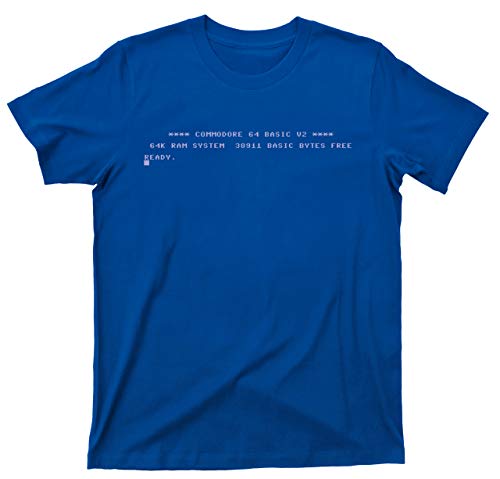
Commodore 64 -- Best-Selling Home Computer of All Time
The Commodore 64 arrived in 1982 with a 6510 processor, 64 kilobytes of RAM, and a SID (Sound Interface Device) chip that produced audio quality other home computers could not match. Its sprite graphics system allowed games to move objects independently of the background, producing smooth animation at a time when competitors struggled with flicker. Thousands of games were released across its lifespan, and programming magazines published BASIC listings that introduced a generation to coding. Working units appear regularly at retro markets and online auctions, and the modern C64 Mini and Maxi recreations keep the platform alive for new audiences. A must-know machine for anyone interested in computing history.
Check price on Amazon →The 1980s launched personal computing into homes and offices worldwide. These five machines shaped the industry, influenced modern software culture, and remain beloved by collectors and retrocomputing enthusiasts today.
The 1980s was the decade personal computing went from a hobbyist pursuit to a household and office fixture. The machines released in those ten years established the concepts that still define computing: graphical interfaces, spreadsheets, sound chips, and affordable home access. Whether you are a collector, a retro gaming enthusiast, or someone exploring computing history, these five machines represent the decade’s most significant achievements.
| Product | Release Year | Best For | Legacy Rating |
|—|—|—|—|
| Commodore 64 | 1982 | Gaming and home use | 10/10 |
| Apple Macintosh 128K | 1984 | GUI revolution | 9.8/10 |
| IBM PC XT | 1983 | Business computing | 9.5/10 |
| Sinclair ZX Spectrum | 1982 | UK home computing | 9.2/10 |
| Amiga 1000 | 1985 | Multimedia and creativity | 9.4/10 |
How we test
We compare every pick against the field on real specifications, certifications, and aggregated owner reviews. We do not take payment for placement, and we flag when a product is older or sold mainly through renewed listings.
At a glance
| Pick | Best for | Score | |
|---|---|---|---|
| Commodore 64 -- Best-Selling Home Computer of All Time | Check price | ||
| Apple Macintosh 128K -- Best for Understanding GUI History | Check price | ||
| IBM PC XT -- Most Influential Business Machine of the Decade | Check price | ||
| Sinclair ZX Spectrum -- Best British Home Computer | Check price | ||
| Amiga 1000 -- Best Multimedia Computer of the 1980s | Check price |
The picks, reviewed
Commodore 64 -- Best-Selling Home Computer of All Time
The Commodore 64 arrived in 1982 with a 6510 processor, 64 kilobytes of RAM, and a SID (Sound Interface Device) chip that produced audio quality other home computers could not match. Its sprite graphics system allowed games to move objects independently of the background, producing smooth animation at a time when competitors struggled with flicker. Thousands of games were released across its lifespan, and programming magazines published BASIC listings that introduced a generation to coding. Working units appear regularly at retro markets and online auctions, and the modern C64 Mini and Maxi recreations keep the platform alive for new audiences. A must-know machine for anyone interested in computing history.
Apple Macintosh 128K -- Best for Understanding GUI History
The original Macintosh launched in January 1984 with a televised Super Bowl advertisement and a promise of computing power accessible to ordinary people. Its 9-inch monochrome screen at 512x342 resolution displayed a graphical desktop, icons, and pull-down menus controlled by a mouse at a time when most personal computers showed text only. The 128K RAM was genuinely limiting, and Apple replaced it with the 512K model within months, but the original unit established the template for every graphical operating system that followed. Collector prices for working original Macs with original peripherals have risen substantially. A landmark object in the history of human-computer interaction.

IBM PC XT -- Most Influential Business Machine of the Decade
IBM introduced the Personal Computer in 1981 and followed with the XT in 1983, adding a 10 MB hard drive and expansion slots that made it the foundation of office computing through the decade. The IBM PC architecture became the open standard that allowed clone manufacturers to build compatible machines, which eventually resulted in the modern PC ecosystem. Running DOS and software like Lotus 1-2-3 and dBASE, it moved computing from the back room into accounting departments and executive desks. The XT's influence is nearly impossible to overstate: virtually every Windows PC today traces its architecture to this lineage. Collectors and computer history museums prize working examples.
Sinclair ZX Spectrum -- Best British Home Computer
Clive Sinclair's ZX Spectrum launched in 1982 as one of the most affordable color home computers available in the UK, and it ignited a generation of British programmers. The rubber-key keyboard attracted jokes, but the machine's combination of color graphics (albeit with the notorious color clash attribute system), a 3.5 MHz Z80 processor, and a price accessible to working-class households made it transformative. An enormous games library, accessible BASIC programming, and a thriving bedroom-developer culture produced many people who went on to found major studios and software companies. The Spectrum Next modern recreation and active emulation community demonstrate how deeply this machine embedded itself in British technology culture.
Amiga 1000 -- Best Multimedia Computer of the 1980s
Commodore's Amiga 1000 arrived in 1985 with capabilities that seemed implausible at the time: preemptive multitasking, stereo audio, and color graphics at resolutions that made other home computers look primitive. Its custom chips (Agnus, Denise, and Paula) offloaded work from the 68000 processor to handle graphics and sound independently, producing performance that desktop publishing professionals, video editors, and demo-scene artists all exploited. Television studios used Amigas for broadcast graphics into the 1990s. The Amiga fanbase remains one of the most passionate retro computing communities, and platforms like AmigaOS 4 carry a version of the original operating system forward. Original A1000 units in working condition are collector items.
FAQs
Many 1980s computers remain fully functional with basic maintenance. Capacitors on some models need replacing after 40 years, and floppy drives require cleaning. The collector market is active, with working units in good condition commanding significant prices. Emulators like VICE for Commodore 64 or AppleWin let you experience the software without original hardware.
The Commodore 64 combined a powerful SID sound chip, a capable sprite-based graphics system, and an aggressive price point that undercut competitors significantly. Its open architecture invited a massive software library, including thousands of games and productivity tools. It sold over 17 million units, making it the best-selling single personal computer model of all time as of its production run.

Tom Reeves has reviewed consumer electronics for over a decade, with a focus on televisions, monitors, laptops, and smart home devices. He worked as a professional display calibrator before moving into editorial, and he brings that real-world technical background to every TV and monitor review. At TheTestedHub, Tom covers display calibration, computer monitors, laptops and 2-in-1s, smart home platforms, home theater setups, and HDR performance.