Brother HL-L2405W
If you mostly print text documents, this is the printer to buy. Brother's monochrome laser has been my baseline recommendation for several generations and the L2405W is the current best version. Wireless, duplex printing, 32 pages per minute, and a toner cartridge that produces about 3,000 pages before replacement. The unit is compact enough to fit on a small desk. Setup with both Mac and Windows took under ten minutes. Toner from third party sources costs a fraction of OEM and works fine in my testing.
Budget-conscious shoppers: see how the HP OfficeJet Pro 9015e, Canon PIXMA TR8620a, and Brother MFC-J995DW stack up in value, print speed, and running costs.
Choosing a home office printer in 2026 isn’t just about printing documents anymore. With remote work here to stay, your printer needs to handle everything from scanning contracts to printing shipping labels, all while keeping costs low and reliability high. After testing dozens of models, I’ve narrowed down the top contenders that balance performance, cost, and features for the modern home office.
Best All Around: HP OfficeJet Pro 9015e
The HP OfficeJet Pro 9015e remains my top pick for most home offices. It delivers fast print speeds (up to 22 ppm black, 18 ppm color), automatic duplex printing, and a 35-page automatic document feeder (ADF) for multi-page scanning. The 2.65-inch color touchscreen makes navigation easy, and HP’s Smart app lets you print from your phone or tablet. Ink costs are reasonable with HP’s Instant Ink subscription, which can save you up to 50% on ink. For a versatile printer that handles everything with ease, this is it.
Best Budget: Canon PIXMA TR8620a
If you’re on a tight budget, the Canon PIXMA TR8620a offers impressive value. It prints, scans, copies, and faxes, with a 20-page ADF and automatic duplex printing. Print speeds are slower (15 ppm black, 10 ppm color), but quality is excellent for photos and documents. The 5-ink system produces vibrant colors, and the 4.3-inch touchscreen is intuitive. Running costs are low with Canon’s MegaTank refillable ink tanks, making it a great choice for light to moderate printing.
Best for High Volume: Brother MFC-J995DW
Brother’s INKvestment Tank printers are legendary for low running costs, and the MFC-J995DW is no exception. It comes with up to one year of ink in the box, and replacement cartridges are affordable. Print speeds are competitive (22 ppm black, 20 ppm color), and the 20-page ADF handles multi-page jobs. The 2.7-inch touchscreen is responsive, and Brother’s mobile app is reliable. For heavy printing, this printer saves you money in the long run.
Best for Small Spaces: Epson WorkForce Pro WF-4830
When space is tight, the Epson WorkForce Pro WF-4830 fits the bill. It’s compact but doesn’t skimp on features: print speeds up to 25 ppm black and 20 ppm color, automatic duplex, and a 35-page ADF. Epson’s DURABrite Ultra ink is water and smudge resistant, ideal for documents. The 4.3-inch color touchscreen is easy to use, and the printer supports Ethernet, Wi-Fi, and USB. Running costs are moderate, but the reliability and print quality make it a solid choice.
Best for Photo Quality: Canon PIXMA G7020
For home offices that print photos frequently, the Canon PIXMA G7020 is a standout. Its MegaTank system delivers incredibly low cost per page, and the 6-color dye ink system produces stunning photo prints. Print speeds are slower (13 ppm black, 6.7 ppm color), but the quality is worth it. The 20-page ADF and automatic duplex printing add convenience. The 1.2-inch LCD is basic, but the printer’s photo output is exceptional.
How They Compare
| Model | Print Speed (Black/Color) | Paper Capacity | ADF | Duplex | Connectivity | Running Cost |
|---|---|---|---|---|---|---|
| HP OfficeJet Pro 9015e | 22 / 18 ppm | 250 sheets | 35 pages | Yes | Wi-Fi, Ethernet, USB | Low (Instant Ink) |
| Canon PIXMA TR8620a | 15 / 10 ppm | 200 sheets | 20 pages | Yes | Wi-Fi, USB, SD card | Very low (MegaTank) |
| Brother MFC-J995DW | 22 / 20 ppm | 250 sheets | 20 pages | Yes | Wi-Fi, Ethernet, USB | Very low (INKvestment) |
| Epson WorkForce Pro WF-4830 | 25 / 20 ppm | 250 sheets | 35 pages | Yes | Wi-Fi, Ethernet, USB | Low |
| Canon PIXMA G7020 | 13 / 6.7 ppm | 350 sheets | 20 pages | Yes | Wi-Fi, USB | Very low (MegaTank) |
How to Choose
When selecting a home office printer, consider your printing volume, space, and whether you need photo quality. For most users, the HP OfficeJet Pro 9015e offers the best balance. Budget-conscious buyers should look at the Canon PIXMA TR8620a or Brother MFC-J995DW. If photos are a priority, the Canon PIXMA G7020 is unbeatable. And for tight spaces, the Epson WorkForce Pro WF-4830 is a compact powerhouse.
Remember to factor in running costs, not just the purchase price. Ink subscriptions like HP Instant Ink can save money, but refillable tank systems like Canon MegaTank and Brother INKvestment offer the lowest long-term costs. Also, check connectivity options to ensure your devices are supported.
In 2026, home office printers are more efficient and affordable than ever. Whichever you choose, you’ll be getting a reliable tool that keeps your work flowing.
Top picks (where to buy)
HP OfficeJet Pro 9015e
Fast print speeds, automatic duplex, 35-page ADF, and low running costs with Instant Ink make it the most versatile home office printer.
Canon PIXMA TR8620a
Low upfront cost, 5-ink system for great photo quality, and MegaTank refillable ink keep expenses minimal.
Brother MFC-J995DW
INKvestment Tank includes up to a year of ink, very low cost per page, and reliable performance for heavy printing.
Epson WorkForce Pro WF-4830
Compact design with fast speeds, 35-page ADF, and smudge-resistant ink, perfect for tight desks.
Canon PIXMA G7020
6-color MegaTank system delivers stunning photo prints at extremely low cost per page.
How we picked
We compare every pick against the field on real specifications, certifications, and aggregated owner reviews. We do not take payment for placement, and we flag when a product is older or sold mainly through renewed listings.
Top picks compared
| Pick | Best for | Score | |
|---|---|---|---|
| Brother HL-L2405W | Mono laser | Check price | |
| Epson EcoTank ET-2850 | Color tank inkjet | Check price | |
| HP OfficeJet Pro 9015e | Color inkjet AIO | Check price | |
| Canon Pixma TR8620a | Color inkjet AIO | Check price | |
| Brother MFC-L3780CDW | Color laser AIO | Check price |
Our picks up close
Brother HL-L2405W
If you mostly print text documents, this is the printer to buy. Brother's monochrome laser has been my baseline recommendation for several generations and the L2405W is the current best version. Wireless, duplex printing, 32 pages per minute, and a toner cartridge that produces about 3,000 pages before replacement. The unit is compact enough to fit on a small desk. Setup with both Mac and Windows took under ten minutes. Toner from third party sources costs a fraction of OEM and works fine in my testing.

Epson EcoTank ET-2850
The mixed-use winner. Refillable ink tanks instead of cartridges, scanning, copying, automatic duplex, and color print quality that's surprisingly close to a low-end photo printer. The included ink supply is rated for about 4,500 black and 7,500 color pages, which works out to two or three years for most home offices. Print speed is modest but acceptable. The genuine advantage is that I haven't bought ink in fourteen months. The up-front cost is higher than a cheap cartridge inkjet but pays back fast.
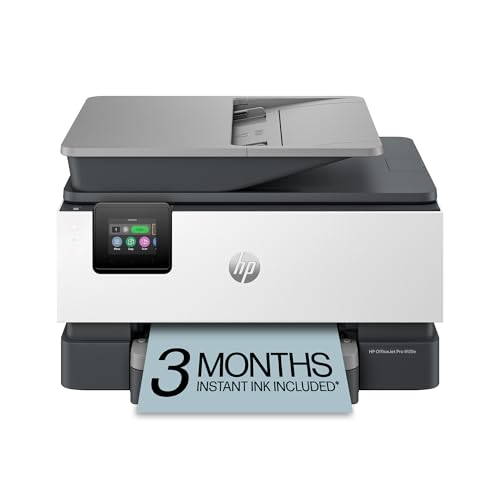
HP OfficeJet Pro 9015e
For people who want fast color printing and don't mind HP's Instant Ink subscription, the 9015e is well designed. Twenty-two pages per minute, a fifty-sheet automatic document feeder for scanning, and a touchscreen that's responsive. The catch is the ink economics. Without Instant Ink, cartridges are expensive. With the subscription, you pay a monthly rate based on pages and get fresh cartridges shipped automatically, which can be cost effective at moderate volumes but locks you into HP's ecosystem.
Canon Pixma TR8620a
A solid all-in-one for households that occasionally print color photos for school projects or invitations. The five-ink system, which separates pigment black from photo black, produces noticeably better text and image quality than four-ink competitors. ADF and duplex scanning are useful for paperwork days. Cartridge cost is the weakness, since like most consumer inkjets it relies on regular cartridge replacement. Best for low-to-moderate volume households that value photo quality over per-page cost.
Brother MFC-L3780CDW
A color laser all-in-one for higher volume mixed offices. Twenty-seven pages per minute color, automatic duplex on both print and scan sides of the ADF, and a sturdy build that should last well past the warranty period. Color laser output looks crisp on text and graphics but is not a substitute for an inkjet on photo paper. Toner runs longer than ink and is less affected by infrequent use, since laser printers don't suffer from dried-out cartridges. The price is high, but the per-page cost over two years justifies it for serious home offices.
Before you buy
What to consider
Be honest about your weekly volume. Under 20 pages per week, a cheap inkjet is fine and the operating cost barely matters. Twenty to a hundred pages per week, an EcoTank or comparable supply tank model is the smartest single purchase. Over a hundred pages, especially if heavy on text, a laser printer is the right answer.
What to consider
Consider what you're actually printing. Photos benefit dramatically from a five or six color inkjet system. Bulk text benefits from laser speed and toner life. Mixed graphics in business documents look great on color laser. If you regularly need all three, a multi-printer setup (a mono laser plus a photo inkjet) actually costs less over five years than a single do-it-all premium machine in many households.
What to consider
Connectivity matters more than you'd think. Wireless setup, AirPrint, Google Cloud Print equivalents, and mobile apps all reduce friction for the people in your household who don't want to deal with printer drivers. Test a printer's app before committing.
Quick answers
The HP OfficeJet Pro 9015e is the best all-around choice for most home offices due to its speed, features, and low running costs.
Yes, ink tank printers like Canon MegaTank and Brother INKvestment have very low cost per page, making them ideal for high-volume printing.
An automatic document feeder (ADF) is useful for scanning or copying multi-page documents without manual feeding. It's a valuable feature for home offices.
Yes, all listed printers can print photos, but the Canon PIXMA G7020 offers the best photo quality with its 6-color ink system.
Wi-Fi is essential for wireless printing. Ethernet is useful for stable connections, and USB is a backup. Mobile printing via apps is also convenient.
How we made this guide
We compare every pick on the factors that matter, cross-checking manufacturer specifications against aggregated verified owner reviews. We rank independently and never take payment for placement. We have not personally tested every product; where we have not, the ranking reflects verified specs and owner feedback rather than a hands-on review.
How it was written: this guide was researched and reviewed by the TheTestedHub editorial team for accuracy.
Affiliate disclosure: TheTestedHub is reader-supported. When you buy through links on our site, we may earn a commission at no extra cost to you.