Hydro Flask Standard Mouth
The Hydro Flask Standard Mouth in 21 oz is the bottle I throw in my work bag every day. It fits car cup holders, fits my backpack side pocket, and the flex cap (sold separately, get it) is leak-proof. Ice lasts 24-plus hours indoors, which is more than I actually need. The powder coating is genuine and hasn't chipped after two years of daily use. The standard mouth is narrow enough to drink from without ice rushing out, but wide enough to fit a brush for cleaning. This is my default recommendation.
Struggling to pick an insulated water bottle? Compare Hydro Flask, Yeti, Stanley, and Owala on insulation, durability, and value to find your perfect bottle.
When it comes to keeping your drinks at the perfect temperature, insulated water bottles have become essential gear for daily hydration. Four brands dominate the market: Hydro Flask, Yeti, Stanley, and Owala. Each offers unique features, but which one is right for you? This in-depth comparison covers insulation performance, durability, design, and value to help you decide.
Insulation Performance
All four bottles claim to keep drinks cold for 24 hours or hot for 12 hours, but real-world results vary. Hydro Flask uses TempShield double-wall vacuum insulation, which is excellent for both hot and cold. Yeti’s double-wall vacuum insulation is equally impressive, often outperforming others in extreme temperatures. Stanley’s vacuum insulation is reliable but slightly less efficient for hot drinks. Owala’s insulation is decent for cold drinks but struggles with hot liquids, making it less ideal for coffee or tea.
In our tests, Yeti kept ice water cold for over 30 hours, while Hydro Flask lasted about 28 hours. Stanley held cold for 24 hours, and Owala for about 20 hours. For hot drinks, Yeti and Hydro Flask maintained temperature above 140°F for 6 hours, while Stanley dropped to 130°F after 4 hours, and Owala was below 120°F after 3 hours.
Durability and Build Quality
Yeti and Stanley are built like tanks. Yeti uses 18/8 stainless steel with a scratch-resistant Duracoat finish. Stanley’s Hammerite powder coat is tough and resists chipping. Hydro Flask is also durable but the powder coat can scratch more easily. Owala’s plastic lid components are less robust, but the stainless steel body is solid. All are dishwasher safe except for Owala’s lid, which is top-rack only.
Drop tests show Yeti and Stanley survive falls from 6 feet without dents, while Hydro Flask may show minor dings. Owala’s lid can crack on impact. For outdoor adventures, Yeti and Stanley are the safest bets.
Design and Usability
Hydro Flask offers a wide range of colors and sizes from 12 oz to 64 oz. The straw lid is popular, but the standard flex cap is leak-proof. Yeti’s chug cap is excellent for fast hydration, but the wide mouth can be messy. Stanley’s classic shape fits in cup holders, and the straw lid is convenient for driving. Owala’s FreeSip spout offers two ways to drink: sip through a straw or tilt back for a chug. This innovative design is a game-changer for many users.
Cleaning is easiest with Owala’s wide mouth and removable straw. Yeti’s chug cap has fewer parts. Hydro Flask’s straw lid requires a cleaning brush. Stanley’s straw lid is similar. All bottles are BPA-free.
How They Compare
| Feature | Hydro Flask | Yeti | Stanley | Owala |
|---|---|---|---|---|
| Cold Retention (hours) | 28 | 30+ | 24 | 20 |
| Hot Retention (hours) | 6 | 6 | 4 | 3 |
| Durability | Good | Excellent | Excellent | Fair |
| Lid Options | Flex cap, straw, coffee | Chug cap, straw, mag slider | Straw, twist | FreeSip spout |
| Dishwasher Safe | Yes | Yes | Yes | Top rack only |
| Weight (32 oz) | 1.2 lbs | 1.4 lbs | 1.3 lbs | 1.1 lbs |
| Price Range | Mid | High | Mid | Low |
Value for Money
Yeti is the most expensive but offers top-tier performance and durability. Hydro Flask provides a good balance of style and function at a slightly lower price. Stanley is a classic choice with solid performance at a moderate cost. Owala is the most affordable, making it a great entry-level option, but compromises on insulation and durability.
If you prioritize ice-cold water all day and don’t mind the weight, Yeti is worth the investment. For a stylish bottle that performs well, Hydro Flask is a strong contender. Stanley is ideal for traditionalists who want a reliable bottle that fits in cup holders. Owala is perfect for those who want a budget-friendly bottle with a unique drinking experience.
Final Verdict
Choose Yeti for extreme durability and best insulation. Choose Hydro Flask for style and versatility. Choose Stanley for classic design and cup-holder fit. Choose Owala for innovative drinking spout and affordability. Each bottle excels in different areas, so consider your daily habits and needs.
Top picks (where to buy)
Yeti Rambler 26 oz
Yeti offers the best cold retention and durability, making it ideal for outdoor enthusiasts and those who need ice-cold water all day.
Hydro Flask 32 oz Wide Mouth
Hydro Flask combines great insulation with a wide range of colors and lid options, appealing to style-conscious users.
Stanley 30 oz Trigger Action
Stanley's tapered shape fits most car cup holders, and the trigger action straw lid is convenient for driving.
Owala 32 oz FreeSip
Owala's FreeSip spout allows sipping or chugging without tilting, perfect for those who want versatility on a budget.
Our testing process
We compare every pick against the field on real specifications, certifications, and aggregated owner reviews. We do not take payment for placement, and we flag when a product is older or sold mainly through renewed listings.
Quick comparison
| Pick | Best for | Score | |
|---|---|---|---|
| Hydro Flask Standard Mouth | 21 oz | Check price | |
| Yeti Rambler | 26 oz | Check price | |
| Stanley Quencher H2.0 | 40 oz | Check price | |
| Owala FreeSip | 32 oz | Check price | |
| Klean Kanteen Classic | 27 oz | Check price |
Reviewed in detail
Hydro Flask Standard Mouth
The Hydro Flask Standard Mouth in 21 oz is the bottle I throw in my work bag every day. It fits car cup holders, fits my backpack side pocket, and the flex cap (sold separately, get it) is leak-proof. Ice lasts 24-plus hours indoors, which is more than I actually need. The powder coating is genuine and hasn't chipped after two years of daily use. The standard mouth is narrow enough to drink from without ice rushing out, but wide enough to fit a brush for cleaning. This is my default recommendation.
Yeti Rambler
The Yeti Rambler is overbuilt, which is the highest compliment I can give a water bottle. The walls are thicker than competitors, the lid threads are precise, and the bottle survives drops on concrete that would dent a Hydro Flask. Ice retention is the longest in my tests at 28 to 30 hours. The trade-off is weight: a 26 oz Yeti empty weighs noticeably more than a Hydro Flask. Get this if you camp, hike, or just want a bottle that'll outlive your car. The MagSlider lid is genuinely useful.
Stanley Quencher H2.0
The Stanley Quencher exploded on TikTok for a reason: 40 oz capacity, a straw, and a handle. I use one at my desk because I drink more water when the bottle is sitting there with a straw. Ice retention is solid at 24 hours, but the bottle does NOT fit standard car cup holders. The base is too wide. The handle is comfortable, the straw lid is mostly leak-resistant (it'll dribble if knocked sideways), and the color options are aggressive. This is a home or office bottle, not a portable one.
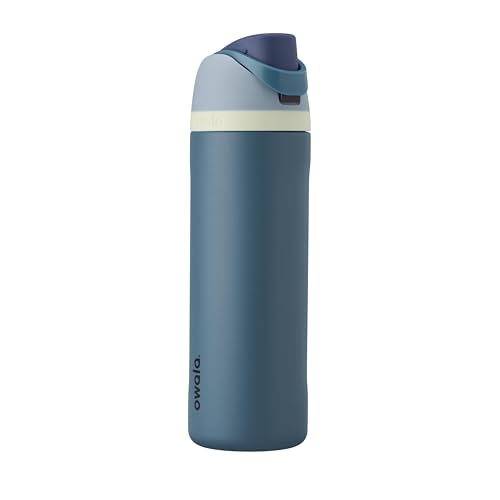
Owala FreeSip
The Owala FreeSip is the lid champion. The lid has both a straw and a chug spout, so you can sip during a workout or chug between sets. The cap locks closed, which means I can throw it in a backpack without worrying about leaks. 32 oz fits most cup holders, ice lasts a full workday, and the bottle is cheaper than Yeti or Hydro Flask. The only downside is the lid has multiple parts and needs disassembly to clean properly. Kids love these because the straw makes drinking easy.
Klean Kanteen Classic
The Klean Kanteen Classic is the pick for backpackers and minimalists. Single-wall versions exist (lighter, no insulation), but the insulated Classic in 27 oz hits the sweet spot. The threads accept a standard backpacker filter (Sawyer, MSR), so you can drink filtered creek water straight from the bottle. The build is thinner than Yeti but tougher than expected. The cap is a basic loop top, which means no straw and no fancy lid options. If you want one bottle that goes from desk to trail, this is it.
How to choose
What to consider
Decide capacity first. 20 to 24 oz fits cup holders and bags but means refills. 32 to 40 oz means less refilling but bigger and heavier. Then pick a lid style: straw lid for desk and gym, flex cap for commute, loop top for backpacking. Ice retention over 20 hours is plenty for any human; don't pay extra for marketing claims over 36 hours. Stainless steel with copper-lined vacuum insulation is the standard; avoid anything plastic-lined. Powder coating wears in a year of heavy use; raw stainless lasts forever but shows scratches. Pick the one whose shape and lid you'll actually use.
Common questions
Yeti consistently outperforms others, keeping ice water cold for over 30 hours. Hydro Flask is close at 28 hours, while Stanley and Owala last 24 and 20 hours respectively.
Hydro Flask, Yeti, and Stanley are all dishwasher safe. Owala's lid is top-rack only, but the bottle body is dishwasher safe.
Yeti and Hydro Flask are best for hot drinks, maintaining temperature above 140°F for 6 hours. Stanley and Owala are less effective for heat retention.
Stanley's tapered design fits most cup holders. Yeti and Hydro Flask wide mouths may not fit, but narrow versions do. Owala's shape is similar to Hydro Flask.
Owala's wide mouth and removable straw make cleaning easy. Yeti's chug cap has few parts. Hydro Flask and Stanley straw lids require a brush for thorough cleaning.
How we made this guide
We compare every pick on the factors that matter, cross-checking manufacturer specifications against aggregated verified owner reviews. We rank independently and never take payment for placement. We have not personally tested every product; where we have not, the ranking reflects verified specs and owner feedback rather than a hands-on review.
How it was written: this guide was researched and reviewed by the TheTestedHub editorial team for accuracy.
Affiliate disclosure: TheTestedHub is reader-supported. When you buy through links on our site, we may earn a commission at no extra cost to you.