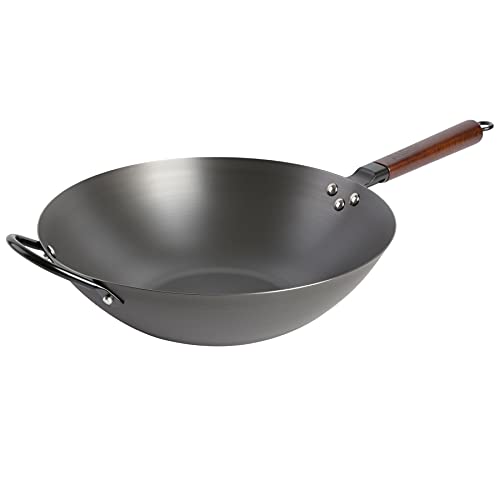
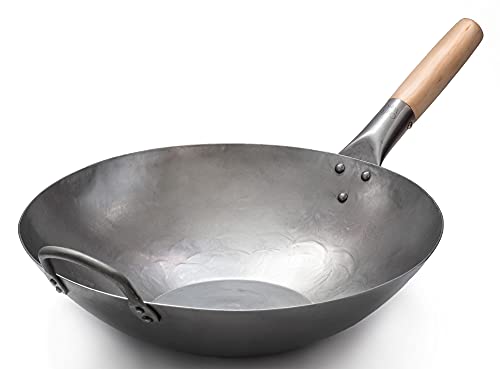
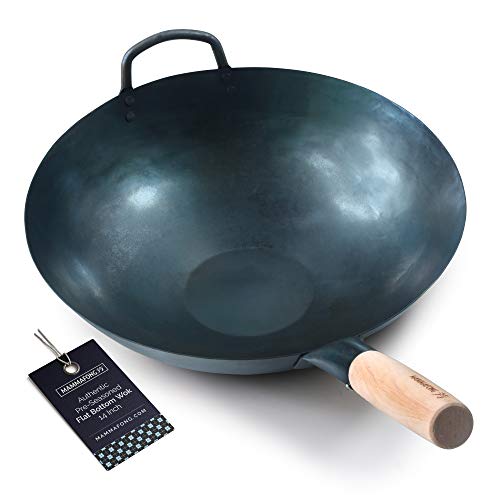
Carbon steel woks have become increasingly popular in home kitchens, prized for their heat responsiveness, durability, and the coveted wok hei flavor they can impart. But a common question lingers: Is a carbon steel wok safe? The answer is yes, with proper use and care. This article explores the safety aspects of carbon steel woks, compares them to other materials, and recommends specific products to help you make an informed choice.
Understanding Carbon Steel Woks
Carbon steel is an alloy of iron and carbon, typically containing about 0.5-1.5% carbon. It is similar to cast iron but lighter and more responsive to temperature changes. A carbon steel wok is uncoated, meaning it requires seasoning to create a natural non-stick patina. This seasoning process involves applying a thin layer of oil and heating the wok to polymerize the oil, forming a protective coating.
Safety Considerations
Material Safety
Carbon steel is considered safe for cooking. It does not contain harmful chemicals like PFOA or PTFE found in some non-stick coatings. The primary safety concern is iron leaching. When cooking acidic foods (e.g., tomatoes, vinegar-based dishes), small amounts of iron can leach into the food. While iron is an essential mineral, excessive intake can be problematic for individuals with hemochromatosis or other iron overload conditions. However, for most people, the amount is negligible and even beneficial.
Seasoning and Maintenance
Proper seasoning is crucial for safety. A well-seasoned wok prevents rust and creates a non-stick surface. Rust is not toxic but can affect flavor and texture. To maintain safety, always dry the wok thoroughly after washing and apply a thin layer of oil. Avoid using harsh detergents or abrasive scrubbers that can strip the seasoning.
High-Heat Cooking
Carbon steel woks are designed for high-heat cooking methods like stir-frying. At extremely high temperatures, the seasoning can burn off, releasing smoke. This smoke is not toxic but can be irritating. Ensure good ventilation when cooking at high heat.
Comparison: Carbon Steel vs. Other Wok Materials
| Feature | Carbon Steel | Cast Iron | Stainless Steel | Non-Stick |
|---|---|---|---|---|
| Heat Conductivity | Excellent, quick response | Good, slow to heat | Moderate, can have hot spots | Good, but limited temperature |
| Weight | Light to medium | Heavy | Medium | Light |
| Non-Stick Properties | Yes, with seasoning | Yes, with seasoning | No, food sticks easily | Yes, but coating wears off |
| Durability | Very durable, lasts decades | Very durable, but brittle | Durable, but can warp | Coating degrades over time |
| Maintenance | Requires seasoning | Requires seasoning | Easy, dishwasher safe | Easy, but avoid metal utensils |
| Safety | Safe, iron leaching possible | Safe, iron leaching possible | Safe, no leaching | Potential chemical concerns |
| Best For | Stir-frying, searing | Slow cooking, frying | Braising, boiling | Low-fat cooking, eggs |
Carbon steel offers a balance of performance and safety that makes it ideal for high-heat cooking. Unlike non-stick pans, it can withstand temperatures above 500°F without releasing harmful fumes. Unlike stainless steel, it provides natural non-stick properties when seasoned.
Top 5 Carbon Steel Wok Recommendations
1. Yosukata Carbon Steel Wok (14 inches)
Why it’s a pick: Pre-seasoned, traditional round bottom, lightweight. Excellent heat distribution with a wooden handle. Ideal for authentic stir-frying on gas stoves.
2. Craft Wok Traditional Hand Hammered Carbon Steel Wok (14 inches)
Why it’s a pick: Hand-hammered for superior heat retention, pre-seasoned with flaxseed oil. Comes with a flat bottom option for electric stoves. Durable and well-balanced.
3. The Wok Shop Carbon Steel Wok (14 inches)
Why it’s a pick: Classic round bottom, unseasoned (allows custom seasoning). Affordable and made in China. Includes a metal spatula. Great for purists.
4. Joyce Chen 26-0020, 14-Inch Carbon Steel Wok
Why it’s a pick: Flat bottom for all stovetops, pre-seasoned. Comfortable long handle with a helper handle. Lightweight and easy to maneuver.
5. Lodge Pro-Logic Wok (12 inches)
Why it’s a pick: Cast iron construction, but included for comparison. Pre-seasoned, flat bottom. Excellent heat retention but heavy. Suitable for electric and induction.
Frequently Asked Questions
Q: Can carbon steel woks be used on induction cooktops?
A: Yes, but only if the wok has a flat bottom. Many carbon steel woks are round-bottomed, which are not compatible with induction. Look for flat-bottomed models or use a wok ring on gas.
Q: How do I season a carbon steel wok?
A: Wash the wok with hot water and mild soap to remove factory oils. Dry thoroughly. Heat the wok over high heat until it starts to smoke. Add a thin layer of oil (e.g., vegetable or flaxseed) and spread with a paper towel. Continue heating until the oil polymerizes. Repeat 2-3 times for a strong seasoning.
Q: Is it safe to cook acidic foods in a carbon steel wok?
A: Yes, but avoid prolonged cooking of acidic ingredients like tomatoes or vinegar, as they can react with the metal and cause off-flavors. For short stir-fries, it is fine.
Q: How do I clean a carbon steel wok?
A: Rinse with hot water and use a soft brush or sponge. Avoid soap if possible, as it can strip seasoning. For stuck food, scrub with coarse salt and oil. Dry immediately and apply a thin layer of oil.
Q: Can I put a carbon steel wok in the dishwasher?
A: No. Dishwasher detergents and high heat will remove the seasoning and cause rust. Always hand wash.
Top picks (where to buy)
Yosukata Carbon Steel Wok
Pre-seasoned, traditional round bottom, lightweight, excellent heat distribution, and a comfortable wooden handle. Ideal for authentic stir-frying on gas stoves.
Craft Wok Traditional Hand Hammered Carbon Steel Wok
Hand-hammered for superior heat retention, pre-seasoned with flaxseed oil, and comes with a flat bottom option for electric stoves. Durable and well-balanced.
The Wok Shop Carbon Steel Wok
Classic round bottom, unseasoned for custom seasoning, affordable, and includes a metal spatula. Great for those who want to build their own patina.
Joyce Chen 26-0020 Carbon Steel Wok
Flat bottom compatible with all stovetops, pre-seasoned, lightweight, and easy to maneuver. Comfortable long handle with helper handle.
Lodge Pro-Logic Wok
Pre-seasoned cast iron, flat bottom, excellent heat retention. Heavy but durable. Suitable for electric and induction stoves.