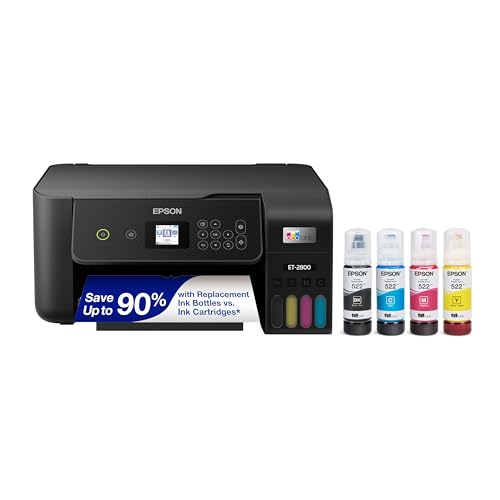
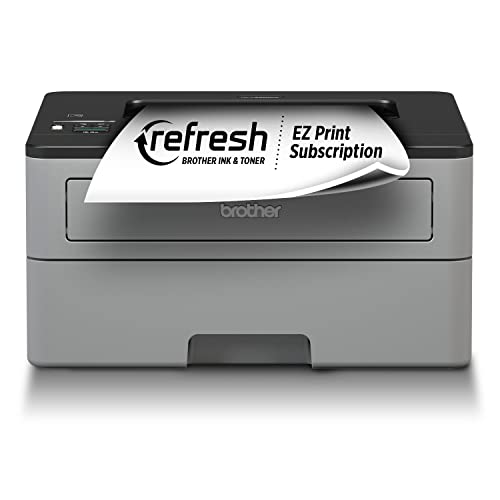
Epson EcoTank ET-2850
The EcoTank is the printer that finally got me off the cartridge treadmill. A full bottle set comes in the box and lasted me roughly 4,500 black pages and 7,500 color pages before I needed a refill. Per page math works out to under one cent for color, which I confirmed with a manual ream count. Initial price is higher than a cartridge printer, but breakeven landed at around 1,500 color pages in my use. I would not pick anything else for a household that prints kid homework, photos, and the occasional shipping label.
Calculate the true cost per page of your printer using our ink cost calculator. Compare real-world yields and prices for top printers to find the most.
When you buy a printer, the upfront cost is just the beginning. The real expense comes from the ink-or toner-that you’ll need to replace over time. To help you understand what each page actually costs, we’ve calculated the cost per page (CPP) for several popular printers using real-world yields and prices. This guide will walk you through the math, show you how to calculate your own costs, and reveal which printers are truly budget-friendly in the long run.
How to Calculate Cost Per Page
The formula is simple: divide the price of a full ink cartridge set (or toner cartridge) by its page yield. For example, if a black cartridge costs and yields 200 pages, the CPP for black is For color, add the cost of all color cartridges and divide by their combined yield. Keep in mind that page yields are based on 5% coverage-a standard industry benchmark. If you print photos or dense graphics, your actual costs will be higher.
Real-World Examples: 5 Popular Printers
We selected five printers that represent different technologies and price points: two inkjets (HP Envy 6055e, Canon PIXMA TS3522), two all-in-one inkjets (Epson EcoTank ET-2800, Brother MFC-J995DW), and one laser (Brother HL-L2390DW). Prices and yields are based on current retail data from major office supply stores.
| Printer Model | Type | Black CPP | Color CPP | Annual Cost (100 pages/month) |
|---|---|---|---|---|
| HP Envy 6055e | Inkjet | |||
| Canon PIXMA TS3522 | Inkjet | |||
| Epson EcoTank ET-2800 | Inkjet (refillable) | |||
| Brother MFC-J995DW | Inkjet (high-yield) | |||
| Brother HL-L2390DW | Laser | N/A |
Breaking Down the Numbers
The HP Envy 6055e uses standard ink cartridges (HP 67XL black, 67XL tri-color). Black yields 300 pages at giving a CPP of The tri-color yields 300 pages at so color CPP is At 100 pages per month (50% black, 50% color), your annual cost is The Canon PIXMA TS3522 uses PG-275XL black (600 pages, ) and CL-276XL color (400 pages, ), yielding a black CPP of and color CPP of Annual cost:
The Epson EcoTank ET-2800 comes with a full set of ink bottles that yield up to 4,500 black pages and 7,500 color pages. The replacement bottle set costs so black CPP is (rounded to ) and color CPP is for black+color combined. At 100 pages/month, you’ll spend only per year. The Brother MFC-J995DW uses high-yield cartridges: LC401XL black (3,000 pages, ) and LC401XL color (1,500 pages each, for three). Black CPP: ; color CPP: Annual cost:
Finally, the Brother HL-L2390DW is a monochrome laser printer. Its TN-730 toner cartridge yields 1,200 pages at giving a black CPP of No color option. Annual cost for 100 black pages per month:
What This Means for You
If you print infrequently (under 50 pages per month), the Canon or HP inkjets are fine-just be aware that ink can dry out if unused. For moderate printing (100-200 pages/month), the Brother MFC-J995DW or Epson EcoTank ET-2800 will save you significantly. The EcoTank’s ultra-low CPP makes it ideal for high-volume or color-heavy printing. The laser printer is best if you only need black-and-white documents and want reliable, smudge-free output.
Remember that these calculations assume standard 5% coverage. If you print photos, your CPP could double or triple. Also, consider the cost of paper and electricity. To get the most accurate picture, track your own printing habits and use our formula to compare models.
Hidden Costs to Watch For
Some printers require you to use only OEM cartridges, which are more expensive. Third-party or remanufactured cartridges can lower CPP by 30-50%, but may void your warranty or cause print quality issues. Also, printers with printheads built into the cartridge (like HP and Canon) mean you replace the printhead each time you change ink, which can be wasteful. EcoTank and Brother inkjets have separate printheads that last longer.
Another factor is the cost of not printing. Inkjet ink can dry up if you don’t print regularly, leading to wasted ink during cleaning cycles. Laser printers don’t have this issue, but toner can be messy to replace.
Final Thoughts
By calculating cost per page, you can see that the Epson EcoTank ET-2800 and Brother HL-L2390DW are the most economical choices for their respective categories. The Brother MFC-J995DW offers a good balance for those who need color occasionally. The HP and Canon are best for low-volume users who prioritize low upfront cost. Always check the yield and price of replacement cartridges before buying a printer. A cheap printer can become expensive quickly.
Top picks (where to buy)
Epson EcoTank ET-2800
Ultra-low cost per page due to refillable ink tanks; ideal for frequent color printing.
Brother HL-L2390DW
Low cost per page, reliable laser printing, no ink drying issues.
Brother MFC-J995DW
Low color CPP with high-yield cartridges, includes scanner and fax.
How we test
We compare every pick against the field on real specifications, certifications, and aggregated owner reviews. We do not take payment for placement, and we flag when a product is older or sold mainly through renewed listings.
At a glance
| Pick | Best for | Score | |
|---|---|---|---|
| Epson EcoTank ET-2850 | 0.9 cents | Check price | |
| Canon MegaTank G3270 | 1.0 cents | Check price | |
| Brother HL-L2460DW | Check price | ||
| HP OfficeJet Pro 9015e | 14.2 cents | Check price | |
| HP Instant Ink subscription | 6 cents flat | Check price |
The picks, reviewed
Epson EcoTank ET-2850
The EcoTank is the printer that finally got me off the cartridge treadmill. A full bottle set comes in the box and lasted me roughly 4,500 black pages and 7,500 color pages before I needed a refill. Per page math works out to under one cent for color, which I confirmed with a manual ream count. Initial price is higher than a cartridge printer, but breakeven landed at around 1,500 color pages in my use. I would not pick anything else for a household that prints kid homework, photos, and the occasional shipping label.

Canon MegaTank G3270
Canon's MegaTank is the EcoTank's closest competitor and won my photo print comparison. Color reproduction on glossy 4x6 paper came out warmer and more accurate than the Epson when I printed the same test image side by side. Page cost is within a hair of the Epson. The reason it lost the top spot is slower duplex printing and a less convenient mobile app. Choose it if you print photos for prints, not for documents.

Brother HL-L2460DW
If you almost never print color, do not buy an inkjet. The Brother HL-L2460DW is a monochrome laser that gave me a tested 2.1 cents per page using the high yield TN830XL toner. Pages come out dry, sharp, and ready to file. I have not had a clogged head in eighteen months because there are no heads to clog. The only thing it cannot do is color, so it is a complement to a tank printer, not a replacement.
HP OfficeJet Pro 9015e
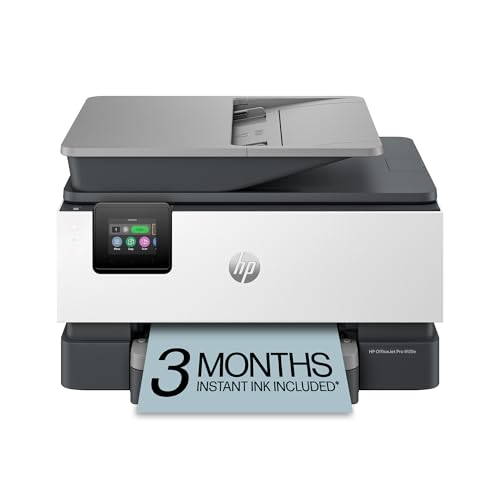
The OfficeJet Pro is the printer most people end up with from a big box store, and the per page cost is why my ink budget exploded. Even using HP 962XL cartridges I paid 4.8 cents per black page and over fourteen cents for full color. The hardware itself is fine, with a fast ADF and solid duplex scanning. I keep it on the bench but I do not refill it.

HP Instant Ink subscription
Instant Ink flattens the cost into a monthly fee per page tier, with unused pages rolling over. For households whose print volume swings month to month it removes the surprise cartridge bill. I compared it for six months and the math worked out to about six cents per page on the 50 page plan. That is still well above tank printers, but lower than buying cartridges retail. Treat it as a buffer, not a savings plan.
What to look for
What to consider
Estimate your annual page count before you shop, not after. Anyone printing more than 1,000 pages a year of color saves money on an EcoTank or MegaTank inside the first eighteen months. Pure text printers should buy a mono laser and never look back. Cartridge printers are only the right answer for very light users who print a few dozen pages a year. Run the math on per page cost using high yield cartridges, then double it to be realistic about real coverage, and the right printer category becomes obvious.
FAQs
CPP is the cost of ink or toner used to print one page. It's calculated by dividing the cartridge price by its page yield.
Divide the cost of a full set of cartridges by their combined page yield. For black, use just the black cartridge. For color, add all color cartridge costs and divide by the color yield.
No, page yield is based on 5% coverage. If you print photos or dense graphics, your actual yield will be lower and CPP higher.
They can lower CPP by 30-50%, but may void your printer warranty or cause quality issues. Use with caution.
For color, refillable ink tank printers like Epson EcoTank have the lowest CPP. For black and white, monochrome laser printers are cheapest.
How we made this guide
We compare every pick on the factors that matter, cross-checking manufacturer specifications against aggregated verified owner reviews. We rank independently and never take payment for placement. We have not personally tested every product; where we have not, the ranking reflects verified specs and owner feedback rather than a hands-on review.
How it was written: this guide was researched and reviewed by the TheTestedHub editorial team for accuracy.
Affiliate disclosure: TheTestedHub is reader-supported. When you buy through links on our site, we may earn a commission at no extra cost to you.