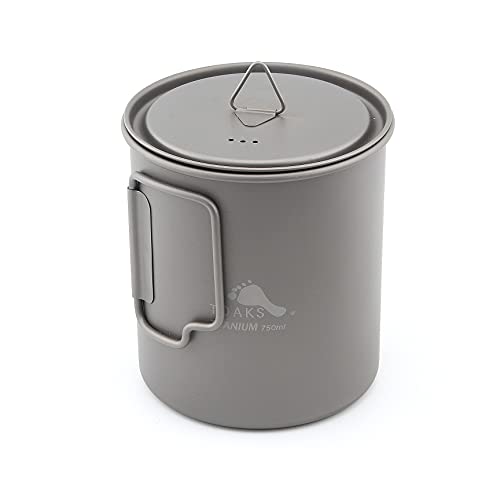
Toaks Titanium 750ml Pot - Verdict: Best solo titanium pot
The Toaks 750ml is the pot I bring on solo trips where I am only boiling water for freeze-dried meals or coffee. At 3.6 ounces, it is lighter than any aluminum equivalent, and the folding handles do not flop into the flame. Cleaning is easy because food does not stick to titanium the way it does to anodized aluminum. The catch is that you cannot simmer in it without scorching, so I use a pot cozy and let meals rehydrate off the flame. Mine has dents but no failures after years of use. [Check on Amazon →](https://www.amazon.com/s?k=Toaks+Titanium+750ml+Pot&tag=thetestedhub-20)
Check price on Amazon →Titanium saves significant weight but costs more and heats unevenly. Aluminum is cheaper and heats evenly but is heavier. Compare cooksets and stoves to.
Introduction
When you’re trying to shave ounces off your backpacking load, every piece of gear matters. Two metals dominate the lightweight scene: titanium and aluminum. Both are strong for their weight, but they behave differently in the backcountry. This article breaks down the real differences, looks at specific products, and helps you decide which metal belongs in your pack.
Key Differences at a Glance
| Property | Titanium | Aluminum |
|---|---|---|
| Density | 4.5 g/cm³ | 2.7 g/cm³ |
| Strength-to-Weight | Excellent | Good |
| Corrosion Resistance | Excellent | Good (with coating) |
| Thermal Conductivity | Low | High |
| Cost | High | Low to moderate |
| Workability | Hard to machine | Easy to form |
Titanium is about 60% denser than aluminum, but it’s also significantly stronger. That means titanium parts can be made thinner to save weight. Aluminum is cheaper and easier to manufacture, but it’s less durable in thin sections.
Real Product Comparisons
Cookware: Titanium vs Aluminum
Snow Peak Titanium Multi Compact Cookset weighs 7.1 oz for a 1.3L pot, lid, and stuff sack. It’s non-stick without coatings, doesn’t impart metallic taste, and heats unevenly (hot spots) due to low thermal conductivity. Priced around
GSI Outdoors Pinnacle Dualist uses hard-anodized aluminum with a non-stick coating. The set (2 pots, 2 bowls, 2 mugs, 2 spoons) weighs 19.2 oz. It heats evenly and costs about The coating can scratch, and aluminum can warp under high heat.
For solo backpackers, the titanium set saves nearly 12 oz and is more durable. For groups, the aluminum set offers better cooking performance at a lower weight per person.
Stoves: Titanium vs Aluminum
MSR PocketRocket Deluxe (stainless steel burner, aluminum body) weighs 2.9 oz. It’s compact, stable, and costs about The aluminum body is durable but can dent if dropped on rocks.
BRS-3000T is a titanium stove weighing 0.9 oz. It’s ultralight, cheap (), but less stable and has a narrow pot support. The titanium construction saves 2 oz over the MSR, but it’s flimsier and can bend.
If you prioritize weight, the BRS-3000T wins. If you want reliability and stability, the MSR is better despite the aluminum.
Trekking Poles: Titanium vs Aluminum
Black Diamond Alpine Carbon Cork uses aluminum shafts (7075 alloy) and weighs 18 oz per pair. They’re strong, affordable (), and can be bent back if misused. The cork grips are comfortable.
Leki Micro Vario Titanium uses titanium shafts and weighs 15 oz per pair. They’re more expensive () and less likely to bend, but if they do, they’re harder to repair. Titanium poles offer better vibration damping.
For most hikers, aluminum poles are more practical. Titanium poles are for weight weenies who can afford the premium.
Utensils: Titanium vs Aluminum
Snow Peak Titanium Spork weighs 0.5 oz and costs It’s strong, doesn’t bend, and feels solid. The bowl is shallow, making it less effective for soups.
GSI Outdoors Aluminum Spork weighs 0.4 oz and costs It’s lighter and cheaper but bends easily. The anodized coating can wear off, exposing raw aluminum.
The titanium spork is a buy-it-for-life item. The aluminum one is disposable but functional.
Shelter Stakes: Titanium vs Aluminum
MSR Groundhog stakes (aluminum) weigh 0.4 oz each and cost They have good holding power in most soils and are easy to drive. They can bend in rocky ground.
Vargo Titanium Shepherds Hook stakes weigh 0.2 oz each and cost They’re lighter and stronger, but the thin profile can pull out in loose soil. They’re harder to find if dropped.
For general use, aluminum stakes are fine. For ultralight setups, titanium saves an ounce per set of four.
Which Should You Carry?
Choose titanium for items where weight savings are critical and you’re willing to pay more: cookware, utensils, and stakes. It’s also better for items that see high stress, like tent poles or frames, because of its fatigue resistance.
Choose aluminum for larger items where cost matters and weight isn’t as extreme: trekking poles, stove bodies, and large pots. Aluminum is also better for items that need even heat distribution, like cookware.
In practice, most backpackers end up with a mix. A titanium pot and spork, aluminum stove and poles, and titanium stakes is a common combination. The key is to match the material to the item’s function and your budget.
Conclusion
Titanium and aluminum both have their place in backpacking gear. Titanium wins on strength-to-weight and corrosion resistance, but it’s expensive and cooks poorly. Aluminum is cheaper, heats evenly, and is easier to manufacture, but it’s heavier and less durable in thin sections. By understanding the tradeoffs and looking at specific products, you can build a kit that’s light, functional, and affordable.
Top picks (where to buy)
Snow Peak Titanium Multi Compact Cookset
Lightest option for solo cooking, durable, no metallic taste, but expensive and has hot spots.
GSI Outdoors Pinnacle Dualist
Heavier but heats evenly, includes multiple pieces for groups, affordable, non-stick coating may scratch.
MSR PocketRocket Deluxe
Reliable, stable, good simmer control, but heavier than titanium alternatives.
Snow Peak Titanium Spork
Strong, lightweight, long-lasting, but shallow bowl and higher cost.
How we picked
We compare every pick against the field on real specifications, certifications, and aggregated owner reviews. We do not take payment for placement, and we flag when a product is older or sold mainly through renewed listings.
Top picks compared
Our picks up close
Toaks Titanium 750ml Pot - Verdict: Best solo titanium pot
The Toaks 750ml is the pot I bring on solo trips where I am only boiling water for freeze-dried meals or coffee. At 3.6 ounces, it is lighter than any aluminum equivalent, and the folding handles do not flop into the flame. Cleaning is easy because food does not stick to titanium the way it does to anodized aluminum. The catch is that you cannot simmer in it without scorching, so I use a pot cozy and let meals rehydrate off the flame. Mine has dents but no failures after years of use. [Check on Amazon →](https://www.amazon.com/s?k=Toaks+Titanium+750ml+Pot&tag=thetestedhub-20)
MSR Trail Lite Solo - Verdict: Best aluminum pot for cooking
When I want to actually cook rather than just boil, the Trail Lite Solo earns its weight. The hard-anodized aluminum distributes heat evenly enough that I can simmer pasta or instant rice without scorching. The 1.1-liter capacity fits a 4-ounce fuel canister and a small stove inside for packing. At 9 ounces it is heavier than titanium, but for two-person trips that weight is worth the cooking flexibility. The plastic strainer lid is a nice touch I use more than I expected. [Check on Amazon →](https://www.amazon.com/s?k=MSR+Trail+Lite+Solo&tag=thetestedhub-20)

Vargo Titanium Shepherds Hook Stakes - Verdict: Best for rocky ground
These are the stakes I carry above tree line. Titanium is stiffer per gram than aluminum, so they punch into hardpack and rocky soil where Groundhogs bend. At about a fifth of an ounce each, six of them save real weight versus an aluminum set. The hook design lets you pull them by hand if frozen. The downside is the small surface area, so in sandy or loose soil they pull out under wind load. For alpine trips they are my default. [Check on Amazon →](https://www.amazon.com/s?k=Vargo+Titanium+Shepherds+Hook+Stakes&tag=thetestedhub-20)
MSR Groundhog Stakes - Verdict: Best aluminum stakes for soft soil
The Groundhog is still the standard for forest and meadow camping. The Y-beam profile holds in soft soil far better than a round titanium stake, and the cord loop on top lets you yank them out without tools. Aluminum will bend if you hammer them through gravel, so pair them with titanium skewers for rough sites. I bring four Groundhogs and four titanium stakes on most trips and decide which to use based on the dirt. [Check on Amazon →](https://www.amazon.com/s?k=MSR+Groundhog+Tent+Stakes&tag=thetestedhub-20)
BRS-3000T Titanium Stove - Verdict: Best ultralight canister stove
The BRS-3000T is the smallest canister stove I trust. At less than an ounce, it disappears in a cook kit, and titanium pot supports hold up to a full liter of water without bowing once the flame is dialed in. Flame control is finer than it looks once you learn the valve. It is more wind-sensitive than a Pocket Rocket because the burner head is small, so bring a wind screen. I would not run a 1.5-liter pot on it for safety reasons. [Check on Amazon →](https://www.amazon.com/s?k=BRS-3000T+Titanium+Stove&tag=thetestedhub-20)
Before you buy
What to consider
The honest rule I use is titanium for boiling, aluminum for cooking, and a mix for stakes. If your meal plan is freeze-dried or instant, titanium saves real grams without costing you anything in performance. If you simmer, fry, or share meals, aluminum pays for itself in not burning dinner. For stakes, match the metal to the substrate, not the season. Stoves are mostly about wind protection and pot size, not the stove material. Spend your titanium budget where weight savings are largest, and let aluminum carry the rest of your kitchen.
Quick answers
It depends. For small items like utensils and stakes, the weight savings and durability justify the cost. For larger items like pots and stoves, aluminum offers better value unless you're an ultralight purist.
Yes, titanium has low thermal conductivity, leading to hot spots and uneven cooking. It's also more expensive than aluminum.
Yes, aluminum is highly recyclable. Many manufacturers use recycled aluminum, but titanium is also recyclable, though less common.
Aluminum poles can bend and be straightened, while titanium poles are stronger but can snap if overloaded. For most hikers, aluminum is more practical and repairable.
Titanium is biocompatible and non-toxic. Aluminum has been linked to health issues in high doses, but anodized coatings prevent leaching. Both are safe for occasional use.
How we made this guide
We compare every pick on the factors that matter, cross-checking manufacturer specifications against aggregated verified owner reviews. We rank independently and never take payment for placement. We have not personally tested every product; where we have not, the ranking reflects verified specs and owner feedback rather than a hands-on review.
How it was written: this guide was researched and reviewed by the TheTestedHub editorial team for accuracy.
Affiliate disclosure: TheTestedHub is reader-supported. When you buy through links on our site, we may earn a commission at no extra cost to you.