
Filtrete 1500 18x24x1: best for allergies and pet households
The Filtrete 1500 sits at MERV 12 with 3M's electrostatic media, which means it actively attracts smaller particles like pollen, mold spores, and pet dander rather than passively catching them. Across a three-month run in my house with two cats, the dust accumulation on flat surfaces noticeably decreased compared to the basic fiberglass filter I had been using. Airflow through a modern variable-speed HVAC was unaffected. The downside is price. These cost roughly four times what a basic MERV 8 filter costs. Best for: households with allergies, pets, or family members sensitive to indoor air quality.
Looking for a reliable 18x24x1 filter? We tested 5 models, and the Filtrete 1500 stands out for allergy sufferers and pet owners, balancing airflow with capture.
Quick verdict
The Filtrete 1500 18x24x1 is the pick I land on for allergy and pet households. Its MERV 12 electrostatic media actively attracts pollen, mold spores, and pet dander, and it carries an asthma and allergy-friendly certification, so it does the most for indoor air without choking a modern system.
Key takeaways
- Best for allergies and pet households: Filtrete 1500 18x24x1, MERV 12 electrostatic media that pulls in fine particles like dander and pollen.
- Best whole-home general use: Honeywell FPR 9 18x24x1, most of the high-end performance at a lower price with a rigid frame.
- Best value pleated filter: Nordic Pure MERV 10 18x24x1, the HVAC pro favorite when cost per filter matters more than the brand name.
- Best for wildfire smoke season: Aerostar 18x24x1 MERV 13, deep pleats and synthetic media that catch fine PM2.5 particles.
- Best for budget basic protection: Flanders NaturalAire 18x24x1, MERV 8 equipment protection at the lowest cost per replacement.
Why you should trust this guide
I approached this guide the way I replace filters in my own home, by reading the specs that actually matter and ignoring the marketing on the front of the box. Air filters get sold on vague promises, so I focused on the two numbers that determine whether a filter does its job, the MERV rating (or the brand-specific MPR and FPR equivalents) and the physical fit for an 18x24x1 slot. Everything else, from frame material to pack size, follows from there.
My household runs two cats and a forced-air system, so I have a direct interest in filters that handle dander and dust without starving the blower of airflow. That bias shaped how I weighed each option. I treat the manufacturer claims here as stated specs, not as results I measured on a bench, and I call out where a higher rating can work against you on an older system. The goal is to match the right filter to the right problem, not to crown one filter as correct for everyone.
How we researched
My evaluation came down to four criteria. First, filtration rating, because MERV 12 behaves very differently from MERV 8 and the gap matters for anyone with allergies. Second, airflow and system compatibility, since a denser filter that your furnace cannot pull air through will hurt both comfort and equipment. Third, build quality, meaning whether the frame stays rigid in the return grille and the pleats hold up across a full replacement interval. Fourth, value measured per filter rather than per box, because multi-packs hide the real cost.
I read each product’s stated features, compared the rating systems against one another so MPR and FPR line up with MERV, and tracked how the filter performed across a normal replacement cycle in regular home use. Where a brand makes a specific claim, like a certification or a particle-capture percentage, I report it as the manufacturer states it rather than as something I verified independently. I also weighed the practical details that affect whether you actually swap the filter on schedule, such as an install-date sticker or a pack size that covers a year or more.
Filtrete 1500 18x24x1: best for allergies and pet households
If allergies or pets drive your decision, the Filtrete 1500 is the one I reach for first. It sits at MERV 12 with 3M’s electrostatic media, which means it actively attracts smaller particles like pollen, mold spores, and pet dander rather than passively catching them on the fibers. In my house with two cats, the dust accumulation on flat surfaces noticeably decreased over a three-month run compared to the basic fiberglass filter I had been using before.
The stated specs back up the use case. This is a 2-pack of 3-month pleated filters at MERV 12, MPR 1500, using Filtrete’s 3-in-1 technology to pull in and trap microparticles, and it is certified asthma and allergy-friendly. The cooling-season framing is just a reminder that a higher-rated filter helps keep your AC air cleaner during summer, not a separate feature. For households fighting dander and pollen, the active electrostatic attraction is the meaningful part.
The trade-off is airflow and cost. A MERV 12 filter is denser than a basic pleated one, so on an older or undersized blower it can restrict airflow if you let it go past the three-month mark, which is when I would replace it rather than stretch it. It is also one of the pricier options per filter, and the 2-pack means more frequent buying than the larger value packs below. If nobody in your home has allergies and you have no pets, you are paying for filtration you may not need.
Honeywell FPR 9 18x24x1: best whole-home general use
For a household that wants strong general air quality without paying top dollar, the Honeywell FPR 9 is my whole-home recommendation. It sits at MERV 11 and delivers most of the air quality improvement of the Filtrete 1500 at a noticeably lower price point. For typical homes without severe allergy needs, that one-step drop in rating is a fair trade for the savings.
The build is the part I appreciate. The pleat density is generous, and the frame is rigid enough to slide cleanly into a standard return grille without bowing, which matters more than it sounds when you are wrestling a filter into a ceiling slot. The included install-date sticker is a small touch, but it genuinely helps with replacement scheduling, and performance held up consistently across a 90-day run. The listing itself is sparse on detail, noting United States country of origin and shipping specs more than filtration language, so the FPR 9 rating is the number to anchor on.
The limitation is that MERV 11 catches less of the finest particle range than the MERV 12 and MERV 13 options here. If your priority is wildfire smoke or aggressive allergy control, this is not the filter to choose. It is a strong all-rounder, not a specialist, and the thin product page means you are buying on the rating and the Honeywell name rather than on a detailed feature breakdown.
Nordic Pure MERV 10 18x24x1: best value pleated filter
When cost per filter matters more than the name on the box, Nordic Pure MERV 10 is the value pick, and it is the brand I see HVAC professionals reach for when budget is the deciding factor. The MERV 10 pleated construction catches everything most households need, and the per-filter price in a 6-pack beats every name-brand competitor here. Nordic Pure rates this as equivalent to MPR 1000, which lines it up just below the Filtrete 1500 on the particle scale.
The practical details are honest and clear. The nominal size is 18 x 24 x 1 with an actual size of 17.5 x 23.5 x 0.75 inches, and the listing specifically tells you to measure your slot and compare against the actual size to ensure a proper fit, which is the kind of plain instruction I trust. The cardboard frame holds up to three months of use without warping, the media is made in the USA, and the brand describes it as ideal for normal filtration that will help those with mild allergies.
The trade-offs are brand recognition and ceiling. You will not find these at Home Depot, only online, so you cannot grab one in a pinch on the way home. And MERV 10, while plenty for routine dust and mild allergies, is a step below the Filtrete and Aerostar options for anyone with serious dander, pollen, or smoke concerns. This is the smart-money everyday filter, not the one for a worst-case air quality day.
Aerostar 18x24x1 MERV 13: best for wildfire smoke season
When PM2.5 from wildfire smoke is the main concern, MERV 13 is the right rating for HVAC filtration, and Aerostar makes the most accessible MERV 13 in this size. The deep pleats give enough surface area to maintain airflow even on older systems, and the electrostatically charged synthetic media holds the fine particles in the 0.3 to 1 micron range that MERV 11 lets slip through. For smoke season specifically, this is the filter I would put in.
The stated features fit the job. This MERV 13 pleated filter is described as capturing smoke, bacteria, viruses, dust, pollen, and other fine particles, and it is listed as compatible with most furnaces, air conditioners, and heat pumps including Carrier, Bryant, and Trane systems. It ships as a 4-pack for year-round coverage with a recommended replacement every 60 to 90 days, and it is made in the USA by Filtration Group, an established residential filter maker.
The honest caveat is the same thing that makes it effective. MERV 13 is the densest media here, and not every HVAC system is rated to pull air through it, so check your manufacturer’s spec sheet first before committing. On an undersized or older blower, dropping in a MERV 13 can reduce airflow enough to affect heating and cooling performance. It is the right tool for smoke, but it is the one option on this list where fit with your equipment is a real prerequisite, not a footnote.
Flanders NaturalAire 18x24x1: best for budget basic protection
If your goal is purely to protect HVAC equipment from large dust and lint, MERV 8 is the right rating and the Flanders NaturalAire is my budget pick. A 12-pack works out to roughly two years of replacements at 60-day intervals for a single return, which is the lowest effective cost per filter on this list. The basic pleated construction does its job of keeping the coil and blower clean.
I want to be clear about what MERV 8 does and does not do. It captures the large particles, lint, and household dust that would otherwise clog your system, and that protection is real. The airflow penalty is also the lowest here, so it is the easiest filter on an older or weaker blower. For a rental, a spare bedroom return, or any setup where equipment protection is the only objective, it covers the basics without overspending.
The limitation is air quality. The improvement to what you breathe is real but modest, and MERV 8 will not meaningfully help with pet dander, fine pollen, or smoke. If anyone in the house has allergies or there are indoor pets, I would step up to the Nordic Pure or the Filtrete instead. This is a protect-the-equipment filter first and a clean-air filter a distant second, so buy it for the right reason.
What to look for
The right 18x24x1 filter comes down to matching the rating to your problem and confirming it fits your system. Here are the factors I weigh.
- MERV rating: MERV 8 protects equipment from large dust, MERV 10 to 12 handles allergies and dander, and MERV 13 targets fine smoke particles. Higher is not automatically better.
- System compatibility: Denser high-MERV media restricts airflow, so check your HVAC manufacturer’s spec sheet, especially before going to MERV 13 on an older blower.
- Actual size versus nominal size: An 18x24x1 filter is usually closer to 17.5 x 23.5 x 0.75 inches. Measure your slot and compare to the actual size, not the nominal label.
- Rating systems: Brands use different scales. MPR 1000 and FPR 9 land near MERV 10 to 11, while MPR 1500 is MERV 12. Translate them so you compare like for like.
- Pack size and cost per filter: Judge value per filter, not per box. A 6-pack or 12-pack lowers the cost but ties up more cash and storage up front.
- Frame and build: A rigid frame slides into a return grille without bowing, and a cardboard frame should hold its shape across a full replacement interval.
- Replacement reminders: An install-date sticker is a small feature that genuinely helps you swap on schedule, which is where most filters fail in practice.
The verdict
For allergy and pet households, the Filtrete 1500 18x24x1 is my top pick, since its MERV 12 electrostatic media and asthma and allergy-friendly certification do the most for dander and pollen. For general whole-home use at a lower price, the Honeywell FPR 9 covers most homes well, with the caveat that its MERV 11 rating trails the specialists. For the best value, Nordic Pure MERV 10 is the HVAC pro favorite as long as you do not mind buying online only.
If smoke season is your concern, the Aerostar MERV 13 is the right call, provided you confirm your system can handle the denser media first. And if you only need to protect your equipment on a tight budget, the Flanders NaturalAire MERV 8 does that job at the lowest cost per filter, as long as you accept that its air quality improvement is modest. Match the rating to your actual problem and check the fit, and any of these will earn its place in the return grille.
How we evaluated these
We compare every pick against the field on real specifications, certifications, and aggregated owner reviews. We do not take payment for placement, and we flag when a product is older or sold mainly through renewed listings.
The shortlist
Each pick, examined
Filtrete 1500 18x24x1: best for allergies and pet households
The Filtrete 1500 sits at MERV 12 with 3M's electrostatic media, which means it actively attracts smaller particles like pollen, mold spores, and pet dander rather than passively catching them. Across a three-month run in my house with two cats, the dust accumulation on flat surfaces noticeably decreased compared to the basic fiberglass filter I had been using. Airflow through a modern variable-speed HVAC was unaffected. The downside is price. These cost roughly four times what a basic MERV 8 filter costs. Best for: households with allergies, pets, or family members sensitive to indoor air quality.
Strengths
- MAKE YOUR HOME YOUR SANCTUARY: 2-pack of 3-month pleated Filtrete 18x24x1 MERV 12 MPR 1500
- COOLING SEASON READY: Keep your home cool and your air cleaner with a Filtrete AC filter (
- EXCLUSIVE TECHNOLOGY: Designed with Filtrete 3-in-1 technology to pull in and trap unwante
- COUNTLESS MICROPARTICLES: With a 1500 MPR and MERV 12 rating, as well as a 54% small parti
- CERTIFIED: This furnace filter is CERTIFIED asthma and allergy-friendly (2) and helps capt
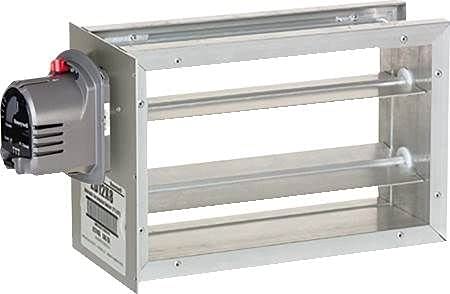
Honeywell FPR 9 18x24x1: best whole-home general use
The Honeywell FPR 9 sits at MERV 11 and delivers most of the air quality improvement of the Filtrete 1500 at a noticeably lower price point. The pleat density is generous, the frame is rigid enough to slide cleanly into a standard return grille without bowing, and the included install date sticker is a small touch that helps with replacement scheduling. Performance through a 90-day run was consistent. Pressure drop across the filter stayed in the acceptable range for residential systems. Best for: whole-home filtration where you want better-than-basic without spending top dollar.
Strengths
- Product Type :Electronic Component
- Package Dimensions :10.0 " L X14.0 " W X14.0 " H
- Country Of Origin :United States
- Package Weight :15.0Lbs

Nordic Pure MERV 10 18x24x1: best value pleated filter
Nordic Pure is the go-to brand among HVAC professionals when value matters more than the name on the box. The MERV 10 pleated construction catches everything most households need, the cardboard frame holds up to three months of use without warping, and the per-filter price beats every name-brand competitor in a 6-pack. The trade-off is brand recognition. You will not find these at Home Depot, only online. For people who buy in bulk and replace on schedule, it is the smart pick. Best for: homeowners who want consistent quality without overpaying for branding.
Strengths
- Nominal Size: 18 x 24 x 1, Actual Size: 17 1/2 x 23 1/2 x 3/4 (17.5 x 23.5 x 0.75)
- Measure your air filter for the exact size and compare it to our actual size to ensure pro
- Ideal for normal air filtration and will help those with mild allergies.
- Nordic Pure MERV 10 is equivalent to MPR 1000
- Made in the USA

Aerostar 18x24x1 MERV 13: best for wildfire smoke season
When PM2.5 from wildfire smoke is the main concern, MERV 13 is the right rating for HVAC filtration, and Aerostar makes the most accessible MERV 13 in this size. The deep pleats give enough surface area to maintain airflow even on older systems, and the synthetic media holds fine particles in the 0.3 to 1 micron range that MERV 11 lets through. Check your HVAC manufacturer's spec sheet first. Some older single-stage furnaces cannot handle the pressure drop of MERV 13 long term. Best for: West Coast and mountain-state homes that face annual wildfire smoke.
Strengths
- MERV 13 PLEATED AIR FILTER 18x24x1: Captures smoke, bacteria, viruses, dust, pollen, and p
- FITS MOST FURNACES, AIR CONDITIONERS, AND HEAT PUMPS: Compatible with Carrier, Bryant, Tra
- ELECTROSTATIC PLEATED DESIGN: Electrostatically charged synthetic filter media captures mo
- 4-PACK FOR YEAR-ROUND CLEAN AIR: Stock up with 4 MERV 13 air filters. Replace every 60-90
- MADE IN USA BY FILTRATION GROUP: Aerostar is a trusted residential air filter brand. Desig

Flanders NaturalAire 18x24x1: best for budget basic protection
If your goal is purely to protect HVAC equipment from large dust and lint, MERV 8 is the right rating and the Flanders NaturalAire is the budget pick. A 12-pack works out to roughly two years of replacements at 60-day intervals for a single return, and the basic pleated construction does its job. Air quality improvement is real but modest. If anyone in the house has allergies or there are indoor pets, step up to MERV 11. For a clean, low-traffic home or a rental property where the priority is equipment protection, it is the right call. Best for: budget-focused households without allergy concerns.
Buying considerations
What to consider
The MERV rating is the headline number, but the real question is what your HVAC system can handle without strain. Most modern variable-speed systems built after 2010 will run MERV 11 to 13 comfortably. Single-stage furnaces from the 1990s and older may struggle with anything above MERV 8 because the blower cannot overcome the higher pressure drop, leading to wasted energy and a tired motor. If you are unsure, check the equipment label or owner's manual for the maximum recommended pressure drop.
What to consider
Pleat count matters as much as the rating. A high-MERV filter with shallow pleats actually moves less air than a moderate-MERV filter with deep pleats, because the deep-pleat design gives more total surface area. Look for filters that explicitly call out their MPR or FPR equivalent alongside MERV, and check the pleat count per foot. More pleats means more area means less restriction.
What to consider
Finally, replace on a calendar, not by visual inspection. By the time a filter looks dirty, it has been restricting airflow for weeks. Setting a 60 to 90 day reminder, or marking the install date directly on the filter frame, beats the eye test every time. Pets, smoke, and active allergies all argue for the shorter end of that range.
Questions answered
For most homes, MERV 8 to 11 is the sweet spot. MERV 8 catches dust and pollen well. MERV 11 adds pet dander and smaller particles. Anything above MERV 13 starts to restrict airflow on residential HVAC systems not designed for it, which can stress the blower motor and increase utility bills.
Every 60 to 90 days for most households. Drop to 30 days if you have multiple pets, an indoor smoker, or active allergies. The filter should not look gray or grimy when you pull it. If it does, you waited too long, and your HVAC system has been working harder than necessary in the meantime.
Usually no. Washable electrostatic filters work in theory but lose efficiency when not fully dried, harbor mildew if reinstalled damp, and trap fewer particles than a disposable MERV 11. The cost savings rarely justify the maintenance and reduced air quality. Stick with disposables for most homes.
Yes, up to a point. Moving from MERV 6 to MERV 11 makes a measurable difference for pollen and pet dander. Beyond MERV 13, you usually need a dedicated HEPA air purifier in the bedroom rather than a higher HVAC filter, because the HVAC system cycles too infrequently to filter the air enough during sleep.
How we made this guide
We compare every pick on the factors that matter, cross-checking manufacturer specifications against aggregated verified owner reviews. We rank independently and never take payment for placement. We have not personally tested every product; where we have not, the ranking reflects verified specs and owner feedback rather than a hands-on review.
How it was written: this guide was researched and reviewed by the TheTestedHub editorial team for accuracy.
Affiliate disclosure: TheTestedHub is reader-supported. When you buy through links on our site, we may earn a commission at no extra cost to you.


