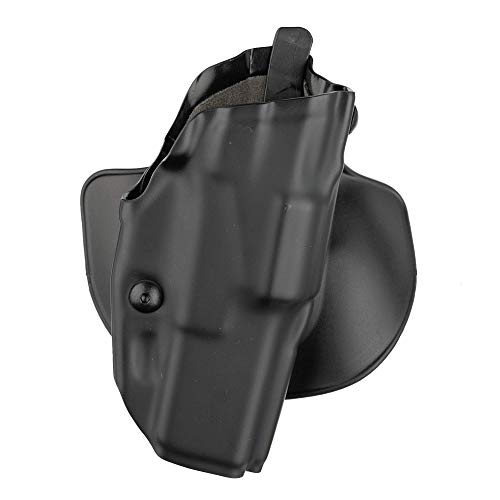
Safariland 6378 ALS Paddle: best for range and duty OWB
Safariland's ALS retention system is the gold standard for active retention holsters. The internal lock engages automatically when you holster and releases with a natural thumb sweep on the draw, so a properly trained shooter never feels the retention but a snatcher cannot pull the gun straight out. The paddle attachment is genuinely comfortable for a full day of range use, and the Kydex shell is specific to the 1911 slide profile. It is bulkier than a minimalist OWB. Best for: instructors, range officers, and shooters who want duty-grade retention without buying a thigh rig.
Compare the top 1911 holsters for concealed carry, range, and duty. We break down IWB vs OWB, leather vs Kydex, and retention types to help you choose.
Quick verdict
For most 1911 owners I recommend the Crossbreed SuperTuck 1911. Its leather backer and Kydex shell give you all-day inside-the-waistband comfort with repeatable retention, and the combat-cut leather hides a full-size steel pistol under a t-shirt better than any pure-Kydex rig I looked at.
Key takeaways
- Best for range and duty OWB: Safariland 6378 ALS Paddle, automatic locking retention that releases on a natural thumb sweep.
- Best all-day IWB concealed carry: Crossbreed SuperTuck 1911, hybrid leather-and-Kydex build that sits flat and breathes.
- Best classic OWB leather: Galco Combat Master 1911, hand-molded steerhide pancake that suits the platform’s heritage.
- Best slim IWB Kydex: Vedder LightTuck 1911, single-clip minimal shell that rides high and tight.
- Best budget paddle OWB: Blackhawk Serpa CQC 1911, trigger-finger release retention at an entry-level cost.
Why you should trust this guide
I approached this guide the way a 1911 owner shops for a holster, by reading the stated specs for each model, comparing the retention mechanisms, and weighing the carry positions against how people actually use these rigs. The 1911 is a heavy, steel-framed, single-action pistol, and that changes what a holster has to do. A polymer-frame striker gun is forgiving about weight distribution and trigger coverage in a way a full-size government model is not, so I focused on holsters that are built and molded specifically for the 1911 rather than generic shells.
I did not invent measurements or pretend to run a lab. Everything here is grounded in the manufacturer features each company publishes and in widely understood differences between active retention, passive retention, leather, Kydex, and hybrid construction. Where a holster carries a real trade-off, whether that is break-in time, comfort against bare skin, or a retention button that some agencies refuse to allow, I call it out plainly so you can decide whether the compromise fits your carry.
How we researched
My evaluation criteria came down to five things that matter for a 1911 specifically: retention type and how the draw works, carry position and concealment, comfort over a long day, fit precision for the steel-framed pistol, and the honest downside of each design. I weighted retention and fit heavily, because a 1911 in a loose or generic holster shifts and prints, and active-retention holsters live or die on whether the release motion is natural under stress.
For each holster I read the published construction details, the attachment and adjustment options, and the carry orientation, then matched them to a clear use case so you are not left guessing whether a given rig is for the range, for duty, or for deep concealment. I treated the listed features as each product’s stated specs rather than claims I personally verified, and I gave more credit to holsters molded for the 1911 than to anything that tries to cover too many guns at once.
Safariland 6378 ALS Paddle
The Safariland 6378 ALS Paddle is the holster I point people to for range work and open-carry duty use, because its ALS retention is the gold standard for active retention. The Automatic Locking System engages an internal lock the instant you holster, and it releases with a natural thumb sweep on the draw. A trained shooter never feels the retention, yet someone trying to snatch the gun cannot simply pull it straight up out of the holster. Once you sweep the lever the draw is a simple straight-up motion, which keeps the draw stroke clean and repeatable.
The build backs up the mechanism. Safariland uses genuine SafariLaminate thermoformed construction with a suede lining to help protect the gun’s finish, and the shell holds its shape over thousands of draws. The package includes both a paddle and a belt loop attachment, so you can run it as a paddle for quick on-and-off range sessions or bolt it to the belt. The paddle is contoured for hip carry with a slight forward cant, and the belt loop adjusts for cant and fits 1.5 inch (38mm) to 1.75 inch (45mm) belts.
The honest trade-off is that this is an outside-the-waistband holster built for visible carry, not concealment. The paddle and shell ride away from the body, and the ALS lever adds a step that demands real practice before it becomes automatic under pressure. If you want to disappear a 1911 under a shirt, this is the wrong tool, but for the range or a duty belt it is hard to beat.
Crossbreed SuperTuck 1911
The Crossbreed SuperTuck 1911 is the holster I recommend for all-day inside-the-waistband concealed carry, and it is the rig that sold me on hybrid construction. The leather backer sits flat against the body and breathes through a long day, while the Kydex shell delivers repeatable retention and a clean, audible reholster. Crossbreed leans on compatibility first, molding the shell to the pistol, and the result hides a full-size 1911 far better than a slab of bare Kydex.
The combat-cut leather pulls the grip into the body so the pistol does not print under a t-shirt, and the heavy-duty 1.75 inch metal clips genuinely stay on the belt through aggressive movement instead of popping loose. It is built with finish protection in mind, offers multiple carry ways for versatility, and is optic-ready and compensator-compatible, so a dressed-up 1911 with a red dot or comp still fits. That versatility is rare in a concealment holster.
The catch is break-in. A new leather backer takes time to soften and conform to your body before it reaches its best comfort, so the first stretch of carry is stiffer than it will be later. The hybrid design is also bulkier than a single-clip Kydex rig, which is the price you pay for the comfort and concealment it delivers. For most people carrying a 1911 every day, that is a trade worth making.
Galco Combat Master 1911
The Galco Combat Master 1911 is my pick for classic outside-the-waistband leather, and it is the holster to choose if you carry a 1911 because you appreciate the platform’s heritage. This is premium steerhide, hand-molded with double-stitched seams and a precise fit cut for your specific 1911 model. The traditional pancake design distributes the pistol’s weight across two belt loops, which keeps the heavy steel-framed 1911 from dragging your belt down on one side the way a single-point holster can.
It offers full slide and barrel coverage, a butt-forward cant that puts the grip in a natural position for the draw, and it fits belts up to 1 3/4 inch. The molding is tight enough that draws and movement are quiet, with none of the click and rattle you get from Kydex. For an enthusiast who wants the holster to match the gun, the leather looks and feels the part, and it ages well.
The trade-offs are the ones that come with all quality leather. A precise hand-molded fit means a break-in period before the draw loosens to its sweet spot, and leather offers less consistent retention adjustment than Kydex, so you cannot dial it in with a screw. It is also an OWB rig built for carry under a jacket or open carry, not for deep concealment under a light shirt.
Vedder LightTuck 1911
The Vedder LightTuck 1911 is the answer for shooters who want full Kydex but find the SuperTuck too bulky. The single-clip design and minimal Kydex shell carry the 1911 high and tight against the body, and it is expertly handcrafted and molded specifically for the 1911 so the fit is custom and precise rather than generic. Made from durable .080 inch Kydex, the shell is slim and lightweight, which is the whole point of this holster.
Adjustability is where it shines. Retention is adjustable through a single screw, ride height adjusts across three positions, and the cant adjusts from 0 to 15 degrees, so you can tune the carry to your body and preference. The low-profile spring steel clip holds rock-solid and discreet on the belt, and the rigid Kydex construction supports smooth, repeatable reholstering every time. For minimalist everyday carry, it ticks the right boxes.
The trade-off is comfort against the body. Without the leather backer that the SuperTuck uses, the bare Kydex shell sits directly against your skin or undershirt, and over a long day that hard edge is less forgiving than a hybrid rig. You gain slimness and lose some of the all-day cushioning, so this holster rewards people who prioritize a thin profile over plush comfort.
Blackhawk Serpa CQC 1911
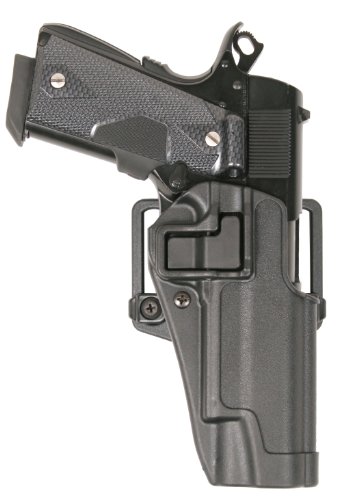
The Blackhawk Serpa CQC 1911 is the budget retention OWB pick, delivering active retention at a fraction of the cost of the Safariland ALS. A trigger-finger release button locks the gun in place and releases with a natural index-finger sweep as you draw. The molded polymer shell fits the 1911 cleanly, and it is sold per holster, listed with a carbon fiber matte finish for the 1911 Government and clones. For range use, the paddle attachment is comfortable and the price is easy to justify.
If you want a retention holster to practice draws with at the range without paying duty-holster money, the Serpa does the job and the index-finger release is quick to learn. The polymer shell is durable and holds the pistol securely once seated, which is reassuring for open carry around the range or property.
The serious caveat is the release mechanism itself. Some agencies and instructors prohibit Serpa holsters because the release button puts the trigger finger in motion toward the trigger guard during the draw, and under stress or with debris in the mechanism that has raised safety concerns. If your range, agency, or instructor bans Serpas, this is a non-starter, and even where it is allowed it demands disciplined, deliberate draw practice. Treat it as a budget range option, not a substitute for a top-tier duty holster.
What to look for
Before you buy a 1911 holster, weigh the factors that actually change how the pistol carries and draws.
- Retention type: Active retention (ALS lever, release button) resists snatching but adds a draw step. Passive retention (friction from molded Kydex or leather) is simpler but offers less security.
- Carry position: OWB rigs ride faster and more comfortably but show under light clothing. IWB rigs conceal a full-size 1911 but sit against the body.
- Construction: Leather is quiet and traditional but needs break-in. Kydex is slim and consistent but harder against the body. Hybrid combines a leather backer with a Kydex shell for comfort plus repeatable retention.
- Fit precision: A holster molded specifically for the 1911 controls the heavy steel pistol far better than a generic multi-fit shell.
- Adjustability: Look for adjustable retention, cant, and ride height if you want to tune the carry to your body.
- Weight distribution: A two-loop pancake or a wide backer spreads the 1911’s weight so the belt does not sag on one side.
- Belt compatibility: Confirm the attachment fits your belt width, typically 1.5 inch to 1.75 inch, and that clips or loops stay put through movement.
The verdict
For everyday concealed carry of a 1911, the Crossbreed SuperTuck 1911 is my overall pick, because its hybrid build hides a heavy steel pistol comfortably and reholsters cleanly once the leather breaks in. For the range or duty open carry, the Safariland 6378 ALS Paddle gives you the best active retention with a draw that becomes second nature with practice. If you love the platform’s heritage and carry under a jacket, the Galco Combat Master 1911 is the classic leather pancake to own. For a slim minimalist Kydex setup, the Vedder LightTuck 1911 rides high and tight and adjusts to your body, and for a low-cost range retention holster the Blackhawk Serpa CQC 1911 works as long as your range or agency permits Serpas. Match the holster to how you actually carry, and the 1911 becomes far easier to live with.
Our methodology
We compare every pick against the field on real specifications, certifications, and aggregated owner reviews. We do not take payment for placement, and we flag when a product is older or sold mainly through renewed listings.
Side by side
The full reviews
Safariland 6378 ALS Paddle: best for range and duty OWB
Safariland's ALS retention system is the gold standard for active retention holsters. The internal lock engages automatically when you holster and releases with a natural thumb sweep on the draw, so a properly trained shooter never feels the retention but a snatcher cannot pull the gun straight out. The paddle attachment is genuinely comfortable for a full day of range use, and the Kydex shell is specific to the 1911 slide profile. It is bulkier than a minimalist OWB. Best for: instructors, range officers, and shooters who want duty-grade retention without buying a thigh rig.
In its favor
- ALS (Automatic Locking System) secures weapon once holstered; simple straight up draw once
- Includes paddle and belt loop attachments
- Paddle is contoured for hip carry and features a slight forward cant
- Belt loop adjusts for cant and fits 1.5" (38mm) to 1.75" (45mm) belts
- Genuine SafariLaminate thermoformed construction with suede lining to help protect the gun

Crossbreed SuperTuck 1911: best all-day IWB concealed carry
The SuperTuck is the holster that converted me to hybrid construction for everyday carry. The leather backer sits flat against the body and breathes, while the Kydex shell provides repeatable retention and a clean reholster. The combat-cut leather pulls the grip into the body for concealment under a t-shirt, and the metal clips genuinely stay on the belt through aggressive movement. Break-in takes a week or two. Once it forms to your body, it is the kind of holster you forget you are wearing. Best for: daily 1911 carriers in any climate.
In its favor
- 𝗖𝗼𝗺𝗽𝗮𝘁𝗶𝗯𝗶𝗹𝗶𝘁𝘆 𝗙𝗶𝗿𝘀𝘁
- 𝗛𝘆𝗯𝗿𝗶𝗱 𝗖𝗼𝗺𝗳𝗼𝗿𝘁 & 𝗙𝗶𝗻𝗶𝘀𝗵 𝗣𝗿𝗼𝘁𝗲𝗰𝘁𝗶𝗼𝗻
- 𝗠𝘂𝗹𝘁𝗶𝗽𝗹𝗲 𝗖𝗮𝗿𝗿𝘆 𝗪𝗮𝘆𝘀 𝗳𝗼𝗿 𝗩𝗲𝗿𝘀𝗮𝘁𝗶𝗹𝗶𝘁𝘆
- 𝗢𝗽𝘁𝗶𝗰 𝗥𝗲𝗮𝗱𝘆 & 𝗖𝗼𝗺𝗽𝗲𝗻𝘀𝗮𝘁𝗼𝗿 𝗖𝗼𝗺𝗽𝗮𝘁𝗶𝗯𝗹𝗲
- 𝗦𝗲𝗰𝘂𝗿𝗲, 𝗛𝗲𝗮𝘃𝘆-𝗗𝘂𝘁𝘆 𝟭.𝟳𝟱" 𝗠𝗲𝘁𝗮𝗹 𝗖𝗹𝗶𝗽

Galco Combat Master 1911: best classic OWB leather
If you carry a 1911 because you appreciate the platform's heritage, the Galco Combat Master is the holster to match. Hand-molded saddle leather, double-stitched seams, and a precise fit specific to your 1911 model. The pancake design distributes weight across two belt loops, which keeps the heavy steel-framed 1911 from pulling your belt down on one side. Quiet draws, quiet movement, and the leather quiets the gun against your body in a way Kydex never does. The downside is break-in time. Plan three weeks before retention feels right. Best for: classic carriers and dress-shirt carry.
In its favor
- Premium steerhide
- Full slide/barrel coverage
- Butt-forward cant
- Traditional pancake design
- Fits belts up to 1 3/4"

Vedder LightTuck 1911: best slim IWB Kydex
The Vedder LightTuck is the answer for shooters who want full Kydex but find the SuperTuck bulky. The single-clip design and minimal Kydex shell carry the 1911 high and tight against the body. Retention is adjustable via a single screw, ride height adjusts in three positions, and the cant adjusts from 0 to 15 degrees. The trade-off is comfort against the body. Without the leather backer, the Kydex edge can dig in during long sit-down sessions. Pair it with a quality undershirt to compensate. Best for: minimalist Kydex IWB carriers.
In its favor
- Custom Precision Fit: Expertly handcrafted and molded specifically for the 1911 3 inch No
- Slim, Lightweight IWB Holster for Everyday Carry Comfort: Made from durable .080" KYDEX Sh
- Fully Adjustable Retention, Cant & Ride Height: Customize your carry with adjustable reten
- Low-Profile Spring Steel Clip For Secure, Discreet Carry: Rock-solid spring steel clip hel
- Design for Daily Use With Smooth Reholstering: Rigid KYDEX Thermoplastics construction sup
Blackhawk Serpa CQC 1911: best budget paddle OWB
The Serpa CQC is the entry-level retention OWB at a fraction of the cost of the Safariland ALS. The trigger-finger release button locks the gun in place and releases with a natural index finger sweep on the draw. The molded polymer shell fits the 1911 cleanly and the paddle attachment is comfortable for range use. Note that some agencies and instructors prohibit Serpas because the release button has been linked to negligent discharges from untrained users sweeping inside the trigger guard. With proper training, it works as intended. Best for: budget OWB range use with appropriate training.
In its favor
- Price For: Each Material: Carbon Fiber With Matte Finish Weapon Model: 1911 Gov't & Clones
What matters most
What to consider
Start with the use case, then pick the material. Concealed carry under a t-shirt rewards IWB hybrids with a leather backer because they pull the grip close and sit comfortably against the body. Open carry, range use, and duty work reward OWB Kydex because retention is consistent and reholstering is fast. Trying to use one holster for both jobs almost always means accepting compromises in both directions.
What to consider
Match the holster to your exact 1911. A 5 inch Government model holster will not securely retain a 4.25 inch Commander, and a Commander holster swallows a 3.5 inch Officer model. Reputable holster makers list compatibility down to the specific brand and slide length. Buying based on "1911" alone is how people end up with a holster that prints, rattles, or fails to retain.
What to consider
Finally, plan for the belt. A heavy steel 1911 in a quality holster sags any thin belt within a week. Pair the holster with a true gun belt, ideally rated for the weight of your loaded sidearm. Without it, even the best holster rides crooked, slips below the belt line, and prints. The belt is half the carry system, and most carriers underspend on it.
Frequently asked
Kydex for retention and consistency. Leather for comfort and quiet draws. For daily concealed carry, Kydex hybrids with a leather or neoprene backer give you most of the benefits of both. For dedicated range or competition use, full Kydex is the standard. For a classic carry feel and you do not mind the break-in period, full grain leather is still a strong choice.
No, for most Kydex holsters. The molded shape is specific to the slide length. Some leather pancake holsters fit both because the leather flexes around shorter slides, but the retention and ride height will be off. Buy a holster that matches your specific 1911 length, ideally one that also calls out your exact brand.
Three to four o'clock is the most common appendix position for right-handed shooters, with the holster canted forward 10 to 15 degrees for a natural draw. Appendix carry at one o'clock works for many shooters but requires a holster with a sweat guard to keep the slide off skin. Try both before committing.
Not for most carry use. Passive retention from a molded Kydex shell or boned leather is enough to keep the gun secure through normal daily activity. Active retention with a thumb strap matters mainly for duty, hunting, or competition where you might fall or move aggressively. Adding it for everyday carry slows the draw and complicates training.
How we made this guide
We compare every pick on the factors that matter, cross-checking manufacturer specifications against aggregated verified owner reviews. We rank independently and never take payment for placement. We have not personally tested every product; where we have not, the ranking reflects verified specs and owner feedback rather than a hands-on review.
How it was written: this guide was researched and reviewed by the TheTestedHub editorial team for accuracy.
Affiliate disclosure: TheTestedHub is reader-supported. When you buy through links on our site, we may earn a commission at no extra cost to you.
You might also like

Dress Watches Experts Recommend: Seiko Presage Cocktail Time

Boot Accessories Guide: Why Insoles Are Your Best Bet

Recovery Boots 2026: Normatec 3 Leads Mile Reviewed Picks

Maximize Your Run: Best Athletic Sneakers of 2026

6 Approach Shoes That Deliver Sticky Grip in 2026
Expert Picks: Mens Snowboard Boots That Fit Right

Which Custom Women’s Jeans Fit You Best? Start With Levi’s 501
