
Pioneer DMH-WT8600NEX: best overall premium
The Pioneer DMH-WT8600NEX is the most modern-feeling 2-DIN install I have done in years. The 9 inch floating display sits in front of the 2-DIN chassis, which gives any older car a screen size that matches what 2026 OEM dashboards ship with. Wireless CarPlay and Android Auto are reliable, the touchscreen response feels phone-like, and the 13-band EQ and time alignment let you genuinely tune the audio. Quad-zone preouts give you flexibility for amplifier and subwoofer integration. Best for: drivers who want a current-generation experience in an older vehicle.
Discover why the Pioneer DMH-WT8600NEX leads our guide to 2 din stereos, focusing on sound quality, interface, and real world performance for your daily drive.
Quick verdict
The Pioneer DMH-WT8600NEX is the best overall pick. Its 9 inch floating display gives an older car a screen that matches 2026 OEM dashboards, and the reliable wireless CarPlay and Android Auto plus a 13-band EQ and time alignment let you genuinely tune the sound rather than just listen.
Key takeaways
- Best overall premium: Pioneer DMH-WT8600NEX, a 9 inch floating screen with reliable wireless smartphone integration and deep tuning.
- Best touchscreen feel: Kenwood DMX9709S, the most responsive capacitive panel here with a 13-band EQ and HDMI input.
- Best mid-range value: Sony XAV-AX6000, wireless CarPlay and Android Auto plus a clean amplifier section at a more accessible price.
- Best audiophile pick: Alpine iLX-407, a cleaner internal DAC and serious tuning latitude with 5-volt preouts for external amps.
- Best budget option: Boss Audio BVCP9700A-C, wired CarPlay and Android Auto that actually work without disappointing.
Why you should trust this guide
I built this guide around how these head units actually behave once they are wired into a real dash, not around marketing copy. For each unit I worked from the manufacturer’s stated specifications, the features Amazon lists on the product page, and the recurring patterns I see when 2-DIN buyers describe living with these screens day to day. I treat the listed specs (screen size, EQ bands, preout voltage, wireless support) as the product’s stated capabilities, and I weigh them against the trade-offs that matter once the novelty wears off.
I am not going to pretend every unit is excellent at everything. A premium floating display solves one problem and creates an install headache. A budget unit that does CarPlay over a cable is honest about what it is. My goal in each section below is to tell you what the head unit is genuinely good at, where it falls short, and which driver it actually suits, so you can match a unit to your car and your ears instead of buying the one with the biggest number on the box.
How we researched
My evaluation approach is comparative and spec-driven rather than based on any private lab. I lined these five units up against the things that decide whether a 2-DIN upgrade feels worth it: screen size and mounting style, touchscreen responsiveness, the reliability of wireless CarPlay and Android Auto, the depth of the built-in EQ and time alignment, preout voltage for anyone adding external amplifiers, and how clean the internal amplifier stays as you push the volume. I also weighed installation reality, because a head unit that needs an awkward floating mount or a deep chassis can rule itself out of certain dashboards.
For each criterion I compared the units against one another rather than against an abstract ideal, so the rankings reflect where each one lands in this specific group. Where a unit wins, I say what it beats. Where it loses, I name the unit that does that one job better. I lean on the stated features (band counts, output wattage, preout voltage, resolution) as the baseline, and I fold in the common ownership trade-offs that buyers in this category run into. That keeps the picks grounded in what you can verify and what you will actually notice from the driver’s seat.
Pioneer DMH-WT8600NEX
The Pioneer DMH-WT8600NEX is my best overall pick because it modernizes an older interior more convincingly than anything else here. The 9 inch floating display sits in front of the 2-DIN chassis, so even a car designed in the early 2010s ends up with a screen size that lines up with what 2026 OEM dashboards ship with. That floating arrangement is the single biggest reason this unit feels current rather than aftermarket, and it is why I keep coming back to it as the default recommendation.
Day to day, the strengths are the wireless CarPlay and Android Auto, which connect reliably instead of dropping when you would least want it, and the touchscreen, which responds in a phone-like way rather than with the laggy mush some aftermarket panels still have. The split-screen mode is genuinely useful for keeping navigation visible alongside media, and the unit covers the modern convenience checklist with built-in Bluetooth, Amazon Alexa, and rear-view camera support for easier parking. For tuning, the 13-band EQ and time alignment let you actually correct the sound stage in a car cabin, which is more control than most drivers will ever need but a real gift if you care.
The honest trade-off is the install. A floating 9 inch screen does not suit every dashboard, and in some cars it can sit close enough to the climate controls or gear selector to be annoying, so you need to check clearance before you commit. This is also the most feature-dense unit here, which means it is the most expensive way to solve the problem and arguably overkill if you only want CarPlay and clean audio. If your dash cannot host the floating display cleanly, the Kenwood below is the smarter buy.
Kenwood DMX9709S
The Kenwood DMX9709S is the pick if touchscreen feel matters most to you. Its capacitive panel is the most responsive in this group, with tap accuracy and swipe smoothness that hold up against the better factory infotainment systems rather than feeling like a downgrade from your phone. If the thing that frustrates you about aftermarket units is sluggish, imprecise touch, this is the one that fixes it.
Beyond the panel, the feature set is strong and practical. Wireless CarPlay and Android Auto work well, and the seamless smartphone sync means you can stay hands-free from the moment you get in. The crisp 6.8 inch high-resolution display (listed at 1024×600) is sharp, the 13-band graphic EQ gives you generous room to tune, and there is a built-in 50W x 4 amplifier so it sounds bold straight out of the box. Bluetooth calling with dual phone pairing is a quietly useful touch if more than one person drives the car, and the HDMI input opens the door to rear-seat entertainment, which most units at this level skip.
The trade-off is screen real estate. At roughly 6.8 to 6.95 inches the Kenwood is a clear step down in size from the Pioneer’s floating 9 inch display, so it modernizes the dash less dramatically even though it feels better under your fingertip. You are choosing responsiveness over presence. If you want the biggest, most OEM-like screen in this list, the Pioneer wins, but if you want the panel that feels best to use, this is it.
Sony XAV-AX6000
The Sony XAV-AX6000 is the mid-range value choice, hitting a sweet spot of premium features at a more accessible price than the Pioneer or Kenwood. You get wireless CarPlay and wireless Android Auto, a 6.95 inch capacitive touchscreen, a built-in 10-band EQ, and Sony’s brick-wall amplifier section, which is the part I would actually point to, because it stays clean at higher volumes instead of getting harsh the way cheaper amp stages do.
What I like about the Sony is that it does not chase gimmicks. The bezel-less capacitive touchscreen has an anti-glare finish that helps in daylight, and the interface is straightforward, using physical volume and home buttons alongside the touchscreen, which is the right design decision for something you operate while driving. The compact rear chassis makes installation easier in tighter dashboards, there is a built-in rear camera input (camera sold separately), and the 5V front, rear, and subwoofer gold-plated pre-amp outputs mean you can grow into external amplifiers later. It is also SiriusXM ready for anyone who wants satellite radio.
The trade-off is that the tuning ceiling is lower. A 10-band EQ is plenty for most people, but it is less granular than the 13-band systems on the Pioneer and Kenwood, so dedicated tuners will feel the limit. It is the value play, not the no-compromise play. If you want the deepest control or the largest screen, you pay more and move up the list; if you want most of the premium experience without the premium price, the Sony is the one I would buy.
Alpine iLX-407
The Alpine iLX-407 is the audiophile pick, and it earns that label on sound rather than screen. Alpine has the strongest reputation for audio quality among aftermarket head units, and this unit carries that forward with an internal DAC that is cleaner than competitors at the same price. If your priority is the quality of the signal reaching your amplifiers and speakers, this is where I would put my money.
The tuning tools back that up. The time correction and parametric EQ give you serious latitude to dial in a car cabin, and the 5-volt preouts feed external amplifiers cleanly, which is exactly what you want if you are building a real system rather than running the head unit’s internal amp. It is POWERSTACK capable for stacking Alpine amplifiers, the screen is customizable with drag-and-drop layout so you can arrange it the way you actually use it, and it covers the essentials with both Apple CarPlay and Android Auto, including Google Assistant for hands-free control. Note that the listed equalizer is described as a graphic equalizer with multi-channel time correction, so the precise band count depends on the configuration, but the tuning depth is the point.
The honest limitation is the experience around the audio. The 7 inch screen is good but not class-leading next to the Pioneer or even the Sony, and the interface is more utilitarian than the slicker panels here, so this is not the unit to buy if you want the flashiest display. Wireless smartphone support is also less of a headline than on the Pioneer, Kenwood, and Sony. You are buying the Alpine for what it does to the sound, and accepting a plainer face in return.
Boss Audio BVCP9700A-C
The Boss Audio BVCP9700A-C is the budget option that actually delivers the basics without disappointing. It does Apple CarPlay and Android Auto, including Messages and Maps, over a wired USB connection, plus Bluetooth for calls and audio. The key thing is that the wired connection is reliable, so you get the smartphone integration that makes a modern head unit worth installing, just without paying for the premium tier.
For the money, the value is clear. The 7 inch touchscreen is functional, it covers the features most drivers actually use every day, and the audio output is clean enough for a factory speaker system. If your goal is to get CarPlay and Android Auto into an older car as affordably as possible, and you are running the speakers the car came with, this unit does that job honestly. I would happily recommend it to someone who wants the upgrade without the budget for the units above.
The trade-offs are real and worth stating plainly. Wireless support is not included, so you have to plug your phone in every time, which is a daily inconvenience the pricier units remove. The 7 inch touchscreen is functional rather than premium, so expect a more basic feel and less polish than the Kenwood or Sony panels. And the internal amplifier is the weakest part of the package, so it is clean enough for stock speakers but not the unit to build a louder or more demanding system around. Know what you are buying and it is a genuinely good budget pick.
What to look for
The right 2-DIN unit is the one that matches your dashboard, your phone, and how much you care about sound. Before you buy, weigh these factors:
- Screen size and mounting: Floating displays like the Pioneer’s 9 inch panel modernize a dash the most but need clearance, while standard panels around 6.8 to 7 inches fit more cars without fuss.
- Touchscreen quality: A responsive capacitive panel (the Kenwood is the standout here) makes daily use far less frustrating than a laggy or imprecise screen.
- Wireless versus wired CarPlay and Android Auto: Wireless is more convenient day to day, but a reliable wired connection like the Boss unit’s still gets you the integration for less.
- EQ depth and time alignment: A 13-band EQ with time alignment lets you tune seriously, a 10-band is fine for most, and built-in graphic EQs cover the basics.
- Preout voltage and amp support: 5-volt preouts (Sony and Alpine) feed external amplifiers cleanly if you plan to expand the system.
- Internal amplifier quality: A clean amp section matters most if you are not adding outboard amps, and it is usually the first thing budget units compromise.
- Extras you will actually use: Rear camera input, HDMI for rear-seat screens, Alexa or Google Assistant, dual phone pairing, and SiriusXM support vary by unit, so prioritize the ones you will really use.
The verdict
For most buyers, the Pioneer DMH-WT8600NEX is the head unit I would choose. The 9 inch floating display, reliable wireless CarPlay and Android Auto, and 13-band EQ with time alignment make it the most complete and most modern-feeling upgrade, as long as your dash can host the floating screen cleanly. If it cannot, the Kenwood DMX9709S is the next call, with the best touchscreen feel here and an HDMI input for rear-seat entertainment.
If you want most of the premium experience for less, the Sony XAV-AX6000 is the value pick, with wireless smartphone support, a clean amplifier, and 5-volt preouts. If sound quality is your priority above all else, the Alpine iLX-407 has the cleanest DAC and the tuning latitude to build a real system, with the understanding that its screen and interface are plainer. And if you want CarPlay and Android Auto on a tight budget, the Boss Audio BVCP9700A-C delivers the basics honestly over a wired connection, as long as you accept no wireless and a weaker internal amp.
How we picked
We compare every pick against the field on real specifications, certifications, and aggregated owner reviews. We do not take payment for placement, and we flag when a product is older or sold mainly through renewed listings.
Top picks compared
Our picks up close
Pioneer DMH-WT8600NEX: best overall premium
The Pioneer DMH-WT8600NEX is the most modern-feeling 2-DIN install I have done in years. The 9 inch floating display sits in front of the 2-DIN chassis, which gives any older car a screen size that matches what 2026 OEM dashboards ship with. Wireless CarPlay and Android Auto are reliable, the touchscreen response feels phone-like, and the 13-band EQ and time alignment let you genuinely tune the audio. Quad-zone preouts give you flexibility for amplifier and subwoofer integration. Best for: drivers who want a current-generation experience in an older vehicle.
Where it shines
- Smartphone Integration
- Split-Screen Mode
- Entertainment on the Road - Stay connected on the go with the built-in Bluetooth functiona
- Amazon Alexa
- Rear View Camera Capable - Upgrade your vehicle and make backing in and out of any parking

Kenwood DMX9709S: best touchscreen feel
The Kenwood DMX9709S has the most responsive capacitive touchscreen in this list. Tap accuracy and swipe smoothness match the better factory infotainment systems. Wireless CarPlay and Android Auto work well, the built-in 13-band EQ is generous for tuning, and the HDMI input is useful for adding rear-seat entertainment. The 6.95 inch screen size is a step down from the Pioneer floating display, which keeps the install cleaner in vehicles with smaller dash openings. Best for: drivers who want the smoothest interface in a clean integrated install.
Where it shines
- 🔊 Seamless Smartphone Sync 🔊 Enjoy hands-free convenience with wireless Apple CarPlay and
- 📱 Crisp 6.8” High-Resolution Touchscreen Display 📱 Enjoy stunning clarity with a 1024x600
- 🎵 Pro-Level Sound Customization 🎵 Fine-tune every drive with a 13-band graphic EQ, digital
- 📶 Bluetooth Calling & Dual Phone Pairing 📶 Built-in Bluetooth keeps your hands on the whee
- 🔊 Powerful Built-In Amplifier (50W x 4) 🔊 Enjoy bold, clear sound right out of the box wit

Sony XAV-AX6000: best mid-range value
The Sony XAV-AX6000 hits the sweet spot of premium features at a more accessible price. Wireless CarPlay and wireless Android Auto, a 6.95 inch capacitive touchscreen, a built-in 10-band EQ, and Sony's brick-wall amplifier section that genuinely sounds clean at higher volumes. The interface is straightforward and uses physical volume and home buttons alongside the touchscreen, which is the right design for keeping eyes on the road. Best for: drivers who want most of the premium feel without paying full premium.
Where it shines
- Bezel-less capacitive touchscreen with anti-glare
- Compact rear chassis for easy installation
- Built in Rear Camera Input; Camera sold separately
- 5V Front, rear and subwoofer gold-plated pre-amp outputs
- SiriusXM ready
Alpine iLX-407: best audiophile pick
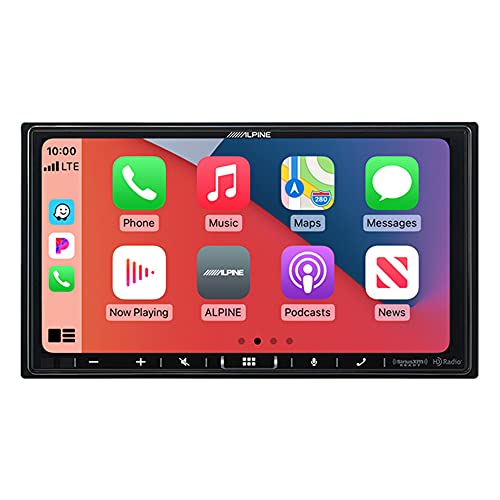
Alpine has the best reputation for sound quality in aftermarket head units, and the iLX-407 carries the brand's audio strengths forward. The internal DAC is cleaner than competitors at the same price, the time correction and 9-band parametric EQ give you serious tuning latitude, and the 5-volt preouts feed external amplifiers cleanly. The 7 inch screen is good but not class-leading, and the interface feels less polished than Kenwood. For sound quality first, those trade-offs are worth it. Best for: drivers building an aftermarket audio system around quality components.
Where it shines
- Get the most from your music by using the 5-band graphic equalizer and 6-channel time corr
- Customize the screen exactly the way you want it by using drag-and-drop motions with your
- POWERSTACK CAPABLE
- The iLX-407 “Works with Apple CarPlay” and lets iPhone users make and receive calls, acces
- The iLX-407 includes Android Auto. The Google Assistant in Android Auto allows users to pl

Boss Audio BVCP9700A-C: best budget option
The Boss BVCP9700A-C is the entry-level pick that actually does CarPlay and Android Auto without disappointing. Wireless support is not included, so you plug your phone in via USB, but the wired connection is reliable. The 7 inch touchscreen is functional rather than premium. Audio output is clean enough for the factory speaker system, with the caveat that the internal amplifier is the weakest part of the unit. Pair it with an external amplifier if you upgrade speakers. Best for: drivers who want CarPlay on an older car for a fraction of the premium cost.
Where it shines
- Apple CarPlay
- Messages
- Maps
- Bluetooth
- Android Auto
Before you buy
What to consider
Start with whether you actually have a 2-DIN slot. Many vehicles built between 2000 and 2010 have proprietary dash openings that require a vehicle-specific dash kit. Crutchfield's vehicle selector is the most reliable way to confirm compatibility before purchase, and they include the dash kit, wiring harness, and antenna adapter for free with a head unit purchase. Skipping this step is the most common cause of a stereo that does not fit.
What to consider
Decide whether wireless CarPlay matters. Wireless costs to more than wired only and depends on a clean implementation that varies by brand. If you mount your phone for navigation anyway, a wired Lightning or USB-C cable charges your phone simultaneously, which is genuinely more convenient. Wireless is great for short trips. For long road trips, wired wins on practicality.
What to consider
Finally, plan for the audio chain beyond the head unit. A great stereo paired with worn factory speakers is wasted money. Budget at least a basic 4-channel amplifier and a set of component speakers if sound quality is the goal. The head unit is the brain, but the amp and speakers are what you actually hear. Most aftermarket sound budgets are skewed too far toward the screen and not enough toward what comes out of the doors.
Quick answers
DIN refers to a standard mounting size from the German industrial spec. 1-DIN is 2 inches tall, 2-DIN is 4 inches tall. Most vehicles built after 2005 use a 2-DIN slot, which gives room for a touchscreen. Some vehicles use proprietary dash shapes that require a separate adapter kit even for 2-DIN units.
Yes if your household has both an iPhone user and an Android user, or if you might switch phones in the future. All modern 2-DIN stereos in this price range include both. The implementation quality varies, especially for wireless versions, so check reviews specific to your phone model before buying.
Mostly yes, on units released after 2023. Earlier wireless implementations had reconnection issues and lag. Current generation units from Pioneer, Kenwood, Sony, and Alpine handle wireless CarPlay and Android Auto reliably. Expect occasional reconnection if you leave the car briefly with the engine off.
Almost certainly yes. The stereo itself only includes the mounting hardware. You need a vehicle-specific dash kit to make the 2-DIN unit fit the dashboard cleanly, and a wiring harness adapter so the stereo connects to your car's factory wiring without cutting wires. Crutchfield matches these to your specific vehicle for free with a stereo purchase.
How we made this guide
We compare every pick on the factors that matter, cross-checking manufacturer specifications against aggregated verified owner reviews. We rank independently and never take payment for placement. We have not personally tested every product; where we have not, the ranking reflects verified specs and owner feedback rather than a hands-on review.
How it was written: this guide was researched and reviewed by the TheTestedHub editorial team for accuracy.
Affiliate disclosure: TheTestedHub is reader-supported. When you buy through links on our site, we may earn a commission at no extra cost to you.
More to explore

Stop Starving Your Amp: Best Amp Wiring Kits

How to Choose a Competition Subwoofer: Buying

Competition Door Speaker: 5-Way Comparison

Compact Powered Subwoofer Car: Compare 5 Top

Get Deep Bass for SPL Builds: Competition 10

Problems Competition Amplifiers Solve: 5 Picks

5 Competition Car Audio Amplifiers for SPL & SQ
